
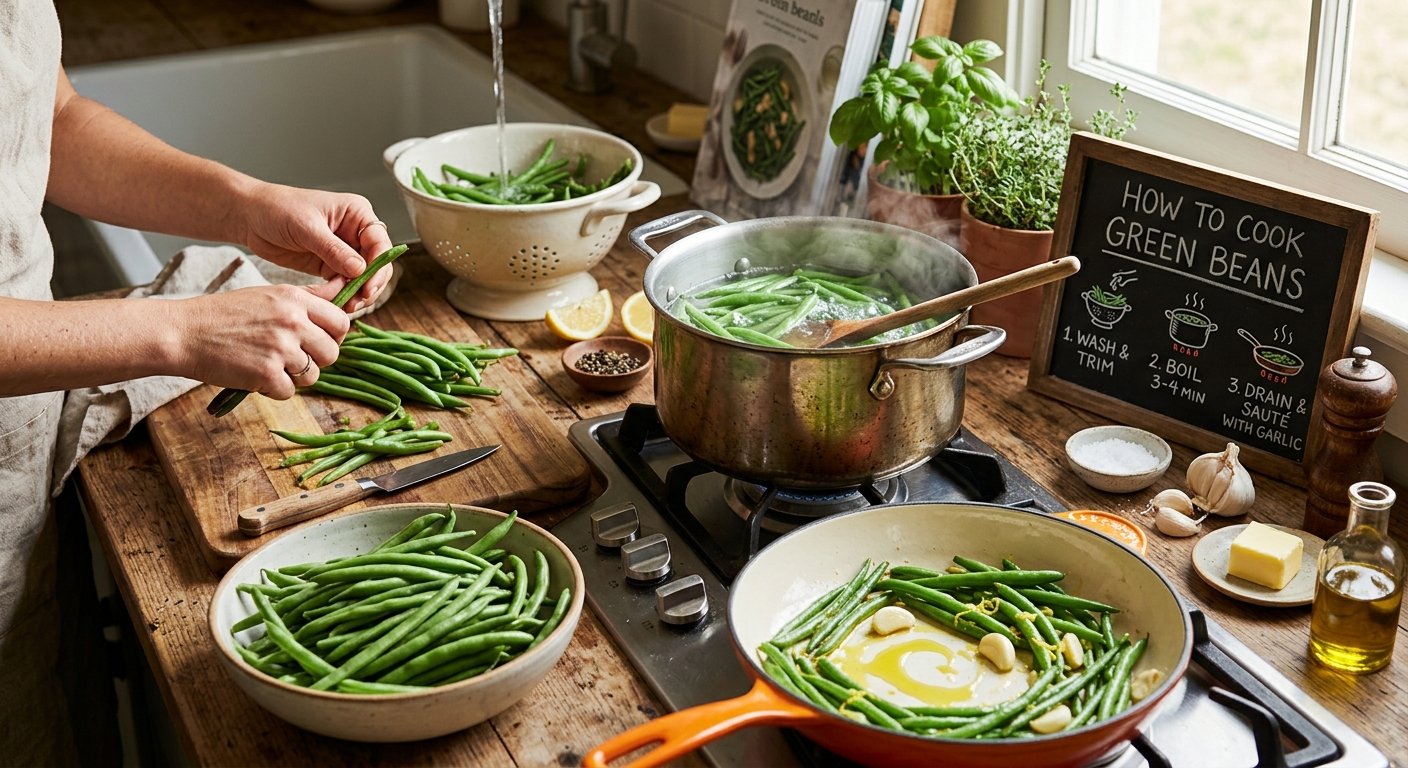

Green beans are a simple, healthy, and delicious vegetable that can make almost any meal better. If you want to learn how to cook green beans, you’re in the right place. Whether you prefer them crisp and bright, soft and tender, roasted until golden, or sautéed with garlic and butter, there are several easy ways to prepare this popular vegetable at home.
Green beans are also known as string beans or snap beans. They are easy to find, affordable, and full of useful nutrients. Best of all, you don’t need expensive ingredients or advanced cooking skills to prepare them. With a little preparation and the right cooking method, you can turn ordinary green beans into a tasty side dish that your family will enjoy.
In this guide, you’ll discover how to choose fresh green beans, clean them properly, cook them using different methods, add delicious seasonings, and avoid common cooking mistakes. You’ll also find practical tips, cooking times, serving ideas, and easy recipes to help you get started.
What Are Green Beans?


6
Green beans are long, narrow pods that are usually eaten whole, including their small seeds. They have a mild, fresh flavor and a pleasant texture that can range from crisp to soft, depending on how they’re cooked.
They’re popular in many types of cooking, from simple home meals to restaurant dishes. You can serve them with rice, chicken, fish, potatoes, pasta, or other vegetables.
Green beans are especially useful because they can be prepared in several ways:
- Boiling: A simple method for soft, tender beans.
- Steaming: Helps preserve their natural flavor without soaking them in water.
- Sautéing: Creates flavorful beans with oil, garlic, butter, and spices.
- Roasting: Gives the beans lightly browned edges and a deeper flavor.
- Air frying: Produces a roasted texture with relatively little oil.
- Microwaving: Offers a quick option when you’re short on time.
Each method has its own benefits. The best choice depends on how much time you have and whether you prefer crisp or soft vegetables.
Why You Should Include Green Beans in Your Meals
Green beans are more than just a colorful addition to your plate. They provide fiber, vitamins, minerals, and other nutrients that support a balanced diet.
Here are some benefits of adding green beans to your meals:
- Provide dietary fiber: Fiber supports normal digestion and helps you feel satisfied after eating.
- Contain vitamin C: This vitamin supports normal immune function and helps the body absorb iron from plant foods.
- Provide vitamin K: Vitamin K plays an important role in normal blood clotting and bone health.
- Offer folate: Folate helps the body make DNA and supports normal cell growth.
- Contain useful minerals: Green beans provide small amounts of minerals such as potassium and manganese.
- Add color and texture: Their bright green color can make a meal look more appealing.
- Fit many eating styles: They’re suitable for many vegetarian, vegan, and balanced meal plans.
Green beans are naturally low in calories when prepared without large amounts of oil, butter, or heavy sauces. However, their nutritional value can vary depending on the portion size and cooking method.
A simple preparation with a little olive oil, garlic, and black pepper is an easy way to enjoy their natural taste.
Ingredients You Need to Cook Green Beans
One of the best things about green beans is that you don’t need a long shopping list. A basic recipe can be made with only a few ingredients.


8
Basic Ingredients
For a simple side dish serving approximately four people, gather the following:
| Ingredient | Amount | Purpose |
|---|---|---|
| Fresh green beans | 1 pound (450 g) | Main ingredient |
| Olive oil or butter | 1–2 tablespoons | Adds flavor and helps coat the beans |
| Garlic | 2 cloves, minced | Provides a rich aroma |
| Salt | To taste | Enhances the flavor |
| Black pepper | To taste | Adds mild heat |
| Lemon juice | 1–2 teaspoons | Adds freshness |
| Water | As needed | Used for boiling or steaming |
You can adjust these amounts according to your taste. For a lighter dish, use a small amount of oil and finish with lemon juice. If you enjoy richer flavors, a little butter can make the beans taste comforting and delicious.
Optional Ingredients for Extra Flavor
Once you’ve mastered the basic recipe, try adding one or two of these ingredients:
- Red pepper flakes for a little heat.
- Onion for sweetness and aroma.
- Paprika for a warm, smoky flavor.
- Grated Parmesan cheese for a savory finish.
- Toasted almonds for crunch.
- Sesame seeds for a nutty taste.
- Fresh parsley or cilantro for freshness.
- A small splash of soy sauce for an Asian-inspired flavor.
Don’t add everything at once. A few well-chosen ingredients often create a better balance than too many competing flavors.
How to Choose Fresh Green Beans
Before learning how to cook green beans, it’s helpful to know how to choose good-quality beans. Fresh ingredients can make a noticeable difference in both flavor and texture.
When shopping, look for green beans that have the following qualities:
- Bright green color: Choose beans with a fresh, even color and no large brown patches.
- Firm texture: The pods should feel firm rather than limp or rubbery.
- Smooth skin: Avoid beans with extensive wrinkles, dark spots, or damaged areas.
- Similar size: Beans of similar thickness usually cook more evenly.
- Fresh appearance: Avoid beans that look slimy or show signs of mold.
Fresh green beans often snap when bent, although this isn’t a perfect test of quality. Some good varieties are more flexible than others.
Can You Use Frozen or Canned Green Beans?
Yes! Fresh beans are excellent, but frozen and canned varieties are useful alternatives.
| Type | Preparation | Best use |
|---|---|---|
| Fresh green beans | Wash and trim | Roasting, sautéing, steaming |
| Frozen green beans | Cook from frozen or thaw if your recipe requires it | Quick side dishes and stir-fries |
| Canned green beans | Drain and rinse if desired, then heat | Soups, casseroles, and quick meals |
Frozen green beans are often blanched before freezing, so they may cook faster than raw beans. Canned beans are already cooked, which means they mainly need reheating. They may also be softer and contain added sodium, depending on the product.
How to Prepare Green Beans Before Cooking


7
Proper preparation helps green beans cook evenly and improves their final texture. Fortunately, the process is easy.
Wash the Beans
Place the green beans in a colander and rinse them under cool, clean running water. Gently move them around with your hands to remove dirt or other surface debris.
Avoid using soap or household cleaning products on vegetables.
Trim the Ends
Place a handful of beans on a cutting board and cut off the tough stem ends with a clean knife. You can also snap off the ends by hand.
The thin tail ends are usually edible, so you don’t need to remove them unless you prefer a neater appearance.
Cut Them Into Smaller Pieces
Green beans can be cooked whole or cut into shorter sections.
- Leave them whole for roasting or serving as an attractive side dish.
- Cut them into 1- to 2-inch pieces for soups, rice dishes, and stir-fries.
- Keep the pieces similar in size so they cook at roughly the same rate.
Dry Them When Needed
If you’re planning to roast or sauté fresh beans, pat them dry with a clean kitchen towel.
Why does this matter? Excess water can create steam in a hot pan or roasting tray, preventing the beans from browning as easily.
How to Cook Green Beans by Boiling

Boiling is one of the easiest methods for beginners. It requires little equipment and works well when you want tender green beans without much added fat.
Ingredients
- 1 pound fresh green beans
- Water
- Salt, to taste
- 1 tablespoon butter or olive oil, optional
- A little lemon juice, optional
Step-by-Step Instructions
Step one: Bring the water to a boil.
Fill a large pot with enough water to cover the beans. Add a little salt if desired and bring the water to a full boil.
Step two: Add the green beans.
Carefully place the trimmed beans into the boiling water. Stir gently to separate them and help them cook evenly.
Step three: Cook until tender.
Cook for approximately 4–7 minutes, depending on the thickness of the beans and how soft you like them. Start checking after four minutes.
For crisp-tender beans, use the shorter cooking time. For softer beans, allow them to cook longer.
Step four: Test for doneness.
Remove one bean with a fork and let it cool slightly before tasting. It should be easy to bite through without feeling unpleasantly tough.
Step five: Drain the beans.
Pour the beans into a colander and drain away the hot water. If you want to stop the cooking quickly and preserve a bright green color, transfer them to a bowl of ice water. Drain and dry them afterward.
Step six: Add seasoning.
Toss the beans with butter or olive oil, black pepper, and a squeeze of lemon juice.
That’s it! You’ve prepared a simple vegetable side dish that pairs well with many main courses.
Tips for Better Boiled Green Beans
- Use enough water so the beans can move freely.
- Avoid cooking them for too long if you prefer a firm texture.
- Drain them promptly when they’re ready.
- Add butter, garlic, or lemon after cooking for a fresh finish.
Boiling is convenient, but it can cause some water-soluble vitamins to move into the cooking water. If you want to reduce this effect, steaming is another excellent option.
How to Steam Green Beans

Steaming is a great choice if you want green beans that taste fresh and retain a pleasant texture. Because the beans aren’t submerged in water, steaming can help limit the loss of certain water-soluble nutrients.
What You’ll Need
- 1 pound fresh green beans
- A saucepan with a lid
- A steamer basket
- A small amount of water
- Salt, pepper, and lemon juice for seasoning
Cooking Instructions
- Wash and trim the green beans.
- Add about an inch of water to a saucepan, making sure the water won’t touch the bottom of the steamer basket.
- Bring the water to a simmer.
- Place the green beans in the basket and cover the saucepan.
- Steam for approximately 5–8 minutes, checking their texture near the end.
- Carefully remove the beans and season them as desired.
Be careful when lifting the lid because hot steam can cause burns. Use oven mitts if necessary, and keep your face and hands away from the escaping steam.
How to Make Steamed Beans Taste Delicious
Steamed green beans have a clean, mild flavor. A little seasoning makes them much more appealing.
Try tossing them with:
- Olive oil and minced garlic.
- Lemon juice and black pepper.
- Butter and chopped parsley.
- Toasted sesame seeds and a small splash of soy sauce.
If you’re serving the beans with a strongly seasoned main dish, a simple lemon-and-pepper finish may be all you need.
How to Sauté Green Beans With Garlic

Sautéing is an excellent way to create flavorful green beans with a lightly browned surface. Garlic adds a rich aroma, while olive oil or butter helps the seasonings coat the vegetables.
This method is ideal for everyday dinners because it doesn’t require much preparation or cleanup.
Ingredients
- 1 pound fresh green beans, trimmed
- 1 tablespoon olive oil
- 1 tablespoon butter, optional
- 2–3 garlic cloves, minced
- Salt and black pepper
- 2 tablespoons water, if needed
- Lemon juice, optional
Step-by-Step Cooking Method
Prepare the pan. Place a large skillet over medium heat and add the olive oil. Allow it to warm without letting it smoke.
Cook the green beans. Add the beans and stir to coat them with the oil. Cook for about 5–7 minutes, stirring regularly.
Add a little water if needed. If the beans remain too firm, add two tablespoons of water and cover the pan for a few minutes. This helps soften the beans without requiring a separate pot.
Add the garlic. Stir in the minced garlic during the final 1–2 minutes. Garlic burns easily, so don’t add it too early or cook it over excessively high heat.
Finish with seasoning. Add salt, black pepper, and butter if desired. Cook until the beans reach your preferred texture, then finish with a small squeeze of lemon juice.
The result is a savory side dish with a pleasant balance of fresh vegetable flavor, garlic, and gentle richness.
A Simple Restaurant-Style Trick
For a more appealing texture, avoid overcrowding the skillet. If the pan is too full, the beans release moisture and steam rather than browning.
If you’re cooking a large quantity, work in batches. It takes a little longer, but the improved texture is worth the effort.
How to Roast Green Beans in the Oven

Roasting gives green beans a deeper flavor and lightly browned edges. This method is perfect if you enjoy vegetables with a little crispness and a rich, roasted taste.
Ingredients
- 1 pound fresh green beans
- 1–2 tablespoons olive oil
- 2 cloves garlic, minced, or ½ teaspoon garlic powder
- Salt and black pepper
- A little grated Parmesan cheese, optional
Instructions
Preheat the oven. Set the oven to 425°F (220°C).
Prepare the beans. Wash, trim, and thoroughly dry the green beans. Place them in a large bowl.
Add the seasonings. Drizzle the olive oil over the beans. Add the garlic, salt, and pepper, then toss everything together.
Arrange on a baking sheet. Spread the beans in a single layer. Leave a little space between them so moisture can escape.
Roast until tender. Bake for approximately 12–18 minutes, turning the beans once if needed. Thicker beans may take longer.
Check before serving. The beans should be tender, with some lightly browned areas. If you want a softer texture, roast them for a few extra minutes.
Add Parmesan cheese or lemon juice just before serving if desired.
How to Make Roasted Green Beans Crispy
A few small details can improve the results:
- Dry the beans thoroughly after washing.
- Use a hot, fully preheated oven.
- Spread the beans across the tray instead of piling them up.
- Avoid adding too much oil, which can make the dish greasy.
- Check them near the end to prevent burning.
Keep in mind that green beans become browned and slightly crisp at the edges, but they won’t have exactly the same texture as deep-fried food.
How to Cook Green Beans in an Air Fryer

An air fryer is a convenient option when you want roasted-style green beans without heating a full-sized oven. It circulates hot air around the vegetables, helping their surfaces dry and brown.
Ingredients
- 1 pound fresh green beans
- 1 tablespoon olive oil
- ½ teaspoon garlic powder
- Salt and black pepper
Instructions
- Wash, trim, and dry the beans.
- Toss them with olive oil, garlic powder, salt, and pepper.
- Preheat the air fryer to 380°F (193°C), if your model requires preheating.
- Place the beans in the basket in a reasonably even layer.
- Cook for about 7–10 minutes, shaking the basket halfway through.
- Check for tenderness and cook for another 1–3 minutes if necessary.
Cooking times vary by air fryer model, bean thickness, and batch size. Avoid packing the basket too tightly because crowded beans may cook unevenly.
For extra flavor, finish with lemon juice, grated Parmesan, or a pinch of red pepper flakes.
How to Cook Green Beans in the Microwave

When time is short, the microwave can be one of the easiest ways to prepare green beans. You don’t need a stovetop, a large pot, or much cleanup.
Ingredients
- 1 pound fresh green beans
- 2–3 tablespoons water
- A microwave-safe bowl with a suitable cover
- Salt and pepper, to taste
Cooking Instructions
Prepare the beans. Wash and trim them, then place them in a microwave-safe bowl.
Add water. Pour in two or three tablespoons of water. This creates steam that helps cook the vegetables.
Cover safely. Use a microwave-safe lid or cover that allows steam to escape according to the manufacturer’s instructions. Never seal the bowl tightly.
Microwave. Cook on high for approximately 4–6 minutes, then carefully check the texture. If the beans are still too firm, continue in 30- to 60-second intervals.
Drain and season. Carefully remove the bowl because both the container and escaping steam may be very hot. Drain excess water and add your favorite seasonings.
Microwave power varies, so use the cooking time as a starting point rather than a guarantee.
How Long Does It Take to Cook Green Beans?
The correct cooking time depends on the method, the thickness of the beans, and how tender you like them. Thin beans usually cook faster than thick ones.
The following table provides a practical starting point for fresh green beans.
| Cooking method | Approximate cooking time | Expected texture |
|---|---|---|
| Boiling | 4–7 minutes | Tender or crisp-tender |
| Steaming | 5–8 minutes | Fresh and tender |
| Sautéing | 7–12 minutes | Tender with some browning |
| Oven roasting | 12–18 minutes | Tender with browned edges |
| Air frying | 7–13 minutes | Roasted with lightly crisp edges |
| Microwaving | 4–6 minutes initially | Steamed and tender |
These times may vary. For example, a thick bean may need several extra minutes, while a thin bean can become soft very quickly.
The best way to check doneness is to taste a bean. It should be easy to chew and have the texture you prefer. Green beans don’t need to become extremely soft to be safe and enjoyable to eat.
Delicious Seasoning Ideas for Green Beans
Plain green beans are useful, but the right seasonings can turn them into a memorable side dish. You can keep things simple or experiment with different flavors.

Garlic Butter Green Beans
Add melted butter, minced garlic, black pepper, and a little salt. This classic combination works well with roasted chicken, potatoes, and rice.

Lemon and Black Pepper
Toss cooked beans with lemon juice, olive oil, and freshly ground black pepper. The bright flavor balances rich main dishes.

Green Beans With Almonds
Sprinkle toasted sliced almonds over cooked beans. The nuts add a pleasant crunch and a mild, nutty flavor.

Spicy Green Beans
Add chili flakes, garlic, and a small amount of oil while sautéing. Adjust the heat to suit your taste.
If you’re cooking for children or people who prefer mild food, serve spicy sauces separately. That way, everyone can season their portion as they like.
Common Mistakes to Avoid When Cooking Green Beans
Even a simple vegetable dish can turn out disappointing if a few small details are overlooked. Fortunately, these problems are easy to prevent.
Overcooking the Beans
One of the most common mistakes is leaving green beans in hot water or a hot pan for too long. Overcooked beans can become very soft and lose their fresh color.
Solution: Start checking the beans a few minutes before the expected cooking time ends. Remove them when they reach your preferred texture.
Using Too Much Water
When boiling green beans, an excessive amount of cooking water isn’t always necessary. If you boil the beans for too long, they can become soft and some nutrients may pass into the water.
Solution: Use a suitable amount of water and avoid prolonged cooking. Steaming is another option if you want to limit direct contact with water.
Adding Garlic Too Early
Garlic burns faster than green beans, especially in a hot skillet. Burnt garlic can taste bitter and overpower the entire dish.
Solution: Add minced garlic near the end of sautéing, allowing enough time for it to become fragrant without turning dark.
Crowding the Pan
Too many beans in a small skillet or roasting tray can trap moisture. As a result, the vegetables may steam instead of browning.
Solution: Use a larger pan or cook the beans in batches.
Forgetting to Taste Before Serving
Salt, lemon juice, and other seasonings can vary in strength. A recipe might need a little more seasoning, or it might already taste just right.
Solution: Taste the beans before serving and adjust the flavor gradually.
How to Store Fresh and Cooked Green Beans
Proper storage helps preserve the quality of green beans and reduces food waste.
Storing Fresh Green Beans
If you don’t plan to cook the beans immediately, follow these simple steps:
- Store unwashed fresh beans in a clean produce bag or suitable container in the refrigerator.
- Keep them in the refrigerator’s crisper drawer if available.
- Wash and trim them shortly before cooking for the best texture.
- Check them regularly and remove any beans that become slimy or moldy.
Fresh green beans generally keep for several days in the refrigerator, although the exact storage life depends on their condition when purchased and how they’re stored.
Storing Cooked Green Beans
Allow cooked beans to cool promptly, then place them in a clean, airtight container. Refrigerate them within two hours of cooking, or within one hour if the surrounding temperature is above 90°F (32°C).
Cooked green beans generally keep for 3–4 days in the refrigerator when stored properly at 40°F (4°C) or below.
When reheating, warm them until they reach 165°F (74°C). You can use a microwave, skillet, or saucepan with a small splash of water.
Can You Freeze Green Beans?
Yes. For better quality, wash and trim fresh beans, blanch them briefly in boiling water, and transfer them to ice water to stop the cooking. Drain and dry them thoroughly before packing them into freezer-safe bags or containers.
Freezing properly prepared green beans helps preserve their quality for longer storage. For the best flavor and texture, use frozen vegetables within the recommended storage period for your freezer and packaging.
Easy Green Bean Recipe for Beginners
If you’re new to cooking, this simple garlic green bean recipe is an excellent place to start. It combines an easy method with familiar ingredients and doesn’t require special equipment.
Easy Garlic Green Beans
Beginner-friendly
Prep time
10 minutes
Cook time
10 minutes
Servings
4 people
Difficulty
Easy
Ingredients1 pound fresh green beans, washed and trimmed1 tablespoon olive oil2 garlic cloves, mincedSalt and black pepper, to taste1 teaspoon lemon juice
Instructions
- Wash and trim the green beans, then pat them dry.
- Heat the olive oil in a large skillet over medium heat.
- Add the green beans and sauté for 5–7 minutes, stirring occasionally.
- Add the minced garlic and cook for another 1–2 minutes, stirring frequently.
- If the beans are too firm, add a splash of water and cover the skillet briefly to help them soften.
- Season with salt and black pepper, then finish with lemon juice.
- Taste a bean to check the texture, and serve warm.
Copy recipe
This recipe is flexible, so you can adjust the garlic, lemon juice, and pepper according to your preferences. For a richer version, stir in a small amount of butter just before serving.
What to Serve With Green Beans
Green beans work well with a wide range of main dishes. Their mild flavor complements both simple meals and more heavily seasoned foods.
Here are a few serving ideas:
| Main dish | How to serve green beans |
|---|---|
| Grilled chicken | Add garlic butter or lemon pepper |
| Baked fish | Use lemon juice and fresh herbs |
| Beef or lamb | Try roasted beans with black pepper |
| Rice and lentils | Serve lightly sautéed beans as a vegetable side |
| Pasta | Toss beans with garlic and olive oil |
| Roasted potatoes | Add herbs and a little Parmesan |
| Vegetarian meals | Pair with chickpeas, rice, or lentils |
For a balanced meal, combine green beans with a source of protein, a grain or starchy food, and other vegetables when practical.
You can also add chopped green beans to soups, vegetable curries, fried rice, and casseroles. Their mild flavor makes them easy to combine with different ingredients.
Frequently Asked Questions About Cooking Green Beans
Should you soak green beans before cooking?
No. Fresh green beans don’t need to be soaked. Rinse them under clean running water, trim the ends, and cook them using your preferred method.
Should you cover green beans while cooking?
It depends on the method. Covering a pot helps trap steam when steaming or briefly softening beans in a skillet. When roasting, leave the beans uncovered so moisture can escape and the surfaces can brown.
How do you keep green beans bright green?
Avoid cooking them for too long. For boiled beans, you can transfer them to ice water after cooking to stop the cooking process. Steaming or sautéing them until just tender can also help preserve their fresh appearance.
Is it better to boil or steam green beans?
Both methods work well. Boiling is convenient when you want straightforward preparation, while steaming reduces direct contact with water. Your preferred texture, available equipment, and cooking time can help determine which method is best for you.
Can you cook green beans without oil?
Yes. Boiling, steaming, and microwaving with a little water are all ways to cook green beans without oil. You can add lemon juice, herbs, garlic, or pepper afterward for extra flavor.
How do you know when green beans are done?
Taste one after it has cooled enough to eat safely. Properly cooked green beans should be easy to bite through. They may remain slightly crisp or become soft, depending on your preference.
Can you cook frozen green beans without thawing them?
Yes. Frozen green beans can usually be cooked directly from frozen. Follow the package directions and adjust the cooking time according to the method you’re using. They may release more water than fresh beans.
Why are my green beans tough?
The beans may be naturally mature, particularly thick, or simply undercooked. Try cooking them for a few more minutes and checking the texture again. Older beans may require more cooking time than young, tender ones.
Final Thoughts on How to Cook Green Beans
Learning how to cook green beans is a simple way to improve your everyday meals. With a few basic ingredients and the right cooking method, you can prepare green beans that are fresh, flavorful, and enjoyable.
Boiling and steaming are convenient options for tender vegetables, while sautéing adds rich garlic flavor. Roasting and air frying create browned edges, and microwaving is useful when you’re short on time.
Remember these essential tips:
- Choose fresh, firm green beans whenever possible.
- Wash and trim them before cooking.
- Adjust the cooking time to suit their thickness and your preferred texture.
- Use seasonings that complement the beans rather than overpowering them.
- Store leftovers safely and refrigerate them promptly.
Most importantly, don’t be afraid to experiment. Try garlic and butter one day, lemon and pepper the next, or roasted beans with a sprinkle of Parmesan when you want something different.
Once you understand how to cook green beans, you’ll have a versatile vegetable recipe that can fit into countless meals. Start with the easy garlic recipe, find the flavor combination you enjoy most, and make this simple, nutritious vegetable a regular part of your kitchen routine.
Files, images, and data analysis are unavailable until usage resets tomorrow at 12:28 AM. Continue chatting with text only, or upgrade for more access.
How to Cook Green Beans: More Delicious Recipes, Cooking Secrets, and Expert Tips
Creative Ways to Make Green Beans More Delicious
Once you know the basics of how to cook green beans, it’s time to explore new flavors and recipes. Green beans are incredibly versatile, and a few simple ingredients can turn them into a dish that feels completely different from your usual vegetable side.
Whether you’re preparing a family dinner, a quick lunch, or a special meal for guests, these ideas can help you make green beans more exciting.


9
Green Beans With Tomatoes and Onions
Tomatoes and onions give green beans a rich, slightly sweet flavor. This combination works especially well with rice, flatbread, or grilled chicken.
Ingredients:
- 2 cups green beans, trimmed
- 1 medium onion, finely chopped
- 1 medium tomato, chopped
- 1 tablespoon cooking oil
- 1 garlic clove, minced
- Salt, black pepper, and paprika to taste
Method:
- Heat the oil in a skillet over medium heat.
- Add the chopped onion and cook until it begins to soften.
- Stir in the garlic and chopped tomato.
- Cook for a few minutes until the tomato begins to break down.
- Add the green beans and season with salt, pepper, and paprika.
- Cover and cook over medium-low heat until the beans reach your preferred tenderness. Add a small splash of water if needed.
- Stir occasionally and serve warm.
This recipe is a good option when you want a vegetable dish with a little sauce. You can also add a pinch of cumin for a warmer, more savory flavor.
Asian-Inspired Sesame Green Beans
If you enjoy bold flavors, try green beans with garlic, soy sauce, and sesame seeds. The result is savory, slightly nutty, and easy to prepare.
Ingredients:
- 2 cups green beans
- 1 tablespoon vegetable or sesame oil
- 2 garlic cloves, minced
- 1 tablespoon soy sauce
- 1 teaspoon sesame seeds
- A little grated ginger, optional
Method:
Heat the oil in a skillet, add the green beans, and cook for several minutes. Add the garlic and ginger, then stir in the soy sauce with a small splash of water. Continue cooking until the beans are tender. Sprinkle sesame seeds over the top before serving.
For a less salty dish, choose reduced-sodium soy sauce and taste before adding extra salt.
How to Cook Green Beans for a Family Dinner
Green beans can be an excellent part of a family meal because they’re easy to prepare in larger quantities. The trick is to choose a cooking method that suits the rest of the menu.
For example, roasted green beans are convenient when the oven is already being used for chicken or potatoes. Steamed beans work well when the stovetop is available, while sautéed beans are useful for quick evening meals.
Here are some practical suggestions:
- For a busy weekday: Microwave green beans and finish with lemon juice.
- For a weekend dinner: Roast them with garlic and olive oil.
- For a traditional home-cooked meal: Cook them with onions, tomatoes, and spices.
- For a special occasion: Serve them with toasted almonds or Parmesan.
- For a vegetarian dinner: Pair them with lentils, chickpeas, or rice.
When feeding a family, prepare the beans shortly before serving whenever possible. If you need to cook them early, slightly undercook them and reheat them gently to avoid making them too soft.
How to Make Green Beans Taste Better Without Too Much Salt
Salt can improve the flavor of vegetables, but it’s not the only way to make green beans delicious. Herbs, spices, citrus juice, and aromatic ingredients can add depth without requiring large amounts of sodium.
Try these combinations:
| Flavor ingredient | What it adds |
|---|---|
| Lemon juice | Fresh, tangy flavor |
| Garlic | Strong, savory aroma |
| Black pepper | Mild heat |
| Cumin | Warm, earthy taste |
| Paprika | Sweet or smoky notes, depending on the variety |
| Fresh parsley | Light herbal flavor |
| Ginger | Warm, fresh taste |
| Toasted sesame seeds | Nutty flavor and texture |
A useful tip is to add acidic ingredients, such as lemon juice, near the end of cooking. This keeps their fresh flavor noticeable.
You can also use a small amount of olive oil to help seasonings coat the beans evenly. You don’t need to pour in large amounts to create a flavorful dish.
How to Cook Green Beans Without Losing Their Texture
Texture is one of the most important parts of cooking vegetables. Green beans that are too hard can be unpleasant to chew, while beans that are overcooked may become soft and watery.
To get the texture right, follow these practical steps:
Start with similar-sized beans. If some beans are very thick and others are thin, they may cook at different speeds. Sort them or cut them into similar lengths when necessary.
Avoid excessive cooking. Begin checking the beans before the recommended cooking time ends. You can always cook them longer, but you can’t restore their original firmness once they’re overcooked.
Use the right amount of heat. A hot oven helps roasting, while medium heat is generally suitable for sautéing. Extremely high heat may burn garlic or other seasonings before the beans are ready.
Stop cooking at the right moment. If you’re boiling beans, drain them promptly. If you’re steaming them, remove the basket when the beans are tender enough.
Serve them soon after cooking. Green beans often have their best texture when freshly prepared.
These small habits can make a noticeable difference, even if you’re using a very simple recipe.
Green Beans as Part of a Balanced Diet
Green beans can fit into many balanced eating patterns. They provide fiber and several vitamins and minerals while adding relatively few calories when prepared with modest amounts of fat.
For a complete meal, combine green beans with different food groups. For example:
- Green beans with brown rice and beans or lentils.
- Green beans with baked fish and potatoes.
- Green beans with chicken and whole-grain bread.
- Green beans with chickpeas and a fresh salad.
Variety matters, too. Although green beans are nutritious, they shouldn’t be your only vegetable. Eating different vegetables throughout the week helps you obtain a wider range of nutrients.
Remember that cooking methods affect the final dish. Deep sauces, large amounts of butter, and salty seasonings can add considerable fat or sodium. You can still enjoy these ingredients, but balance them with your overall dietary needs.
Frequently Asked Questions About Green Bean Recipes
Can I cook green beans ahead of time?
Yes. You can cook them ahead and refrigerate them in an airtight container. For better texture, cook them until just tender, cool them promptly, and reheat them gently before serving.
What spices go well with green beans?
Garlic, black pepper, paprika, cumin, ginger, and chili flakes all work well. Lemon juice and fresh herbs are also excellent additions.
How can I make green beans softer?
Cook them for a little longer using boiling, steaming, or covered skillet cooking. Check them regularly until they reach your preferred texture.
Are green beans suitable for vegetarian meals?
Yes. Green beans are naturally plant-based and can be used in vegetarian and vegan meals. Check any added sauces, cheese, or other ingredients if you’re preparing a dish for someone with specific dietary requirements.
Can I combine green beans with potatoes?
Absolutely. You can roast them separately on the same baking tray if there’s enough room, or cook them in a skillet with onions and seasonings. Because potatoes usually take longer to cook, start them first or cut them into smaller pieces.
Final Tips for Perfect Green Beans
Mastering how to cook green beans doesn’t require complicated recipes or expensive kitchen equipment. The secret is to begin with good ingredients, choose a suitable cooking method, and pay attention to texture.
Keep these final tips in mind:
- Wash fresh beans under running water before preparation.
- Trim the stem ends and remove damaged sections.
- Choose boiling or steaming for simple, tender beans.
- Use sautéing for garlic flavor and roasting for browned edges.
- Add delicate seasonings near the end of cooking.
- Taste before serving and adjust the seasoning gradually.
- Refrigerate leftovers promptly and reheat them thoroughly.
Green beans can be simple, comforting, or full of bold flavor depending on how you prepare them. Experiment with different seasonings and cooking methods until you find your favorite combination.
With these extra recipes and techniques, you’ll have even more ways to enjoy how to cook green beans and serve a delicious vegetable dish with everyday meals.
For more news, helpful articles, and the latest updates, visit Leo Art News.