
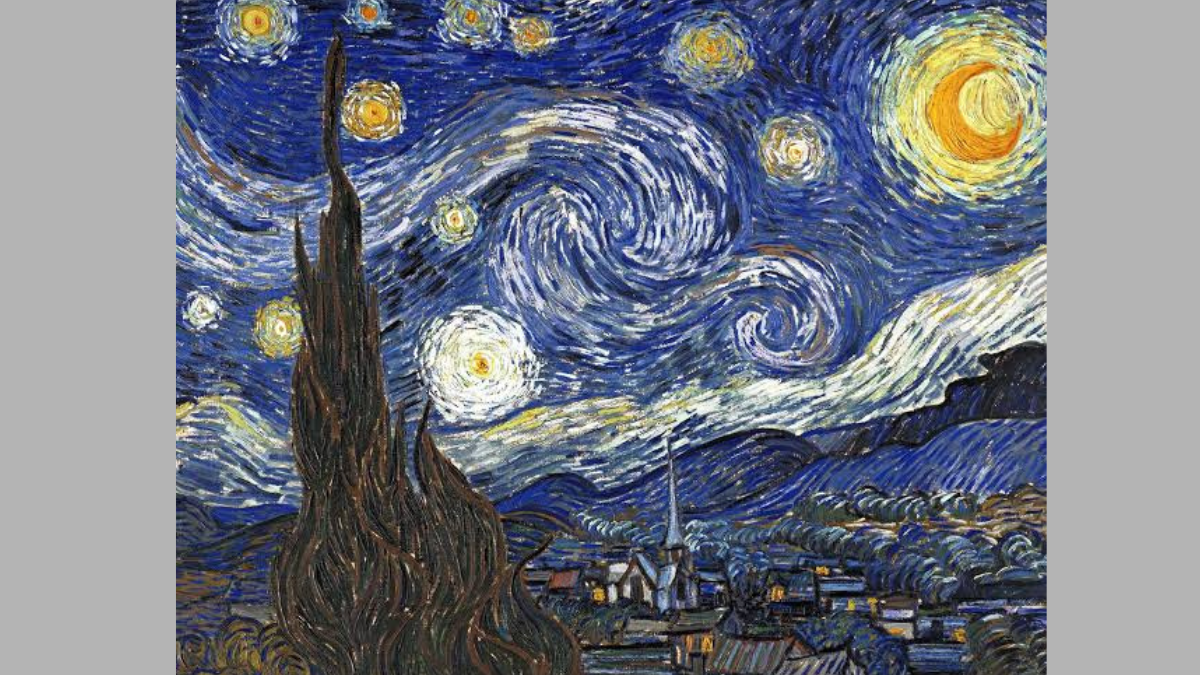

Have you ever looked at a painting filled with bright yellow stars, beautiful flowers, or a peaceful village and wondered who created it? One artist who made these wonderful pictures was Vincent van Gogh. He was a famous Dutch painter whose colorful artwork continues to inspire children, artists, and art lovers around the world.
This Vincent van Gogh biography for kids takes you on a journey through the life of a remarkable artist. You will discover where he was born, what he enjoyed as a child, how he learned to paint, and why his artwork became so famous. You will also explore some of his best-known paintings, including The Starry Night, Sunflowers, and The Bedroom.
Vincent did not become a famous artist overnight. His life included many challenges, changes, and difficult moments. However, he continued to practise his art and express his feelings through colors and paintings.
Although he lived for only 37 years, he created hundreds of paintings and drawings. Today, his artwork can be seen in famous museums, and millions of people admire his special painting style.
Let’s discover the fascinating story of Vincent van Gogh!
1. Who Was Vincent van Gogh?
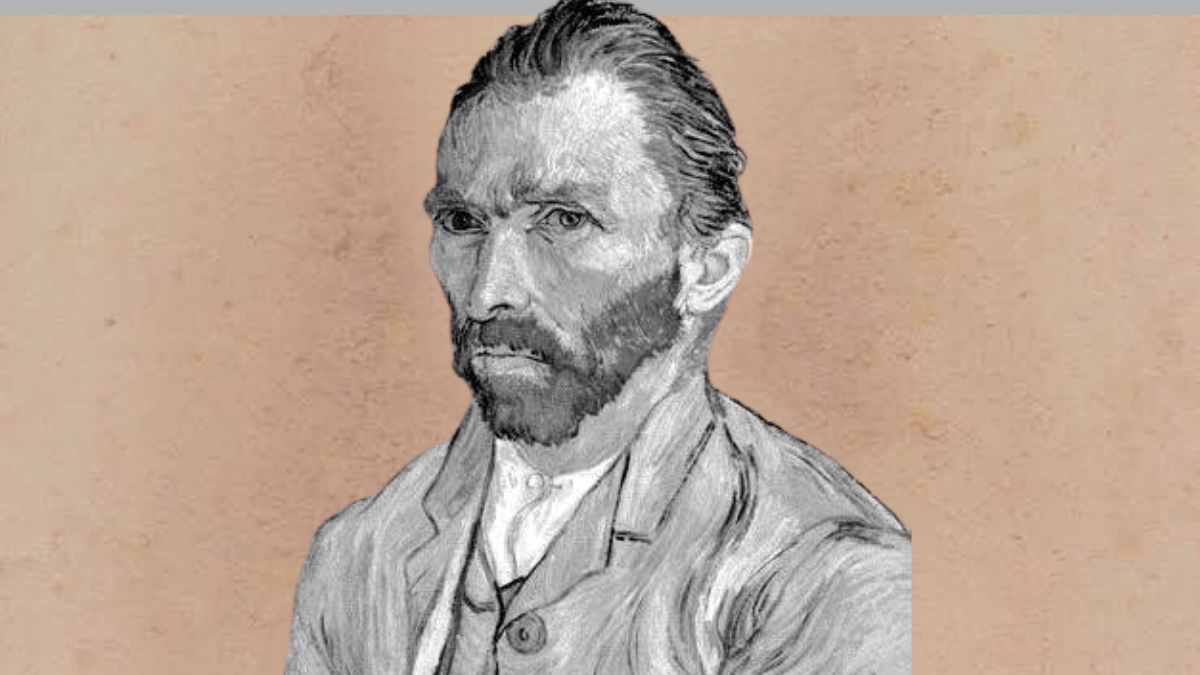
Vincent van Gogh was a Dutch painter who became one of the most famous artists in history. He was born on March 30, 1853, in a small village called Zundert in the Netherlands.
His full name was Vincent Willem van Gogh. He is especially remembered for using bright colors, thick paint, and energetic brushstrokes. His paintings often showed flowers, landscapes, buildings, people, and beautiful scenes from everyday life.
Van Gogh belonged to a group of artists known as Post-Impressionists. These artists explored new ways of showing the world through color, shapes, and personal feelings.
Unlike some painters who tried to make every picture look perfectly realistic, Vincent wanted his artwork to communicate emotions. He believed that colors could make a painting feel exciting, peaceful, warm, or even mysterious.
He painted many subjects that children can recognize, such as:
- Beautiful flowers and gardens.
- Bright stars in the night sky.
- Country roads and green fields.
- Houses, bedrooms, and village streets.
- Portraits of people and himself.
Vincent’s paintings are now displayed in important museums, including the Van Gogh Museum in Amsterdam.
For more information about his life, paintings, and artistic journey, visit the official Van Gogh Museum.
2. Vincent van Gogh’s Childhood and Family
Vincent grew up in a family with strong religious traditions. His father, Theodorus van Gogh, was a Protestant minister, while his mother, Anna Cornelia Carbentus, enjoyed drawing and nature.
He was the eldest surviving child in a family of six children. His younger brother Theo became one of the most important people in his life.
As a child, Vincent enjoyed exploring the countryside around his home. He liked observing plants, flowers, trees, and other natural things. These early experiences helped develop his interest in nature and art.
His mother encouraged creative activities, and drawing became one of the ways he explored the world around him.
Vincent attended different schools during his childhood. However, his education was not always easy or consistent. He spent some time at boarding schools and later studied at a secondary school in Tilburg.
He was interested in languages, books, and drawing. He also enjoyed walking outside and observing the natural world.
His childhood was important because it introduced him to many subjects that later appeared in his paintings.
3. Vincent’s Love for Drawing and Art
Vincent developed an interest in drawing when he was young, but he did not immediately decide to become a professional painter.
During his teenage years, he continued his education and explored different interests. His family also helped him find employment opportunities.
He began working at an art dealership when he was around 16 years old. This experience introduced him to paintings, artists, and the business side of the art world.
Although he learned about artwork through this job, he eventually became unhappy with the work.
He also tried several other occupations, including teaching and religious work. These experiences helped him understand people and everyday life.
Eventually, Vincent realized that painting was the activity he wanted to pursue.
In 1880, when he was 27 years old, he decided to focus seriously on becoming an artist.
This was a major turning point in his life.
4. How Vincent van Gogh Became an Artist
Vincent did not attend a famous art school for many years before becoming a painter. Instead, he spent a great deal of time practising drawing, studying other artists, and learning different techniques.
His younger brother Theo supported him financially and emotionally. This support allowed Vincent to spend more time creating artwork.
Theo also worked in the art business and understood how important painting was to his brother.
Vincent sent many letters to Theo. These letters discussed his daily life, artistic ideas, money, and the paintings he was creating.
He practised drawing ordinary people, workers, landscapes, and buildings. He also studied how light and shadows changed the appearance of objects.
In the early years of his career, Vincent mostly used dark and earthy colors.
One of his first major paintings was The Potato Eaters, created in 1885. It shows a group of people sitting around a table and eating potatoes.
The painting was inspired by the lives of hardworking farming families. Vincent wanted to show their simple lifestyle and the effort involved in earning a living.
This artwork demonstrates how much he cared about ordinary people and their everyday experiences.
5. Vincent van Gogh Moves to Paris
In 1886, Vincent moved to Paris, France, where his brother Theo was living.
Paris was an important center for artists during that period. Many creative people lived, worked, and shared new ideas there.
Vincent met several artists and learned about different painting styles. He also discovered new approaches to color and brushwork.
Some of the artists he encountered included:
- Camille Pissarro.
- Paul Gauguin.
- Henri de Toulouse-Lautrec.
- Paul Signac.
- Georges Seurat.
These artists helped expose Vincent to new ways of creating pictures.
During this period, he began using brighter colors instead of relying mainly on dark brown and earthy shades.
He also experimented with short brushstrokes and contrasting colors.
For example, he discovered that placing blue and orange or yellow and purple near each other could make a painting look more vibrant.
Paris played an important role in developing the colorful style that later made him famous.
6. Vincent van Gogh’s Famous Painting Style
Vincent van Gogh developed a painting style that was easy to recognize.
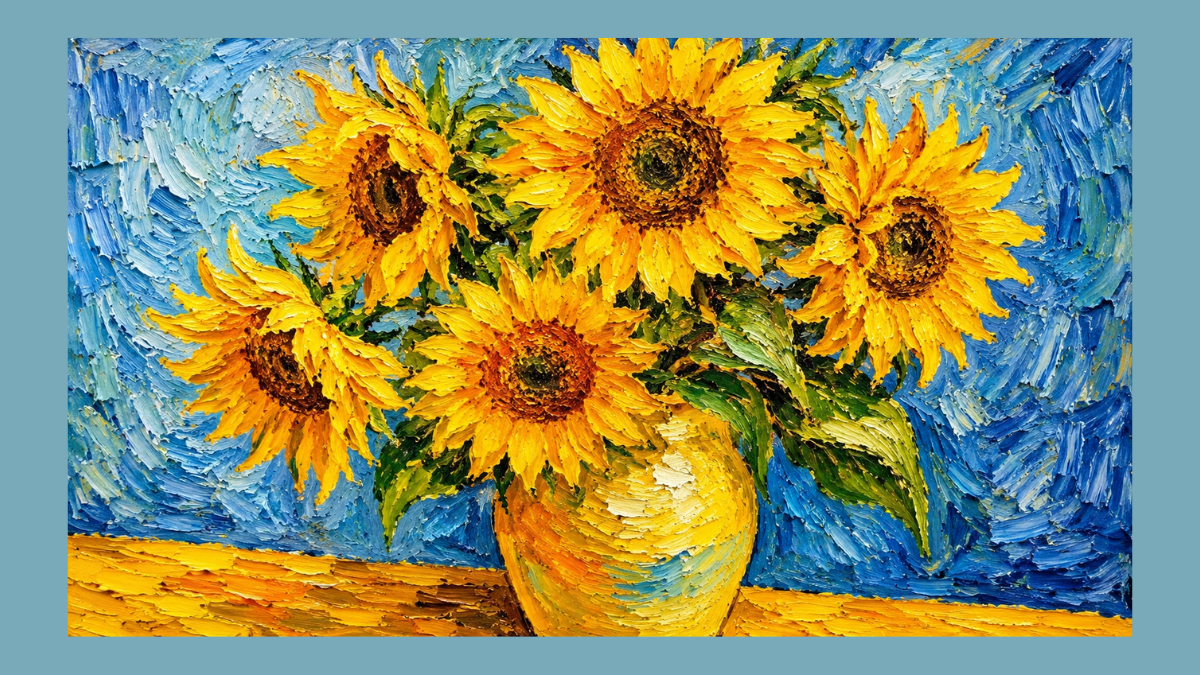
His artwork often included strong colors, thick paint, and visible brushstrokes. Instead of hiding every mark made by his brush, he allowed the texture to become an important part of the picture.
This technique is sometimes called impasto. It means applying paint thickly so that it creates a raised surface.
Here are some important features of his style:
Bright and Beautiful Colors
Vincent loved using yellow, blue, green, orange, and other strong colors.
He often used colors to express feelings rather than simply copying the exact appearance of an object.
Thick Brushstrokes
His paintings frequently contain visible lines and marks made by his paintbrush.
These marks can make the sky appear to move, flowers look lively, and landscapes feel energetic.
Emotional Expression
Vincent believed that paintings could communicate emotions.
His artwork sometimes feels joyful, peaceful, dramatic, or thoughtful.
Nature and Everyday Life
He frequently painted things he saw around him, including gardens, trees, fields, buildings, and ordinary people.
His ability to turn everyday subjects into expressive artwork helped make his paintings special.
7. The Starry Night: One of His Most Famous Paintings
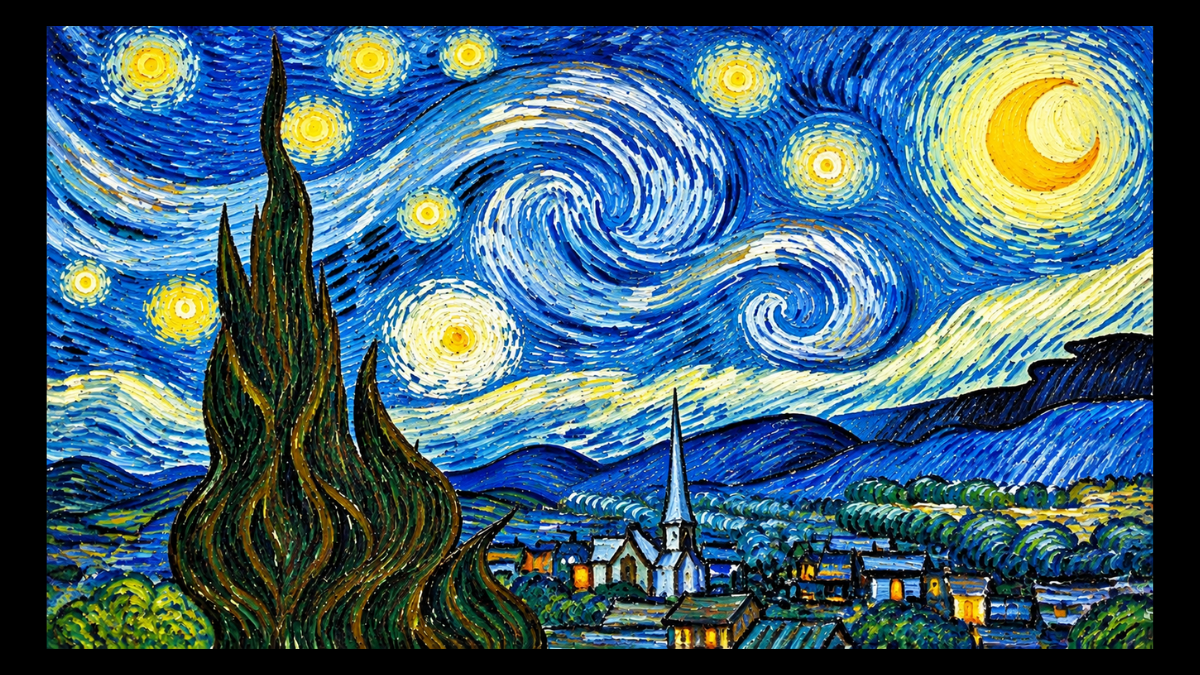
One of Vincent van Gogh’s most recognized paintings is The Starry Night.
He created this famous artwork in 1889 while staying at an institution in Saint-Rémy-de-Provence, France.
The painting shows a beautiful night sky filled with bright stars, a glowing moon, swirling clouds, and a quiet village below.
A tall cypress tree rises in the foreground, creating a strong contrast with the bright sky.
The swirling patterns make the sky appear full of movement and energy.
Vincent used different shades of blue and yellow to create an unusual and memorable scene.
Although the painting was inspired by the view around him, it was not simply an exact copy of what he could see outside his window.
He used his imagination and artistic ideas to create the final composition.
Today, The Starry Night is displayed at the Museum of Modern Art in New York City.
It remains one of the most recognizable paintings in the world.
8. Sunflowers: Vincent’s Beautiful Flower Paintings
Vincent van Gogh loved painting flowers, especially sunflowers.
He created several sunflower paintings during his time in Arles, France, in 1888 and 1889.
These paintings show sunflowers in different stages, from fresh flowers to those beginning to wilt.
He used many shades of yellow and orange to create beautiful compositions.
For Vincent, sunflowers were more than ordinary flowers. They became an important subject through which he explored color, light, and artistic expression.
He also created the paintings to decorate a room in the Yellow House, where he hoped to welcome fellow artists.
His sunflower series became one of the most famous flower collections in art history.
Children can learn several interesting lessons from these paintings:
- One subject can be painted in many different ways.
- Colors can change the mood of an artwork.
- Flowers can make wonderful subjects for painting.
- Artists can use imagination to create something unique.
9. The Bedroom: A Painting of Vincent’s Room
Another well-known painting by Vincent is The Bedroom.
He painted this artwork in 1888 while living in the Yellow House in Arles.
The painting shows his simple bedroom, including a bed, chairs, a small table, pictures on the walls, and a window.
Vincent used bright colors and simple shapes to create the scene.
The room looks peaceful and organized, although the perspective and proportions are not perfectly realistic.
He created several versions of this painting.
The artwork gives viewers an interesting look at the place where Vincent lived and worked.
It also demonstrates that ordinary rooms and everyday objects can become beautiful subjects for art.
10. Vincent’s Life in Arles, France
In February 1888, Vincent moved to Arles in the south of France.
He was attracted by the bright sunlight, beautiful countryside, and colorful landscapes.
He hoped the area would provide inspiration for his paintings.
During his time in Arles, Vincent created many important artworks, including paintings of sunflowers, gardens, houses, and landscapes.
He lived in a building known as the Yellow House.
Vincent dreamed of creating a place where artists could live together, share ideas, and work on their paintings.
His friend Paul Gauguin eventually joined him for a short period in 1888.
However, the two artists had different personalities and approaches to art. Their time together became difficult, and they eventually separated.
Despite these challenges, Vincent continued creating paintings that would become important parts of his artistic legacy.
11. Vincent van Gogh and His Brother Theo
Theo van Gogh was one of the most important people in Vincent’s life.
He was not only Vincent’s younger brother but also his supporter, friend, and trusted correspondent.
Theo worked in the art trade and helped Vincent financially during much of his artistic career.
Without this support, Vincent would have found it much harder to afford painting materials, food, and accommodation.
The brothers regularly exchanged letters.
Through these letters, historians have learned about Vincent’s thoughts, daily experiences, artistic plans, and relationships.
Theo believed in his brother’s abilities even when Vincent struggled to find recognition.
Their relationship reminds us how important family encouragement and friendship can be.
Theo also helped preserve Vincent’s paintings and letters after his death.
His wife, Johanna van Gogh-Bonger, later played an important role in sharing Vincent’s work with a wider audience.
12. Challenges in Vincent van Gogh’s Life
Vincent’s life was not always easy.
He experienced financial difficulties, loneliness, and periods of poor mental health.
He sometimes struggled to maintain relationships and found it difficult to settle into everyday life.
During his time in Arles, he experienced a serious personal crisis that involved the well-known incident in which part of his left ear was injured.
Later, he spent time receiving care at an institution in Saint-Rémy.
Even during difficult periods, he continued painting whenever he was able.
His experiences remind us that creative people can face personal challenges, just like everyone else.
It is important to understand that Vincent’s difficulties were part of his life, but they do not define his entire story.
He was also a hardworking artist, a loving brother, a careful observer of nature, and a person with a strong desire to create meaningful artwork.
13. Vincent van Gogh’s Final Years
In 1890, Vincent moved to Auvers-sur-Oise, a village near Paris.
He continued painting and created many landscapes, portraits, and pictures of the surrounding countryside.
During this period, he received support from Dr. Paul Gachet, who was also interested in art.
Vincent worked with great energy and produced many paintings during his final months.
One famous artwork from this period is Wheatfield with Crows, which shows a dramatic wheat field beneath a cloudy sky.
Vincent died on July 29, 1890, at the age of 37.
His death was a sad moment for his family and friends.
Although he did not become widely famous during his lifetime, his paintings later received enormous attention.
His brother Theo died in 1891, but Theo’s wife, Johanna, helped preserve and promote Vincent’s artwork.
Today, people around the world recognize his name and admire his paintings.
14. Why Is Vincent van Gogh Famous Today?
Vincent van Gogh became famous because of his unique artistic style and the emotional power of his paintings.
His work influenced many later artists and helped shape the development of modern art.
People admire his ability to use colors, textures, and brushstrokes in creative ways.
His paintings also show how ordinary subjects can become extraordinary when viewed through an artist’s imagination.
For example, a simple vase of flowers became a beautiful series of sunflower paintings.
A quiet night became The Starry Night.
An ordinary bedroom became an artwork that people still study and admire.
His story also inspires young artists to practise, experiment, and develop their own creative styles.
Vincent’s success did not happen immediately. It took years of learning, effort, and dedication.
That is one of the most valuable lessons children can take from his life.
15. Interesting Facts About Vincent van Gogh for Kids
Here are some fun and educational facts about the famous Dutch painter:
- Vincent van Gogh was born on March 30, 1853.
- He was from the Netherlands.
- His younger brother was named Theo.
- He decided to become an artist at the age of 27.
- His artistic career lasted about ten years.
- He created around 900 paintings.
- He also made more than 1,000 drawings and other works on paper.
- The Starry Night was painted in 1889.
- He created several paintings featuring sunflowers.
- He loved painting landscapes, flowers, and portraits.
- He lived in France during important periods of his artistic career.
- His famous painting style included thick paint and visible brushstrokes.
- His brother Theo supported him throughout much of his career.
- Vincent’s paintings became much more famous after his death.
- The Van Gogh Museum in Amsterdam is dedicated to his life and artwork.
These facts help children understand why Vincent remains an important figure in art history.
16. What Can Children Learn From Vincent van Gogh?
Vincent’s life offers several lessons for children who enjoy drawing, painting, or other creative activities.
Keep Practising
Vincent spent many years improving his drawing and painting skills.
Children can learn that becoming better at something takes time and regular practice.
Be Creative
He developed a personal way of using colors and brushstrokes.
Young artists should feel comfortable experimenting with different ideas.
Observe the World
Vincent often painted things he saw around him.
Children can find inspiration in flowers, trees, buildings, animals, and everyday objects.
Learn From Mistakes
Not every painting needs to be perfect.
Trying different techniques and learning from mistakes can help artists improve.
Follow Your Interests
Vincent tried several occupations before deciding to become an artist.
His story shows the importance of discovering activities that bring happiness and purpose.
17. Easy Vincent van Gogh Art Activities for Kids
Children can enjoy learning about Vincent by creating their own artwork inspired by his style.
Here are some simple activities.
Draw a Starry Night
Use blue paper or a white drawing sheet with blue paint.
Add a moon, stars, and swirling lines to create a night sky.
Paint a Sunflower
Draw a large circle in the middle of a page.
Add yellow petals around it and use brown paint for the center.
Create a Colorful Landscape
Draw hills, trees, houses, and a bright sky.
Experiment with different colors rather than trying to copy a photograph exactly.
Make a Self-Portrait
Look in a mirror and draw your face.
Choose colors that express your personality and feelings.
Experiment With Brushstrokes
Try using short lines, curved marks, and thick paint.
See how different brush movements change the appearance of your picture.
These activities help children explore creativity while learning about one of history’s most famous painters.
Conclusion
Vincent van Gogh was an extraordinary artist whose paintings continue to inspire people of all ages. His life story shows that becoming successful can take time, and that learning a new skill requires patience, creativity, and dedication.
From his childhood in the Netherlands to his artistic journey in France, Vincent explored different ways of expressing the world around him. His famous paintings, including The Starry Night, Sunflowers, and The Bedroom, demonstrate his love for nature, beautiful colors, and everyday life.
Although he faced many personal challenges, he continued creating artwork that would eventually become some of the most admired paintings in history.
This Vincent van Gogh biography for kids teaches an important lesson: everyone has their own creative abilities, and those abilities can grow through practice and imagination.
Children who enjoy drawing and painting can take inspiration from Vincent’s journey. They do not need expensive materials or perfect skills to begin creating something special. Sometimes, a simple idea, a few colors, and a little imagination are enough to make beautiful art.
Frequently Asked Questions (FAQs)
1. Who was Vincent van Gogh?
Vincent van Gogh was a famous Dutch painter born on March 30, 1853. He became well known for his colorful paintings, expressive brushstrokes, and artwork inspired by nature and everyday life.
2. When was Vincent van Gogh born?
Vincent van Gogh was born on March 30, 1853, in Zundert, a village in the Netherlands.
3. How old was Vincent van Gogh when he died?
Vincent van Gogh died on July 29, 1890, at the age of 37.
4. What is Vincent van Gogh’s most famous painting?
One of his most famous paintings is The Starry Night, created in 1889. It shows a beautiful night sky with swirling clouds, bright stars, and a quiet village.
5. Why did Vincent van Gogh use bright colors?
Vincent used bright colors to express emotions and make his artwork more interesting. He believed that colors could communicate feelings and give paintings a special atmosphere.
6. How many paintings did Vincent van Gogh create?
Vincent created around 900 paintings during his artistic career. He also produced more than 1,000 drawings and other works on paper.
7. Who was Theo van Gogh?
Theo van Gogh was Vincent’s younger brother. He supported Vincent financially, encouraged his artistic career, and exchanged many letters with him.
8. What are Vincent van Gogh’s most famous paintings?
Some of his best-known paintings include The Starry Night, Sunflowers, The Potato Eaters, The Bedroom, and Wheatfield with Crows.
9. Did Vincent van Gogh become famous during his lifetime?
Vincent received limited recognition during his lifetime. His paintings became widely admired after his death, partly because of the efforts of his brother Theo’s wife, Johanna.
10. What can kids learn from Vincent van Gogh?
Children can learn to practise regularly, experiment with colors, observe nature, express their creativity, and remain dedicated to their interests.
If you enjoy exploring famous paintings and creative masterpieces, read our guide to The Most Beautiful Artworks That Inspire the World, featuring some of the world’s most inspiring works of art.


