
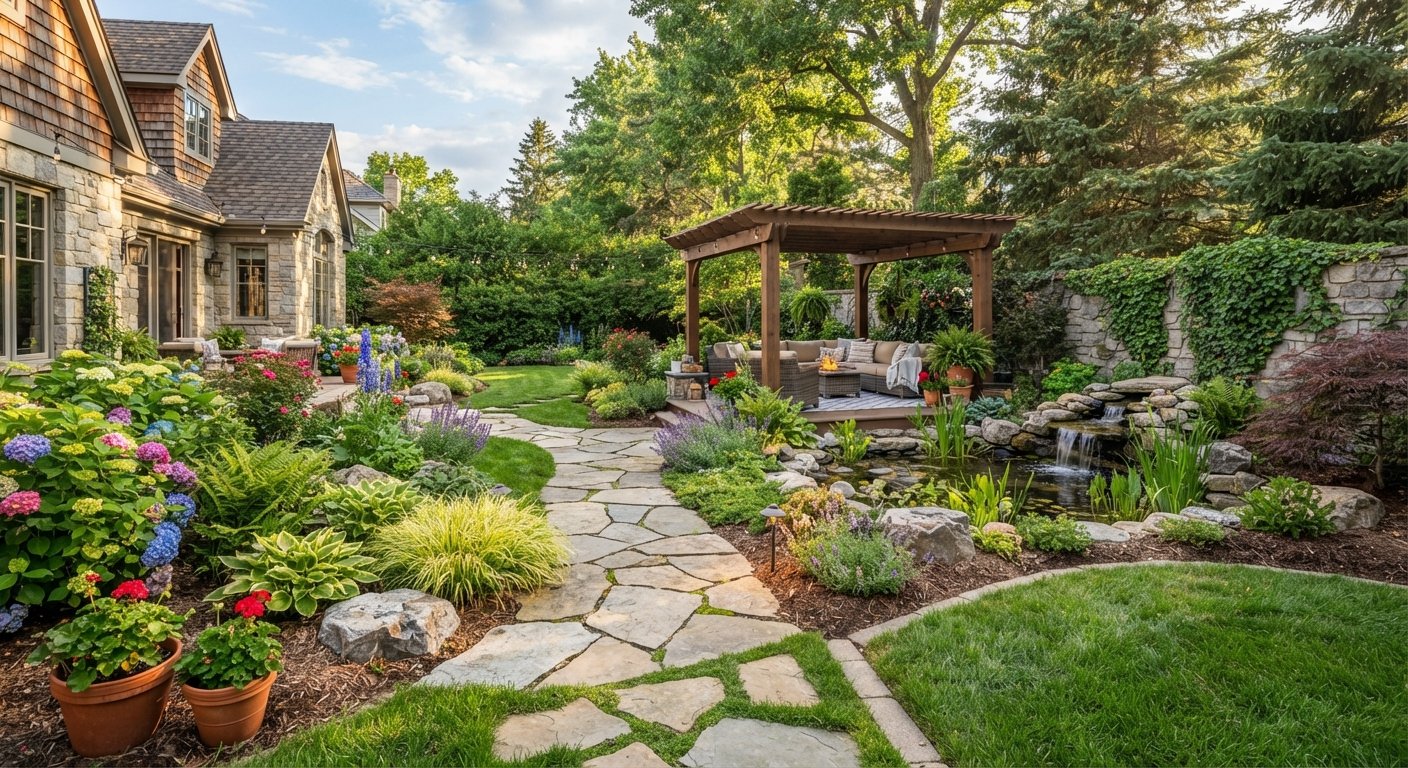

Introduction to Landscaping Ideas
Landscaping ideas can help you turn an ordinary yard into a beautiful, relaxing, and useful outdoor space. Whether you have a large backyard, a small front garden, a narrow side yard, or just a tiny patio, the right design can make a big difference. With a little planning, suitable plants, and creative touches, you can create an outdoor area that reflects your style and fits your budget.
Landscaping isn’t only about planting flowers or cutting grass. It also includes choosing trees, arranging pathways, adding outdoor lighting, improving drainage, creating seating areas, and making the most of every available space. In fact, even a simple change, such as adding a flower bed beside the entrance, can make your home feel more welcoming.
The good news is that you don’t need to hire an expensive designer or buy costly materials to improve your yard. Many attractive projects can be completed gradually, allowing you to spread the cost over time. From modern garden layouts to natural stone paths and colorful flower borders, there are countless ways to make your outdoor area more enjoyable.
In this guide, you’ll discover practical landscaping ideas for different spaces, budgets, styles, and experience levels. You’ll also learn how to select plants, avoid common mistakes, and create a garden that’s attractive without becoming difficult to maintain.
Why Landscaping Matters for Your Home
A well-planned landscape can improve the appearance and everyday use of your property. It can create a peaceful place to relax, provide room for family activities, and make outdoor areas more comfortable.
Here are some important benefits of thoughtful landscaping:
- Improves curb appeal: A tidy lawn, attractive entrance, and colorful plants can make your home look more inviting.
- Creates useful outdoor spaces: You can add seating, dining areas, play spaces, or a small vegetable garden.
- Supports local wildlife: Suitable flowers, shrubs, and trees can provide food and shelter for pollinators and birds.
- Helps manage rainwater: Proper grading, rain gardens, and permeable surfaces can help water soak into the ground.
- Adds shade and privacy: Trees, hedges, and carefully placed screens can make outdoor spaces more comfortable.
- Makes your property more personal: Your choice of plants, materials, colors, and decorations can reflect your taste.
However, successful landscaping begins with realistic expectations. A large garden filled with delicate flowers may look wonderful, but it can require regular watering, pruning, and replacement. By contrast, a design based on suitable local plants may offer beauty with less work.
The goal is to create a landscape that looks good and works well for your household.
Front Yard Landscaping Ideas for a Welcoming Entrance
Your front yard is often the first part of your home that visitors notice. Fortunately, you don’t need a large lawn to create an attractive entrance. Simple changes can make the area look neat, balanced, and inviting.
Create a Beautiful Garden Border
Planting flowers and shrubs along the front of your house is an easy way to add color and structure. Choose plants with different heights so that the garden looks interesting from the street.
For example, you could place taller shrubs near the walls, medium-sized flowering plants in the middle, and low-growing ground covers along the edge.
Keep enough space between plants for healthy growth. A crowded garden may look full at first, but it can become difficult to maintain as the plants mature.
Upgrade Your Front Walkway
A clear, attractive pathway can connect the driveway, gate, and front door. Consider using materials such as:
- Natural stone for a traditional appearance.
- Concrete pavers for a clean, modern look.
- Brick for a classic garden style.
- Gravel for an informal and often affordable path.
- Stepping stones surrounded by suitable ground cover.
Make sure the walkway is stable, easy to use, and suitable for people with different mobility needs. In rainy areas, pay attention to drainage and avoid surfaces that become dangerously slippery.
Add Symmetry Around the Entrance
Matching planters on both sides of a doorway can create a balanced appearance. You could use two similar pots with small shrubs, flowering plants, or ornamental grasses.
Symmetry works particularly well with traditional homes. For a more relaxed style, use different containers with a similar color or shape instead.
Keep the Lawn Simple and Healthy
A healthy lawn can provide an attractive green background for flowers and shrubs. However, grass isn’t necessary in every part of the front yard. If mowing is difficult or water is limited, consider replacing some lawn areas with garden beds, mulch, or suitable ground cover.
Choose grass that matches your climate and soil rather than selecting a variety simply because it looks good in a photograph.
Backyard Landscaping Ideas for Relaxation and Family Time
Your backyard can become an extension of your living space. With the right layout, it can support outdoor meals, quiet reading, family gatherings, and gardening.
Design an Outdoor Seating Area
A comfortable seating area can make even a small backyard feel special. Place a bench under a tree, arrange chairs around a small table, or create a simple patio beside the house.
Before buying furniture, consider how many people will use the space and how much room they need to move around comfortably.
Useful additions include:
- Weather-resistant chairs and tables.
- Outdoor cushions made for exterior use.
- Shade from a tree, umbrella, or pergola.
- Containers with colorful flowers.
- Soft lighting for evening use.
Keep the furniture away from areas where rainwater collects. If your climate has strong sun or heavy rain, choose materials that can withstand local conditions.
Build a Small Outdoor Dining Space
If you enjoy eating outside, consider creating a dining area close to the kitchen. A paved surface or stable deck can provide a suitable base for a table and chairs.
For a low-cost option, use an existing patio and improve it with potted plants, a clean table, and simple lighting. You can always upgrade the space later.
Leave enough room for chairs to move back and for people to walk around the table without stepping into flower beds.
Add a Relaxing Garden Corner
Sometimes, a small quiet corner is all you need. A wooden bench, a few leafy plants, and a narrow pathway can create a peaceful retreat.
For additional privacy, use suitable shrubs, trellises, or climbing plants. Check the mature size and growth habits of any plant before placing it near a wall, fence, or seating area.
A relaxing garden doesn’t need many decorations. A simple design often feels calmer and is easier to care for.
Small Garden Landscaping Ideas That Make Every Inch Count
Small outdoor spaces can be attractive and useful when each feature has a clear purpose. Instead of trying to fit everything into the yard, focus on a few elements that work together.
Use Vertical Gardening
Vertical gardening is an excellent option when ground space is limited. It allows you to grow plants upward rather than spreading them across the floor.
You can use:
- Wall-mounted planters.
- Shelves designed for outdoor use.
- Trellises for suitable climbing plants.
- Hanging baskets secured safely.
- Narrow vertical growing systems for herbs.
Before installing anything, check the wall’s strength, sunlight exposure, and access to water. Heavy wet planters can put considerable weight on supports, so proper installation matters.
Choose Multi-Purpose Furniture
Furniture that serves more than one purpose can help reduce clutter. A storage bench, for example, provides seating and a place to keep gardening tools or cushions.
Foldable chairs and compact tables are also useful because they can be stored when they’re not needed.
Create the Illusion of More Space
A small garden can feel larger when the layout is simple and open. Try these ideas:
- Use a limited color palette for a coordinated look.
- Place taller plants near boundaries and shorter plants closer to the center.
- Keep pathways clear.
- Choose furniture that fits the scale of the yard.
- Use mirrors only where they’re safe, weather-resistant, and unlikely to confuse birds.
- Avoid filling every empty space with pots and decorations.
A narrow path that leads toward a focal point, such as a flowering shrub or small sculpture, can also make the garden feel deeper.
Low-Cost Landscaping Ideas for a Beautiful Yard on a Budget
Landscaping doesn’t have to be expensive. In many cases, careful planning and a few simple projects can produce noticeable improvements without a major investment.
Start With Cleaning and Trimming
Before buying new plants, remove weeds, collect fallen branches, trim dead growth where appropriate, and clean existing pathways.
You may discover that the garden already has attractive features hidden beneath overgrown plants or clutter.
Use Mulch in Garden Beds
Organic mulch, such as shredded bark or suitable wood chips, can help conserve soil moisture, reduce weed growth, and protect the soil surface.
Apply mulch according to the needs of the plants and local conditions. Keep it away from direct contact with tree trunks and plant stems to reduce the risk of rot and other problems.
Reuse Suitable Materials
Old materials may be useful in a new landscape design. For example, you could reuse clean bricks for a garden edge or turn suitable containers into planters.
Before reusing an item, check that it’s safe for outdoor use and won’t release harmful substances into the soil. Avoid materials treated with unknown chemicals, especially around edible plants.
Grow Plants From Seeds or Cuttings
Seeds and cuttings can be more affordable than buying mature plants. Many annual flowers, herbs, and suitable perennials can be grown from seed.
Some shrubs and other plants can be propagated from cuttings, although success depends on the species and method.
Start with a small number of plants and learn what grows well in your garden. This approach is affordable and helps you understand your local growing conditions.
Improve the Garden in Stages
Rather than renovating the entire yard at once, divide the project into manageable steps.
For example:
- First, clean the area and improve the soil.
- Next, create the main path or garden borders.
- Then, plant trees, shrubs, and flowers.
- Finally, add lighting, seating, and decorative features.
This staged approach helps you control costs and adjust the design as you learn more about the space.
Modern Landscaping Ideas for a Clean and Stylish Look
Modern landscaping often combines simple shapes, practical materials, and carefully selected plants. The aim isn’t to remove all natural beauty but to create a balanced outdoor space without unnecessary clutter.
Combine Stone, Wood, and Greenery
A modern garden can include paving stones, wooden seating, gravel, and plants with interesting shapes. The contrast between hard surfaces and soft greenery creates visual interest.
Use materials that suit your climate. In hot regions, dark paving can become very warm under direct sunlight. In wet conditions, select surfaces that provide reliable grip.
Choose a Limited Color Scheme
A simple palette can make a landscape feel organized. You might combine gray paving, natural wood, green foliage, and flowers in one or two main colors.
This doesn’t mean every plant must match. Instead, use a consistent theme so the different areas feel connected.
Add Architectural Plants
Plants with strong shapes can create a modern appearance. Depending on your climate, suitable choices may include ornamental grasses, compact evergreen shrubs, or plants with bold leaves.
Always check whether a plant is appropriate for your region. Some popular ornamental species can become invasive or require more water than expected.
Install Simple Garden Lighting
Outdoor lighting can make paths and seating areas easier to use after sunset. It can also highlight a tree, wall, or attractive planting bed.
Consider low-voltage or solar-powered lights where suitable. Solar lights generally perform best in locations with enough direct sunlight, while wired lighting may provide more consistent output.
Choose outdoor-rated equipment, protect electrical connections from moisture, and follow local electrical safety requirements.
Flower Garden Landscaping Ideas for Color and Beauty
Flowers can make a landscape feel lively and welcoming. By selecting plants with different flowering periods, you can enjoy color throughout more of the growing season.
Mix Annuals and Perennials
Annual flowers generally complete their life cycle in one growing season, while many perennials return for several years under suitable conditions.
Combining the two can provide both variety and continuity. Annuals offer flexible seasonal color, while perennials can form the lasting structure of a flower bed.
Plan Flowers by Height
Arrange taller plants toward the back of a border or in a central position within an island bed. Place medium-sized plants in the middle and shorter flowers along the front.
This arrangement helps more plants receive sunlight and makes the garden easier to view.
Create a Pollinator-Friendly Garden
Flowers that provide nectar and pollen can support bees, butterflies, and other beneficial insects.
To make the garden more welcoming:
- Choose flowers that suit your local climate.
- Include different flowering periods.
- Plant several examples of suitable flowering species together.
- Avoid unnecessary pesticide use.
- Provide clean water in a shallow, safely designed dish.
- Prefer locally appropriate native plants where practical.
Native plants can be especially valuable because local wildlife may already depend on them. However, the best choices will vary by region.
Use Containers for Flexible Color
Pots allow you to change the garden’s appearance without digging up permanent beds. Place containers near an entrance, patio, or sunny wall, and choose plants according to the amount of light available.
Containers dry out faster than many garden beds, so check their moisture regularly. Ensure that pots have drainage holes and use an appropriate growing medium.
Low-Maintenance Landscaping Ideas for Busy Homeowners
A beautiful garden should fit your lifestyle. If you don’t have much time for regular care, choose a design that reduces unnecessary work.
Select Plants That Suit Your Climate
Plants adapted to local conditions are often easier to maintain than those that need constant attention. Consider temperature, rainfall, sunlight, soil type, and seasonal changes before choosing plants.
A plant that thrives in one region may struggle in another, even if both gardens look similar.
Group Plants With Similar Water Needs
Place plants with similar watering requirements together. This practice makes irrigation easier and helps prevent overwatering some plants while others remain too dry.
For example, plants that prefer dry soil shouldn’t usually share an irrigation zone with moisture-loving plants.
Reduce Unnecessary Lawn Areas
Lawns can require regular mowing, watering, feeding, and weed control. Replacing selected sections with suitable ground cover, mulched beds, or patios may reduce the work involved.
Don’t remove all vegetation without considering erosion, drainage, and local environmental needs. Ground cover should be suitable for the site and able to establish successfully.
Choose Durable Garden Features
Long-lasting paths, stable edging, and weather-resistant seating may cost more initially but can reduce replacement expenses.
The best choice depends on your climate, maintenance preferences, and available budget. A simple, durable design often works better than a complicated layout filled with fragile decorations.
Landscaping Ideas for Sloped Yards and Uneven Ground
Sloped yards can be challenging because rainwater may run downhill, soil can erode, and some areas may be difficult to access. However, the right design can turn a slope into an attractive feature.
Create Terraced Garden Beds
Terraces divide a slope into flatter sections. They can provide useful planting areas and make a steep garden easier to organize.
However, retaining walls must be designed to handle soil pressure, drainage, and local conditions. Large or high retaining walls may require professional design and permits.
Use Suitable Ground Cover
Plants with spreading roots can help protect soil from erosion when they are appropriate for the site. Choose species suited to the slope’s sunlight, moisture, and soil conditions.
Avoid planting invasive species simply because they grow quickly.
Plan Water Flow Carefully
Water should be directed away from buildings and areas where it could damage neighboring properties. A professional may be needed when the slope is steep, the soil is unstable, or runoff problems already exist.
Never assume that adding a wall or a drainage pipe will solve every problem. The whole drainage pattern should be considered before construction begins.
Sustainable Landscaping Ideas for a Greener Outdoor Space
Sustainable landscaping aims to use resources wisely while supporting a healthy outdoor environment. Small decisions can make a meaningful difference over time.
Choose Native and Climate-Adapted Plants
Native plants often support local wildlife and may require less special care once established. Climate-adapted plants can also perform well when they match the garden’s conditions.
Still, native plants aren’t automatically suitable for every location in a yard. Some need wet soil, while others prefer dry, sunny areas.
Collect Rainwater Where Permitted
Rain barrels and other suitable collection systems can provide water for gardens. Install them securely, use covered containers, and follow local rules for rainwater collection.
Collected water should be used appropriately, especially when watering edible crops.
Improve Soil Naturally
Compost made from suitable plant waste can improve soil structure and support healthy plant growth. Add compost according to the soil’s needs rather than assuming that more is always better.
A soil test can help identify pH problems or nutrient deficiencies before you spend money on fertilizers.
Reduce Chemical Use
Hand weeding, mulching, proper plant spacing, and choosing resistant varieties can reduce the need for some garden chemicals.
When a pest or disease appears, identify the problem first. Follow product labels and local safety guidance if treatment is necessary.
Outdoor Lighting and Water Features for Extra Appeal
Small decorative features can give a garden a distinct personality. Lighting and water features are useful options, provided they suit the space and can be maintained safely.
Highlight Paths and Trees
Path lights can improve visibility, while carefully directed spotlights can draw attention to attractive trees or architectural details.
Avoid excessive brightness and lighting that shines into neighboring homes. Choose outdoor-rated equipment and consider timers or motion sensors to save energy.
Add a Small Water Feature
A small fountain or recirculating water feature can create a pleasant atmosphere. Compact models may work well on patios or in small garden corners.
Before installation, consider cleaning requirements, electricity use, water loss, and child safety. In warm climates, standing water can also attract mosquitoes if it isn’t managed properly.
Decorate With a Clear Purpose
Garden art, birdbaths, decorative pots, and sculptures can add character. Choose only a few features that complement the surrounding plants and materials.
Too many decorations may make a small garden look crowded. A well-placed feature can have more impact than several unrelated items.
Choosing Landscaping Plants: A Practical Comparison
The best plants depend on your location, soil, sunlight, water supply, and preferred style. The following table offers general categories to consider rather than a universal planting list.
| Plant type | Common landscaping use | Main consideration |
|---|---|---|
| Flowering perennials | Colorful borders and beds | Match the species to local climate and sunlight |
| Evergreen shrubs | Structure and privacy | Check mature size and spacing |
| Ornamental grasses | Texture and movement | Choose suitable species and manage seasonal trimming |
| Ground covers | Covering selected bare areas | Avoid invasive varieties |
| Small ornamental trees | Shade and focal points | Check root space and mature canopy |
| Herbs | Edible container or garden beds | Provide suitable sunlight and drainage |
| Climbing plants | Trellises and vertical gardens | Check support needs and growth habits |
| Native flowering plants | Pollinator-friendly beds | Select species appropriate to your specific region |
Before purchasing plants, read their labels and ask a knowledgeable local nursery about their growing requirements. This simple step can prevent costly mistakes.
Landscaping Budget: How to Plan Your Spending
Your budget will influence the materials, plant sizes, and features you can include. A clear spending plan helps you focus on the improvements that matter most.
| Budget level | Possible projects | Planning advice |
|---|---|---|
| Very low | Cleaning, pruning, seeds, simple containers | Start with improvements using materials you already have |
| Low | Mulch, small flower beds, basic edging | Complete one area at a time |
| Moderate | Paved paths, seating, larger plantings, lighting | Compare material quality and installation costs |
| Higher | Patios, irrigation, retaining walls, mature trees | Consider professional design and site assessment |
These levels are relative, not fixed price estimates. Actual costs vary by location, labor rates, materials, transport, and project size.
Remember to include ongoing costs. Plants may need replacement, irrigation equipment requires maintenance, and wooden features may need weather protection.
It’s also wise to keep some money aside for unexpected issues, such as poor soil, damaged paving, or drainage problems discovered during construction.
Common Landscaping Mistakes to Avoid
Even attractive landscaping ideas can fail when basic planning is overlooked. Avoiding a few common mistakes can save time and money.
Choosing Plants Without Checking Their Mature Size
A small shrub can eventually become too large for its location. Check its expected height and width before planting, especially near paths, windows, fences, and foundations.
Ignoring Sunlight and Soil Conditions
A sun-loving flower may struggle in deep shade, while a plant that needs moist soil may fail in a dry, exposed bed.
Observe the garden throughout the day and choose plants based on the conditions they will actually experience.
Planting Too Closely
New plants may look small when purchased, making it tempting to place them close together. However, overcrowding can reduce airflow, increase competition, and make maintenance harder.
Follow recommended spacing and allow the landscape time to mature.
Forgetting Drainage
Water that collects near a house can damage foundations, encourage dampness, and harm plants. Check the ground’s slope and water flow before adding paving, raised beds, or retaining walls.
Trying to Do Everything at Once
Large projects can become expensive and overwhelming when there is no clear plan. Begin with the most important improvements and expand the design gradually.
Copying a Design Without Adapting It
A landscape photograph may show a beautiful garden, but its plants and materials may not suit your location. Use photographs for inspiration, then adapt the layout to your weather, soil, water supply, and lifestyle.
How to Create a Landscaping Plan Step by Step
A simple plan helps bring different landscaping ideas together into one coordinated design.
Assess your outdoor space. Measure the yard and note existing trees, paths, fences, buildings, sunny areas, shaded areas, and drainage problems.
Decide how you want to use it. List your main goals, such as improving curb appeal, growing flowers, creating a play area, or adding a place to sit outdoors.
Set a realistic budget. Decide how much you can spend initially and how much time and money you can devote to future maintenance.
Choose a design style. You might prefer a modern layout, a natural garden, a colorful flower border, or a simple low-maintenance space.
Select suitable plants and materials. Consider local growing conditions, mature plant sizes, safety, durability, and water needs.
Complete the main structural work. Where required, address drainage, paths, retaining walls, and other permanent features before planting.
Plant and finish the garden. Add trees, shrubs, flowers, mulch, containers, and suitable decorations according to your plan.
Review and improve the result. Observe how the garden performs through different weather conditions and seasons. Adjust watering, pruning, and planting choices as needed.
If your project involves major excavation, underground utilities, large retaining walls, or complex drainage, seek qualified professional advice before beginning.
Seasonal Landscaping Maintenance Tips
Regular care keeps a landscape healthy and helps prevent small issues from becoming expensive problems. The right schedule depends on your climate and the plants you grow.
| Season or period | Useful maintenance tasks |
|---|---|
| Spring | Inspect plants, remove damaged growth, prepare beds, and check irrigation |
| Summer | Monitor soil moisture, water when needed, control weeds, and inspect for pests |
| Autumn | Collect fallen leaves where necessary, add suitable compost, and prepare sensitive plants for colder weather |
| Winter | Protect vulnerable plants, inspect structures, and plan future projects where conditions allow |
In tropical or subtropical climates, rainy and dry seasons may be more useful than the traditional four-season schedule. Adapt your gardening routine to local weather patterns.
Water deeply when appropriate for the plant and soil rather than following a rigid schedule. Check soil moisture first, because frequent shallow watering can encourage weak root development in some plants.
Prune plants according to their growth habits and flowering cycles. Incorrect timing can remove flower buds or stress certain species, so check the needs of each plant before cutting.
Final Thoughts on Landscaping Ideas
The best landscaping ideas are the ones that make your outdoor space more beautiful, comfortable, and practical while fitting your budget and lifestyle. You don’t need a huge yard, expensive materials, or professional equipment to make a meaningful improvement. A clean pathway, a few well-chosen plants, a small seating area, or a colorful flower border can completely change how your garden feels.
Start by understanding your space, checking your soil and sunlight, and deciding what you want the garden to achieve. Choose plants that suit your local conditions, pay attention to drainage, and plan for the maintenance you can realistically manage. If the project is large, consider professional guidance for structural and technical work.
Most importantly, remember that a garden develops over time. You can begin with a simple design and add new features as your skills, budget, and interests grow. By using practical landscaping ideas and making thoughtful choices, you can create an outdoor space that welcomes visitors, supports nature, and gives you a pleasant place to enjoy every day.
Landscaping Ideas Part 2: Creative Garden Designs, Outdoor Features, and Expert Tips
Introduction to More Landscaping Ideas
Landscaping ideas can help you create an outdoor space that looks beautiful, feels comfortable, and serves a useful purpose. After planning the main garden layout, you can explore additional ways to improve your yard, from creative plant arrangements to decorative pathways and outdoor living areas.
A successful landscape doesn’t need to look expensive. Sometimes, a few carefully chosen plants, a simple wooden bench, or a well-designed flower bed can make a space feel completely different. The key is to understand your outdoor area’s size, sunlight, soil, weather, and maintenance needs before making changes.
In this second part, we’ll explore more landscaping ideas for different home styles, outdoor spaces, and budgets. You’ll discover creative garden themes, privacy solutions, edible gardens, natural materials, and practical tips that can help you avoid costly mistakes.
Creative Landscaping Ideas for Different Home Styles
Every home has its own character. Your landscaping should complement the building instead of competing with it.
Traditional Landscaping Ideas
Traditional landscapes often feature balanced layouts, shaped shrubs, colorful flower beds, and clearly defined pathways. This style works well for homeowners who prefer a neat and organized appearance.
You can create a traditional garden by combining:
- Symmetrical flower beds near the entrance.
- Small evergreen shrubs along pathways.
- Brick or stone edging.
- A central tree or decorative planter.
- Neatly maintained lawns and hedges.
Choose plants that suit your local climate and leave enough room for mature growth. Although traditional gardens can look formal, they don’t have to be difficult to maintain.
Cottage Garden Landscaping Ideas
Cottage gardens create a relaxed atmosphere through colorful flowers, mixed planting, and natural-looking pathways. Instead of arranging every plant in a strict pattern, this style allows flowers and greenery to blend together.
Consider planting suitable roses, daisies, lavender, salvias, or other locally appropriate flowering plants. Mix different heights and flowering periods to maintain interest throughout the growing season.
A cottage garden can look wonderful beside a small house, along a fence, or around a garden gate. However, choose plants according to your climate rather than copying a design that depends on different weather conditions.
Contemporary Landscaping Ideas
Contemporary landscaping uses simple shapes, clear pathways, and carefully selected materials. The design often includes open spaces, attractive foliage, and a limited color palette.
For this style, consider:
- Large-format paving stones.
- Straight or gently curved garden borders.
- Decorative grasses and compact shrubs.
- Minimal outdoor furniture.
- Subtle lighting around paths and seating areas.
The main goal is balance. A few well-positioned features usually create a stronger visual effect than filling every corner with decorations.
Privacy Landscaping Ideas for Your Backyard
Privacy can make your outdoor area more comfortable, especially when neighboring homes are close together. You don’t always need a tall fence to create a more private garden.
Use Hedges and Shrubs
Hedges can create a natural boundary around a patio, lawn, or seating area. Choose shrubs based on their mature height, width, growth rate, and suitability for your region.
Evergreen varieties may provide year-round screening in climates where they grow well. Flowering shrubs can offer privacy while adding seasonal color.
Remember that hedges need space for roots and branches. Avoid planting large shrubs too close to walls, underground pipes, or property boundaries.
Install a Decorative Trellis
A trellis can support suitable climbing plants and provide a light visual screen. It’s particularly useful beside patios, balconies, and small seating areas.
Choose a sturdy structure designed for outdoor conditions. Some climbing plants grow quickly and become heavy, so the support must be strong enough for their mature growth.
Combine Plants With Outdoor Screens
Wooden screens, outdoor panels, and strategically placed containers can help separate different parts of the garden.
For example, a row of tall planters beside a dining area can provide some privacy without making the yard feel enclosed.
Before installing a permanent screen, check local property rules and make sure it won’t block important access routes or create drainage problems.
Landscaping Ideas With Natural Stone and Gravel
Natural materials can add texture and structure to a garden. Stone and gravel are especially useful for pathways, decorative borders, seating areas, and selected low-water garden designs.
Create a Stone Pathway
A stone pathway can guide visitors through the garden while protecting plants from unnecessary foot traffic.
You can use natural stepping stones across a lawn, a paved walkway between flower beds, or a narrow path leading to a quiet seating area.
For safety, keep stones stable and reasonably level. In wet climates, choose materials and finishes that provide suitable grip.
Design a Gravel Garden
Gravel can work well in areas where a traditional lawn is difficult to maintain. It can also complement drought-tolerant planting in suitable climates.
To create a gravel garden:
- Remove unwanted weeds and prepare the ground.
- Address drainage problems before laying the surface.
- Select gravel suitable for the intended use.
- Add plants that match the sunlight and soil conditions.
- Use appropriate edging to keep the gravel in place.
Gravel isn’t completely maintenance-free. Leaves, weeds, and displaced stones may still require attention.
In very hot areas, gravel can reflect or retain heat, so combine it with suitable planting and consider where people will walk or sit.
Add a Decorative Stone Border
Stone edging can separate lawns, pathways, and planting beds. It helps define the garden’s shape and can give the landscape a more finished appearance.
Use a consistent material and size for a coordinated look. Make sure the edging doesn’t create a trip hazard or prevent water from draining properly.
Edible Landscaping Ideas for Fresh Food at Home
Why not make your garden both beautiful and productive? Edible landscaping combines attractive plants with herbs, vegetables, fruit, and other useful crops.
Grow Herbs Near the Kitchen
Herbs are practical choices for small gardens, patios, and sunny windowsills. Depending on your climate, you might grow mint, basil, rosemary, coriander, or parsley.
Containers make herbs easier to manage, especially when different plants have different watering needs.
Mint can spread aggressively when planted directly in the ground, so keeping it in a container may help control its growth.
Create a Small Vegetable Garden
You don’t need a large yard to grow vegetables. Raised beds, containers, and carefully arranged garden rows can provide useful growing space.
Start with vegetables that suit your local climate and the season. Leafy greens, tomatoes, peppers, and other common crops may work well under the right conditions.
Before building raised beds, check that the soil and materials are safe for growing food. Provide suitable drainage and enough sunlight for the crops you choose.
Use Fruit Trees as Garden Features
Some fruit trees can provide shade, spring flowers, and edible produce. Dwarf varieties may be suitable for smaller yards or large containers.
However, fruit trees need appropriate sunlight, soil, watering, and pruning. Consider the mature canopy, root space, pollination requirements, and the location of fallen fruit before planting.
Edible landscaping offers an excellent way to combine beauty and usefulness without dedicating the entire yard to a vegetable plot.
Landscaping Ideas for Hot and Dry Climates
Gardens in hot climates often face intense sunlight, high temperatures, and limited water supplies. A thoughtful design can reduce water waste while maintaining an attractive appearance.
Select Drought-Tolerant Plants
Drought-tolerant plants can survive periods of limited water once established, although their needs vary by species and growing conditions.
Look for plants adapted to your local climate. Some ornamental grasses, native shrubs, and other climate-appropriate species may be suitable.
Don’t assume that every plant described as drought-tolerant will thrive in your garden. Soil drainage, humidity, and extreme temperatures also matter.
Add Shade Where It’s Needed
Trees, pergolas, umbrellas, and shade structures can make outdoor seating areas more comfortable.
Before planting a tree, consider its mature size and how its shade will affect nearby plants. A location that provides welcome afternoon shade for a patio may be too dark for sun-loving flowers.
Improve Watering Efficiency
Watering early in the morning can reduce evaporation in many climates. Drip irrigation may also help deliver water directly to plant roots.
Group plants with similar water requirements together, and inspect irrigation systems for leaks.
Mulch can help conserve moisture in garden beds, but the correct depth and material depend on the plants and local conditions.
Landscaping Ideas for Rainy Climates
Rainy regions present different challenges. Excess moisture can damage plants, create muddy paths, and cause water to collect around buildings.
Choose Plants That Suit Wet Conditions
Some plants tolerate moist soil better than others. If an area remains wet for long periods, choose species that can handle those conditions or improve the drainage where appropriate.
Don’t plant moisture-loving species everywhere simply because your garden receives frequent rain. Other parts of the yard may dry out quickly.
Create a Rain Garden
A rain garden is a shallow planted area designed to collect and absorb runoff from suitable surfaces. It can help manage stormwater when designed for the local soil and rainfall.
A rain garden should be placed where runoff can be handled safely, away from building foundations and problematic underground utilities.
If your soil drains slowly, the site is steep, or the runoff volume is large, seek local professional guidance before building one.
Use Permeable Garden Surfaces
Permeable paving and suitable gravel surfaces can allow some rainwater to pass into the ground instead of running across the surface.
However, their performance depends on the soil, installation, and maintenance. Leaves, sediment, and compacted material can reduce permeability over time.
Beautiful Landscaping Ideas for Balconies and Patios
Outdoor space isn’t limited to a traditional yard. A balcony, terrace, or small patio can become an attractive garden with the right containers and layout.
Arrange Plants at Different Heights
Place containers on stable stands or shelves to create a layered appearance. Keep taller plants where they won’t block doors, walkways, or important views.
Use lightweight containers when appropriate, but remember that soil and water add considerable weight. Check balcony load limits and building rules before adding many large planters.
Choose Compact Plants
Small outdoor spaces often benefit from compact shrubs, herbs, seasonal flowers, and plants suited to container growing.
Check each plant’s mature size and light requirements. A balcony that receives several hours of direct sunlight will support different plants from one that stays shaded most of the day.
Add Comfortable Seating
A small chair, folding table, or compact bench can turn a plain balcony into a relaxing outdoor corner.
Keep the layout open enough for safe movement. Secure lightweight furniture and containers in locations exposed to strong winds.
Landscaping Ideas for Families With Children and Pets
A family-friendly landscape should combine attractive design with safe, practical features.
Create an Open Play Area
A small open lawn or suitable play surface can provide space for outdoor games. Keep paths clear and avoid placing sharp-edged decorations near areas where children run.
Choose surfaces according to the intended activities and the ages of the children using the space.
Select Plants Carefully
Some common garden plants can be harmful if eaten, and certain species have sharp leaves, thorns, or irritating sap.
Before planting, check the safety of each species for children and pets. Ask a qualified local source for help identifying plants if you’re uncertain.
Avoid assuming that a plant is safe simply because it is common in home gardens.
Store Tools and Chemicals Securely
Keep fertilizers, pesticides, sharp tools, and other garden supplies in secure storage. Follow product labels and local safety guidance.
Make sure ponds, water features, and other potential hazards are managed according to the needs of your household.
Landscaping Ideas That Support Wildlife
A garden can provide food, shelter, and water for local wildlife while remaining attractive and organized.
Plant Flowers for Pollinators
Choose suitable flowering plants that provide nectar and pollen at different times of the year. Locally native species are often valuable because native insects may depend on them.
Planting several examples of the same suitable flower can make resources easier for some pollinators to find.
Provide Shelter for Birds
Trees, shrubs, and dense planting can provide nesting opportunities and protection for birds.
If you install a bird feeder or birdbath, clean it regularly and follow local wildlife guidance. Poorly maintained feeding stations can spread disease.
Reduce Unnecessary Pesticide Use
Identify pests before choosing a treatment. Some insects are beneficial, and many minor pest problems can be managed through hand removal, improved plant care, or other targeted methods.
A wildlife-friendly garden doesn’t have to look untidy. Clear paths, defined borders, and carefully chosen native plants can create an organized appearance while supporting biodiversity.
A Practical Landscaping Ideas Checklist
Before starting your next outdoor project, use this checklist to organize the main tasks.
- Measure the available outdoor space.
- Identify sunny, shaded, and wet areas.
- Check the soil and drainage.
- Decide how you want to use the garden.
- Set a realistic project budget.
- Select plants suited to your local climate.
- Check mature plant sizes and spacing.
- Plan pathways and seating areas.
- Address drainage and structural issues before planting.
- Choose materials that are durable and suitable for outdoor use.
- Plan a realistic watering and maintenance routine.
- Review the garden after planting and adjust where needed.
Working through these steps can help you avoid rushed purchases and create a landscape that stays useful as it grows.
Final Thoughts on Landscaping Ideas
The most successful landscaping ideas combine beauty, comfort, practicality, and thoughtful planning. Whether you want a colorful flower garden, a modern patio, a private backyard, or an edible landscape, you can improve your outdoor space one project at a time.
Start with the features that matter most to you. Choose plants that suit your climate, use materials that can withstand local weather, and consider maintenance before adding complicated features. Pay attention to drainage, sunlight, mature plant sizes, and the needs of everyone who uses the garden.
Above all, let your landscape develop naturally over time. A well-placed tree, a simple stone path, or a small collection of healthy plants can make a meaningful difference. With patience and creative landscaping ideas, you can turn almost any outdoor area into a welcoming space that reflects your personality and brings lasting enjoyment.
For more news, helpful articles, and the latest updates, visit Leo Art News.