
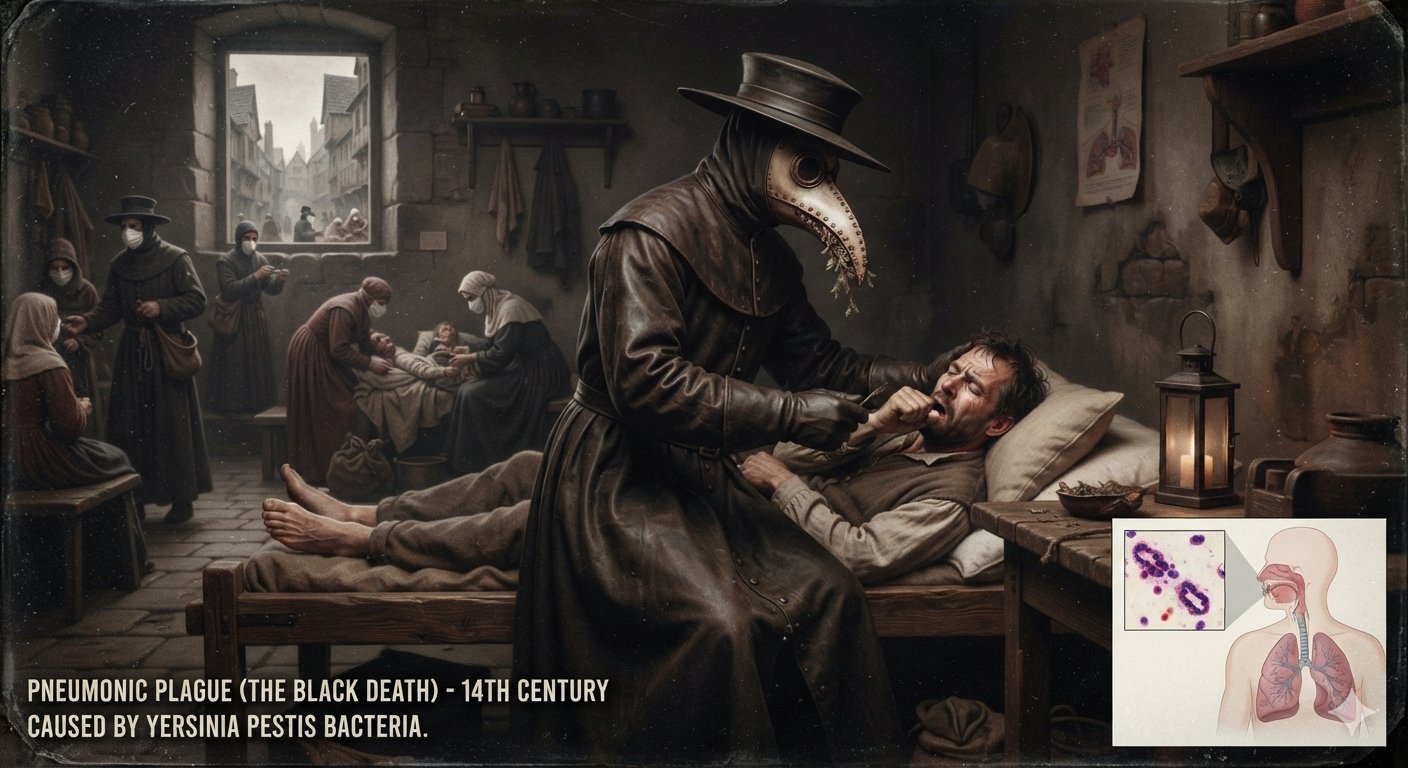

Pneumonic plague is a rare but very serious bacterial infection that affects the lungs. It is caused by Yersinia pestis, the same bacterium responsible for other forms of plague. Unlike the form of plague most people know from history, modern plague can often be treated successfully when doctors recognize it quickly and start the right antibiotics.
The word “plague” can sound frightening, especially because of its connection with historical outbreaks such as the Black Death. However, medical care has changed dramatically. Today, antibiotics are effective against Yersinia pestis, and public-health measures can help stop transmission.
Still, pneumonic plague deserves special attention because it can become severe very quickly. It can also spread from one person to another through respiratory droplets during close contact. According to the World Health Organization, untreated pneumonic plague can be fatal, while early treatment greatly improves the chance of recovery.
This guide explains what pneumonic plague is, how it spreads, its warning signs, how doctors diagnose it, available treatments, prevention methods, and why early medical care matters.
What Is Pneumonic Plague?
Pneumonic plague is the lung-related form of plague. It occurs when Yersinia pestis infects the lungs and causes severe pneumonia.
There are three main clinical forms of plague:
- Bubonic plague
- Septicemic plague
- Pneumonic plague
Bubonic plague is the most common form. It usually causes painful swollen lymph nodes called buboes. Septicemic plague occurs when the bacteria infect the bloodstream. Pneumonic plague affects the lungs and is considered the most serious form because it can progress rapidly and can be transmitted between people through respiratory droplets.
Pneumonic disease can develop in two major ways. First, bacteria can spread to the lungs from another form of plague. Second, a person can inhale infectious respiratory droplets from a person or animal with pneumonic plague.
That second route is particularly important from a public-health perspective. Close contact with an infected person can create a risk of transmission.
What Causes Pneumonic Plague?
The cause of pneumonic plague is the bacterium Yersinia pestis. This bacterium naturally circulates among certain wild animals, especially rodents, and their fleas.
People can become infected through several routes. The most common overall route of plague infection is the bite of an infected flea. Direct contact with infected animals or their tissues can also transmit the bacteria. Pneumonic plague has the additional concern of respiratory transmission.
The bacteria can reach the lungs after entering the body in different ways. For example, an untreated infection that begins elsewhere in the body may spread to the lungs. In another situation, infectious droplets may be inhaled directly.
A simple way to understand the process is:
Bacteria enter the body → infection develops → lungs become involved → pneumonia-like symptoms appear.
Because the disease can progress rapidly, waiting for symptoms to become severe isn’t a good idea if there has been a known exposure.
How Does Pneumonic Plague Spread?
One of the most important facts about pneumonic plague is that it can spread from person to person.
A person with pneumonic plague may release bacteria-containing respiratory droplets when coughing. Another person who is in close contact may inhale those droplets. CDC guidance notes that person-to-person transmission is associated with close exposure, rather than the type of long-distance airborne spread seen with diseases such as measles.
Potential sources of exposure include:
- Close contact with someone who has pneumonic plague
- Exposure to respiratory droplets from an infected person
- Close contact with an infected animal in certain situations
- Contact with infected tissues or body fluids
- Flea bites associated with infected animals
The risk isn’t the same in every situation. Simply hearing about a case doesn’t mean someone has been infected.
In particular, ordinary casual contact doesn’t automatically lead to infection. Public-health professionals look at the type, timing, and closeness of an exposure when deciding who needs monitoring or preventive treatment.
Can Pneumonic Plague Spread Between People?
Yes. Pneumonic plague is the form of plague that can spread directly between people.
However, this doesn’t mean that every person with plague automatically spreads the disease. Transmission generally involves respiratory droplets and close contact with someone who has pneumonic disease.
According to CDC guidance, respiratory droplet precautions are used for patients with suspected or confirmed pneumonic plague.
This is one reason suspected cases are treated as a public-health concern. Healthcare workers may use protective equipment, and close contacts may be monitored or offered preventive antibiotics when appropriate.
Fortunately, modern infection-control methods can greatly reduce the chance of further spread.
Symptoms of Pneumonic Plague
Symptoms can develop quickly. The CDC describes pneumonic plague as a rapidly developing pneumonia that may cause fever, headache, weakness, shortness of breath, chest pain, cough, and sometimes bloody or watery mucus.
Common symptoms may include:
- Sudden fever
- Chills
- Headache
- Weakness
- Cough
- Shortness of breath
- Chest pain
- Difficulty breathing
- Bloody or watery sputum
- Rapidly worsening pneumonia
Some symptoms can look like other serious respiratory infections. That’s why doctors don’t diagnose pneumonic plague based on one symptom alone.
The patient’s medical history matters too.
For example, a doctor may ask about:
- Recent travel
- Flea exposure
- Contact with rodents
- Contact with wild animals
- Exposure to sick or dead animals
- Contact with someone diagnosed with pneumonic plague
- Recent residence in an area where plague occurs
When these details are combined with rapidly developing pneumonia, plague may become an important possibility.
Incubation Period and How Quickly It Can Develop
The incubation period is the time between infection and the beginning of symptoms.
For pneumonic plague, symptoms can develop rapidly. CDC information indicates that the incubation period after inhalation can be as short as one day, while its current clinical testing guidance describes a typical period of about one to three days.
This short timeline is one of the reasons early recognition is so important.
Someone who has a possible exposure and then develops sudden fever, cough, chest pain, or breathing difficulty shouldn’t simply wait several days to see what happens.
When it comes to pneumonic plague, time matters.
Pneumonic Plague Compared With Other Forms of Plague
Understanding the differences between plague forms can make the subject much easier to understand.
| Type of plague | Main area affected | Common features | Person-to-person spread |
|---|---|---|---|
| Bubonic plague | Lymph nodes | Fever and painful swollen lymph nodes | Usually no |
| Septicemic plague | Bloodstream | Fever, weakness, shock, bleeding or tissue damage | Not normally |
| Pneumonic plague | Lungs | Cough, chest pain, breathing difficulty, pneumonia | Yes, through respiratory droplets |
Bubonic plague is the most common form. It usually begins after an infected flea introduces bacteria into the body.
Septicemic plague involves the bloodstream and can cause severe systemic illness.
Pneumonic plague involves the lungs and is particularly dangerous because the infection can worsen quickly and can be transmitted through respiratory droplets during close contact.
How Doctors Diagnose Pneumonic Plague
Diagnosing pneumonic plague requires careful medical evaluation and laboratory testing.
Doctors may first recognize a possible case from the combination of symptoms and exposure history. Laboratory testing can then help confirm the infection.
Possible samples include:
- Blood
- Sputum
- Material from an affected lymph node when appropriate
The laboratory looks for evidence of Yersinia pestis. WHO notes that confirmation can involve identifying the bacteria from appropriate clinical samples, while CDC recommends collecting specimens and starting treatment promptly when plague is strongly suspected.
Importantly, doctors don’t necessarily wait for final laboratory confirmation before starting treatment.
That’s because the disease can progress rapidly.
If clinical suspicion is high, treatment may begin after appropriate samples have been collected. CDC specifically advises healthcare professionals not to delay treatment while waiting for diagnostic test results.
Why Early Diagnosis Is So Important
Early diagnosis is one of the strongest factors in successful management.
Untreated pneumonic plague can become life-threatening very quickly. WHO states that untreated pneumonic plague can be fatal, potentially within a very short period after symptoms begin.
Early medical care can:
- Start effective antibiotics
- Reduce the risk of severe complications
- Improve the chance of recovery
- Help protect close contacts
- Allow public-health teams to investigate the source
- Reduce the possibility of further transmission
In other words, recognizing the problem early can make a major difference.
That’s why a person with a possible exposure and sudden severe respiratory symptoms should seek urgent medical attention rather than trying to manage the condition at home.
Treatment for Pneumonic Plague
The good news is that pneumonic plague is treatable with antibiotics.
Treatment should be started as soon as plague is suspected. CDC guidance explains that patients may receive intravenous or oral antimicrobial treatment depending on the severity of illness and other clinical factors.
Treatment choices can depend on:
- Age
- Overall health
- Severity of illness
- Allergies
- Pregnancy status
- Other medicines
- Local medical guidance
- Antibiotic susceptibility and availability
CDC currently lists gentamicin and certain fluoroquinolones among first-line treatment options in the United States, with treatment commonly continuing for 10 to 14 days, although the exact regimen is determined by healthcare professionals.
Patients with serious disease may need hospital care and supportive treatment for breathing, circulation, fluids, and other complications.
It’s important not to self-treat suspected plague with leftover antibiotics. The correct drug, dose, route, and treatment duration need to be selected by a qualified medical professional.
What Happens During Hospital Care?
A patient with suspected pneumonic plague may need urgent evaluation and isolation precautions.
Healthcare professionals may:
- Assess breathing and oxygen levels
- Collect laboratory samples
- Start antibiotics quickly
- Use respiratory precautions
- Monitor blood pressure and other vital signs
- Provide supportive care
- Notify appropriate public-health authorities
Patients with suspected pneumonic plague may be placed under appropriate infection-control precautions to reduce the risk to healthcare workers, family members, and other patients.
Severe cases may require intensive medical support.
The exact treatment depends on the individual situation. There’s no one-size-fits-all plan, and medical teams adjust care according to how the patient responds.
Who Is at Higher Risk of Exposure?
Plague remains uncommon in many parts of the world, but it continues to occur naturally in certain areas.
Risk can be higher for people who:
- Live in or travel to areas where plague occurs
- Spend time around wild rodents
- Handle potentially infected animals
- Have exposure to infected fleas
- Handle animal carcasses without appropriate protection
- Have close contact with someone who has pneumonic plague
- Work with plague bacteria in specialized laboratory settings
WHO reports that plague occurs naturally on several continents, with recent human cases concentrated particularly in parts of Africa, while cases also occur in some regions of Asia and the Americas.
Risk depends heavily on local conditions.
So, if you’re planning outdoor activities in an area where plague has been reported, it’s wise to follow local public-health advice.
How to Prevent Pneumonic Plague
Prevention begins with understanding where exposure can occur.
For general plague prevention, health authorities recommend reducing contact with infected fleas and avoiding direct contact with potentially infected animals and animal tissues.
Helpful precautions include:
- Avoid touching sick or dead wild animals.
- Don’t handle animal carcasses without proper protection.
- Reduce exposure to rodents and their fleas.
- Follow local warnings about plague activity.
- Keep pets away from wild rodents where possible.
- Seek veterinary advice if a pet becomes sick after possible exposure.
- Use appropriate flea-control measures for pets.
- Avoid close contact with someone suspected of having pneumonic plague until healthcare professionals provide guidance.
If a person is diagnosed with pneumonic plague, healthcare and public-health teams can identify close contacts and determine whether preventive antibiotics are needed.
Protecting Family Members and Close Contacts
When pneumonic plague is suspected, protecting close contacts becomes an important part of the response.
People who have had close exposure may be monitored for symptoms. Depending on the exposure, healthcare professionals may recommend preventive antibiotics, sometimes called chemoprophylaxis.
WHO guidance describes monitoring close contacts of pneumonic plague patients and providing preventive antibiotics when indicated.
Close contacts shouldn’t simply guess whether they need medication.
Instead, they should contact healthcare or public-health professionals and explain:
- Who they were exposed to
- When the exposure happened
- How close the contact was
- How long the contact lasted
- Whether respiratory symptoms occurred
- Whether the infected person was receiving treatment
This information helps professionals make the right decision.
Is There a Vaccine for Pneumonic Plague?
Vaccination isn’t currently a routine prevention method for the general public.
WHO does not recommend plague vaccination for most people. It may be considered for certain high-risk groups, such as laboratory workers with ongoing occupational exposure or specific healthcare workers, depending on circumstances and available vaccines.
For most people, prevention focuses instead on:
- Avoiding infected fleas
- Avoiding infected animals
- Using appropriate infection-control precautions
- Recognizing symptoms early
- Getting prompt medical care
- Following public-health advice
Historical Importance of Pneumonic Plague
Plague has played a major role in human history.
The disease was responsible for devastating epidemics, including the Black Death in medieval Europe. WHO reports that the Black Death caused more than 50 million deaths in Europe during the fourteenth century.
However, it’s important not to compare medieval plague directly with modern medical conditions.
Today, doctors have:
- Antibiotics
- Laboratory testing
- Modern hospitals
- Infection-control procedures
- Public-health surveillance
- Better understanding of transmission
- Modern protective equipment
These advances have transformed how plague is managed.
So, while the historical reputation of plague is frightening, modern medicine provides tools that were unimaginable centuries ago.
Where Does Plague Still Occur?
Plague hasn’t disappeared completely.
The bacteria remain naturally present in animal populations in certain parts of the world. Human cases continue to occur, although they are uncommon in many countries.
WHO’s current information reports that most human cases during 2019–2025 occurred in the Democratic Republic of the Congo and Madagascar. Plague also occurs in other endemic areas.
In the United States, plague continues to occur naturally in parts of the western country, particularly in areas where wild rodents and fleas maintain the bacteria.
The important lesson is simple: plague is rare in many places, but it hasn’t vanished.
Common Misunderstandings About Pneumonic Plague
Several myths can make plague harder to understand.
Myth: All plague spreads from person to person
Not true.
Bubonic plague is generally associated with infected flea bites and does not normally spread directly between people. Pneumonic plague is the form that can spread between people through respiratory droplets.
Myth: Plague is always fatal
That’s not correct today.
Untreated pneumonic plague can be extremely dangerous, but appropriate antibiotics can cure plague when treatment is started promptly.
Myth: The disease only belongs to history books
Nope. Plague still exists naturally in some animal populations and occasional human cases occur.
Myth: Every cough could mean plague
Absolutely not.
Cough and fever have many possible causes. Pneumonic plague is rare, and diagnosis requires professional assessment and laboratory testing.
When Should Someone Seek Medical Help?
Anyone with severe breathing difficulty, chest pain, rapidly worsening pneumonia, or coughing blood should seek urgent medical attention.
Medical attention is especially important if these symptoms occur after a known or possible exposure to plague.
Tell the healthcare professional about any:
- Recent travel
- Flea exposure
- Rodent exposure
- Wild-animal contact
- Sick-animal exposure
- Known contact with a person who has pneumonic plague
Don’t be embarrassed about mentioning an unusual exposure. That information may be exactly what helps a doctor identify a rare infection.
If you’re having severe trouble breathing or rapidly worsening symptoms, emergency medical care is appropriate.
The Role of Public Health During an Outbreak
Managing pneumonic plague isn’t only about treating one patient.
Public-health teams may investigate:
- Where the infection originated
- Whether animals or fleas are involved
- Who had close contact with the patient
- Whether additional cases are developing
- Whether preventive antibiotics are needed
- What infection-control measures should be used
WHO recommends identifying the likely source, implementing infection-prevention measures, managing flea exposure, isolating pneumonic patients, monitoring close contacts, and ensuring appropriate treatment during outbreaks.
This teamwork is important because rapid action can stop a small cluster from becoming a larger outbreak.
Why Accurate Information Matters
Plague can create fear because of its history. Unfortunately, fear can sometimes lead to misinformation.
Reliable health information should come from trusted sources such as:
- World Health Organization
- Centers for Disease Control and Prevention
- National or local public-health authorities
- Qualified doctors
- Infectious-disease specialists
Social media posts aren’t a substitute for medical advice.
And here’s the key point: if someone has symptoms that could represent a serious infection, searching online shouldn’t delay professional medical care.
Frequently Asked Questions About Pneumonic Plague
Is pneumonic plague contagious?
Yes. Pneumonic plague can spread from an infected person to another person through respiratory droplets during close contact.
Is pneumonic plague dangerous?
Yes. It is the most serious form of plague and can progress quickly without treatment. However, early antibiotic treatment can be highly effective.
Can pneumonic plague be cured?
Yes. Plague can be treated with appropriate antibiotics. Treatment should begin as soon as plague is suspected rather than waiting for final laboratory confirmation.
How is pneumonic plague different from bubonic plague?
Bubonic plague mainly affects the lymph nodes and commonly causes painful swollen lymph nodes. Pneumonic plague affects the lungs and can spread between people through respiratory droplets.
Can animals spread plague to humans?
Yes. People can become infected after flea bites associated with infected animals or through direct contact with infected animals and their tissues.
Can a person get plague from a cat?
Cats can become infected with plague, particularly after contact with infected rodents. CDC notes that sick pets, especially cats, can sometimes expose people to plague.
Is plague still found today?
Yes. Plague remains naturally present in certain regions, although human cases are uncommon in many parts of the world.
Should someone take antibiotics after possible exposure?
That decision should be made by a healthcare or public-health professional. Close contacts of pneumonic plague patients may be offered preventive antibiotics depending on the nature and timing of their exposure.
Final Thoughts on Pneumonic Plague
Pneumonic plague is a rare but serious bacterial disease that requires fast medical attention. Caused by Yersinia pestis, it affects the lungs and can produce sudden fever, cough, chest pain, shortness of breath, and rapidly developing pneumonia. It is also the form of plague that can spread between people through respiratory droplets during close contact.
The encouraging news is that modern medicine has changed the outlook dramatically. Antibiotics can treat plague effectively when given promptly, while laboratory testing, infection-control procedures, contact monitoring, and public-health action can help prevent additional infections.
Understanding the disease doesn’t mean living in fear. Instead, knowledge helps people recognize genuine warning signs, avoid unnecessary exposure, and seek appropriate medical care when needed. In short, pneumonic plague remains a serious condition, but early recognition, rapid treatment, and modern public-health measures give healthcare professionals powerful tools to control it.
Pneumonic Plague Part 2: Understanding the Disease in Greater Detail
Pneumonic plague is one of the most serious forms of plague because it affects the lungs and can become dangerous in a short period of time. Although the word “plague” is strongly connected with ancient history, the infection still exists today in certain parts of the world.
The good news is that modern medicine has made a huge difference. Doctors understand how Yersinia pestis behaves, laboratories can test for the bacteria, antibiotics can treat the infection, and public-health teams can identify people who may have been exposed.
In this second part, we’ll look more closely at how pneumonic plague develops, how healthcare workers recognize it, what complications can occur, how close contacts are handled, and what practical lessons people can take from modern plague control.
How Pneumonic Plague Affects the Lungs
The lungs are responsible for bringing oxygen into the body and removing carbon dioxide. When Yersinia pestis infects the lungs, the normal process of breathing can become severely disturbed.
Pneumonic plague can cause inflammation and infection in lung tissue. As the illness progresses, a person may develop coughing, chest discomfort, difficulty breathing, fever, and other symptoms associated with severe pneumonia.
The infection can also affect the body’s wider systems. A serious bacterial infection may place considerable stress on the heart, blood vessels, and other organs.
This is why doctors take suspected cases seriously.
A person who suddenly develops a severe respiratory illness after a possible plague exposure needs professional evaluation rather than home treatment.
Primary and Secondary Pneumonic Plague
Doctors can describe pneumonic plague according to how the lungs became infected.
Primary Pneumonic Plague
Primary pneumonic plague occurs when a person becomes infected through inhalation of infectious respiratory droplets or another route that directly introduces Yersinia pestis into the lungs.
Person-to-person transmission can occur when someone with pneumonic plague releases infectious droplets during coughing or other respiratory activity.
Secondary Pneumonic Plague
Secondary pneumonic plague occurs when plague begins somewhere else in the body and later spreads to the lungs.
For example, an infection that initially develops after a flea bite may progress and involve the bloodstream and lungs.
Both forms are serious.
The distinction is useful to doctors because understanding the route of infection can help with treatment, contact investigation, and public-health measures.
Early Warning Signs of Pneumonic Plague
Recognizing warning signs doesn’t mean trying to diagnose yourself. Instead, it helps people understand when urgent medical attention may be necessary.
Possible symptoms include:
- Fever
- Chills
- Headache
- Weakness
- Cough
- Chest pain
- Shortness of breath
- Difficulty breathing
- Bloody or watery sputum
- Rapidly worsening pneumonia
The illness may resemble other respiratory infections at first. That’s where the exposure history becomes especially important.
For example, a doctor may be more concerned about pneumonic plague if severe pneumonia develops after close contact with a confirmed patient or after exposure to an infected animal in an area where plague occurs.
Why Exposure History Matters
Imagine two people arriving at a hospital with fever and cough.
One has a routine respiratory infection and no unusual exposure.
The other recently had close contact with someone diagnosed with pneumonic plague.
The symptoms might overlap, but the second person’s exposure history changes the medical picture considerably.
Healthcare professionals may ask questions about:
- Recent travel
- Outdoor activities
- Rodent exposure
- Flea exposure
- Contact with wild animals
- Contact with sick or dead animals
- Contact with someone with suspected or confirmed plague
Don’t skip these details when speaking with a doctor.
Sometimes, a small piece of information can point healthcare professionals toward the correct diagnosis.
Laboratory Testing for Pneumonic Plague
Because pneumonic plague can resemble other types of pneumonia, laboratory testing plays an important role.
Healthcare professionals may collect appropriate clinical samples, including respiratory specimens or blood, depending on the patient’s condition.
Laboratory specialists can then look for evidence of Yersinia pestis using appropriate testing methods.
Testing may involve:
- Culture
- Molecular testing
- Antigen or antibody-based methods in certain circumstances
- Microscopic examination of suitable specimens
The exact tests available can differ between laboratories and countries.
One important principle remains the same: treatment shouldn’t be unnecessarily delayed while waiting for confirmation when clinical suspicion is high.
Doctors may begin appropriate antibiotics based on the patient’s symptoms and exposure history while diagnostic testing continues.
Why Doctors Act Quickly
With many illnesses, doctors may have time to observe symptoms and wait for test results.
Pneumonic plague is different.
The infection can progress rapidly, and untreated disease can become life-threatening. Early antibiotic treatment therefore matters enormously.
Rapid action can include:
- Recognizing possible plague.
- Taking appropriate clinical samples.
- Beginning recommended antibiotic treatment.
- Using appropriate infection-control precautions.
- Assessing people who may have been exposed.
- Working with public-health authorities.
This approach allows doctors to treat the patient while also reducing the risk of additional cases.
Antibiotics and Medical Treatment
Antibiotics are the main treatment for plague.
The specific medicine depends on factors such as the patient’s age, illness severity, medical history, allergies, pregnancy status, and local medical recommendations.
Healthcare professionals may use antibiotics such as certain aminoglycosides, fluoroquinolones, or other recommended agents depending on the clinical situation.
Treatment can involve:
- Intravenous medication for seriously ill patients
- Oral medication in appropriate circumstances
- Oxygen support when necessary
- Fluids
- Monitoring of vital signs
- Treatment of complications
- Intensive care for severe disease
Patients shouldn’t attempt to select their own antibiotic.
Using the wrong antibiotic, taking an incorrect dose, or stopping treatment early can create serious problems.
For suspected pneumonic plague, professional medical management is essential.
Supportive Care Can Be Just as Important
Antibiotics attack the bacterial infection, but seriously ill patients may also need supportive care.
A hospital team might monitor:
- Breathing
- Oxygen saturation
- Blood pressure
- Heart rate
- Temperature
- Kidney function
- Hydration
- Signs of sepsis
Some patients may need oxygen or other forms of respiratory support.
Severe infections can affect multiple organs, so doctors continually assess the patient’s overall condition.
Thankfully, modern hospitals have many tools available to support people through serious infections.
Possible Complications
Untreated or severe pneumonic plague can cause major complications.
Potential complications may include:
- Respiratory failure
- Sepsis
- Shock
- Organ damage
- Severe inflammation
- Death
These complications explain why pneumonic plague is treated as a medical emergency.
However, a list of possible complications shouldn’t cause unnecessary panic. The disease is rare in many parts of the world, and modern antibiotic treatment can significantly improve outcomes when started early.
The key lesson is simple: rapid recognition and treatment matter.
Pneumonic Plague and Sepsis
Sepsis is a dangerous reaction to an infection that can lead to organ dysfunction.
Because Yersinia pestis can spread beyond the lungs, severe plague may result in bloodstream infection and systemic illness.
Signs of severe infection can include:
- Very low or high body temperature
- Rapid heart rate
- Rapid breathing
- Confusion
- Extreme weakness
- Low blood pressure
- Reduced urine output
These symptoms can have many causes, so they aren’t specific to plague.
Still, someone with suspected pneumonic plague and signs of severe illness requires urgent hospital treatment.
How Healthcare Workers Reduce Transmission
When a patient may have pneumonic plague, healthcare workers take special precautions.
These can include appropriate respiratory protection and other personal protective equipment based on the situation.
The patient may also be placed in a suitable area to reduce contact with other patients.
Infection-control measures can help protect:
- Doctors
- Nurses
- Hospital staff
- Family members
- Other patients
- Emergency responders
Healthcare workers are trained to balance patient care with infection prevention.
This teamwork is one of the major reasons modern outbreaks can be controlled more effectively than historical epidemics.
What Happens to Close Contacts?
A confirmed or suspected case can lead to a public-health investigation.
Officials may identify people who had close contact with the patient and assess their level of exposure.
Close contacts may be:
- Asked about symptoms
- Monitored for a period of time
- Given instructions about what symptoms to report
- Offered preventive antibiotics when appropriate
Not every person who was in the same general area will necessarily require medication.
The decision depends on the nature of the exposure.
That’s why people shouldn’t automatically take antibiotics just because they heard about a case nearby.
Preventive Antibiotics for Exposed People
People who have had significant exposure to pneumonic plague may be given preventive antibiotic treatment.
This is called prophylaxis or chemoprophylaxis.
Healthcare professionals consider factors such as:
- How close the contact was
- How long the contact lasted
- Whether the infected person was receiving treatment
- Whether respiratory droplets were likely involved
- When the exposure happened
- The person’s medical circumstances
Preventive treatment should be guided by qualified healthcare or public-health professionals.
This approach helps protect people who are genuinely at risk while avoiding unnecessary antibiotic use.
How Long Can an Infected Person Spread Pneumonic Plague?
A person with untreated pneumonic plague can pose a transmission risk because bacteria can be present in respiratory secretions.
Once effective antibiotic treatment begins, the risk of transmission generally decreases as the infection is controlled.
Healthcare professionals determine when appropriate precautions can be changed or discontinued.
Because this is a serious and rare infection, decisions about isolation should be made by medical and public-health professionals rather than by the patient alone.
The Role of Animals in Plague Transmission
Animals play an important role in the natural cycle of plague.
Yersinia pestis can circulate among wild rodents and their fleas. Other mammals can occasionally become infected as well.
Domestic cats and dogs can potentially encounter infected wildlife or fleas.
This creates an important connection between human health, animal health, and environmental conditions.
In areas where plague occurs naturally, people can reduce risk by limiting contact between pets and wild animals and by maintaining appropriate flea-control measures.
Why Rodent Control Matters
Rodents can be part of the natural ecology of plague.
However, simply seeing a wild rodent doesn’t mean it carries plague.
Still, reducing unnecessary contact with wild rodents is a sensible precaution in areas where plague is known to occur.
Helpful practices include:
- Keeping food stored securely
- Reducing places where rodents can nest
- Avoiding piles of debris around buildings
- Following local pest-control recommendations
- Avoiding contact with dead rodents
- Keeping pets away from wild rodents
Environmental hygiene can reduce several health risks, not just plague.
Pets and Pneumonic Plague
Pets can occasionally become exposed to plague through infected fleas or wildlife.
Cats deserve particular attention because they can become infected after hunting rodents.
A pet that becomes seriously ill after possible wildlife exposure should be evaluated by a veterinarian.
Pet owners should tell the veterinarian about:
- Hunting behavior
- Rodent contact
- Flea exposure
- Recent outdoor activity
- Contact with sick or dead animals
If plague is suspected, veterinary and public-health professionals can provide specific instructions.
Travel Considerations
Most travelers don’t need to worry about plague during ordinary trips.
However, people traveling to areas where plague occurs naturally should pay attention to local health advice.
Depending on the destination, travelers may be advised to:
- Avoid contact with wild rodents
- Avoid sick or dead animals
- Protect themselves from fleas
- Keep pets away from wildlife
- Seek medical advice after a significant exposure
Travel-related health decisions should be based on current information for the destination.
How Modern Surveillance Helps
Public-health surveillance allows authorities to detect unusual patterns of disease.
Healthcare professionals can report suspected or confirmed cases to appropriate authorities. Epidemiologists then investigate possible sources and contacts.
Surveillance may involve:
- Human case reports
- Laboratory results
- Animal surveillance
- Flea surveillance
- Environmental monitoring
- Geographic mapping
This information helps authorities understand where plague is active and where preventive action may be useful.
Lessons From Historical Plague Outbreaks
Historical plague outbreaks demonstrate what can happen when infectious diseases spread without effective treatment or public-health systems.
Centuries ago, doctors didn’t know about bacteria, antibiotics, or modern infection control.
Today, the situation is dramatically different.
Modern medicine provides:
| Modern tool | Why it matters |
|---|---|
| Antibiotics | Treat the bacterial infection |
| Laboratory testing | Helps confirm the cause |
| Infection control | Reduces healthcare transmission |
| Contact investigation | Identifies exposed people |
| Public-health surveillance | Detects cases and patterns |
| Veterinary medicine | Helps identify infected animals |
| Protective equipment | Helps protect healthcare workers |
These advances don’t make plague harmless, but they make it far more manageable.
How the Public Can Avoid Unnecessary Fear
Hearing the term pneumonic plague can understandably cause concern.
But fear isn’t the same as preparedness.
A better approach is to remember a few basic facts:
- Plague is rare in many countries.
- It is caused by a bacterium.
- Antibiotics can treat it.
- Pneumonic plague can spread through respiratory droplets during close contact.
- Early treatment is important.
- Public-health authorities have procedures for investigating cases.
- Most coughs and fevers aren’t caused by plague.
In other words, informed caution is much more useful than panic.
What Not to Do if You Suspect Exposure
If someone believes they have been exposed to pneumonic plague, there are several things they shouldn’t do.
Don’t Ignore Symptoms
Sudden fever and respiratory symptoms after a significant exposure deserve prompt medical attention.
Don’t Self-Prescribe Antibiotics
Using leftover medication isn’t a safe substitute for professional treatment.
Don’t Hide the Exposure
Tell the healthcare professional exactly what happened.
Don’t Continue Close Contact Unnecessarily
If pneumonic plague is suspected, follow medical instructions about avoiding close contact until evaluated.
Don’t Rely Only on Social Media
Online posts can contain incomplete or incorrect information. Public-health authorities and healthcare professionals are better sources for urgent medical decisions.
Frequently Asked Questions About Pneumonic Plague
Is pneumonic plague a new disease?
No. Plague has existed for centuries. Modern science has identified Yersinia pestis as the bacterium responsible for the disease.
Is pneumonic plague the same as ordinary pneumonia?
No. Both can affect the lungs, but pneumonic plague is caused by Yersinia pestis. Ordinary pneumonia can have many different causes, including other bacteria, viruses, and fungi.
Can pneumonic plague spread through coughing?
Yes. Respiratory droplets from a person with pneumonic plague can transmit the bacteria during close contact.
Can antibiotics treat pneumonic plague?
Yes. Appropriate antibiotics are used to treat plague, and treatment should begin promptly when the disease is strongly suspected.
Is pneumonic plague common?
No. Human plague is uncommon in many parts of the world, although the bacteria remain naturally present in certain regions.
Can a person recover from pneumonic plague?
Recovery is possible, particularly when effective treatment begins early. Delayed treatment can greatly increase the risk of severe disease.
Can animals carry the plague bacteria?
Yes. Certain wild animals and fleas can be part of the natural plague cycle.
Should I be worried about every wild rodent?
No. Seeing a wild rodent doesn’t mean it has plague. However, avoiding unnecessary contact with wild animals is sensible, particularly in regions where plague is known to occur.
Key Facts to Remember About Pneumonic Plague
If you remember only a few points from this guide, keep these in mind:
- Pneumonic plague is caused by Yersinia pestis.
- It primarily affects the lungs.
- It can develop rapidly.
- Symptoms may include fever, cough, chest pain, and difficulty breathing.
- It can spread between people through respiratory droplets during close contact.
- Antibiotics are the main treatment.
- Early treatment is extremely important.
- Close contacts may need monitoring or preventive treatment.
- Plague also has important links to wildlife and fleas.
- Public-health authorities play an important role in controlling outbreaks.
- Modern medicine makes successful treatment possible.
Final Thoughts on Pneumonic Plague
Pneumonic plague is a serious infectious disease, but it shouldn’t be viewed only through the frightening lens of history. Modern healthcare has transformed our ability to recognize, investigate, treat, and control plague.
The most important lesson is the value of early action. A person with sudden severe respiratory symptoms and a credible exposure should seek medical attention quickly and provide healthcare workers with a complete exposure history. Doctors can then decide what testing, treatment, isolation, and preventive measures are appropriate.
Public-health cooperation is equally important. Identifying close contacts, controlling potential animal and flea exposure, and using suitable infection-control measures can help prevent additional cases.
Above all, knowledge is powerful. Understanding how pneumonic plague spreads, recognizing its warning signs, and knowing that effective medical treatment exists can replace unnecessary fear with sensible awareness and preparedness.
Discover more insightful articles, helpful updates, and engaging stories on Leo ART News, and stay connected with the latest information. For more details, Contact Us.