
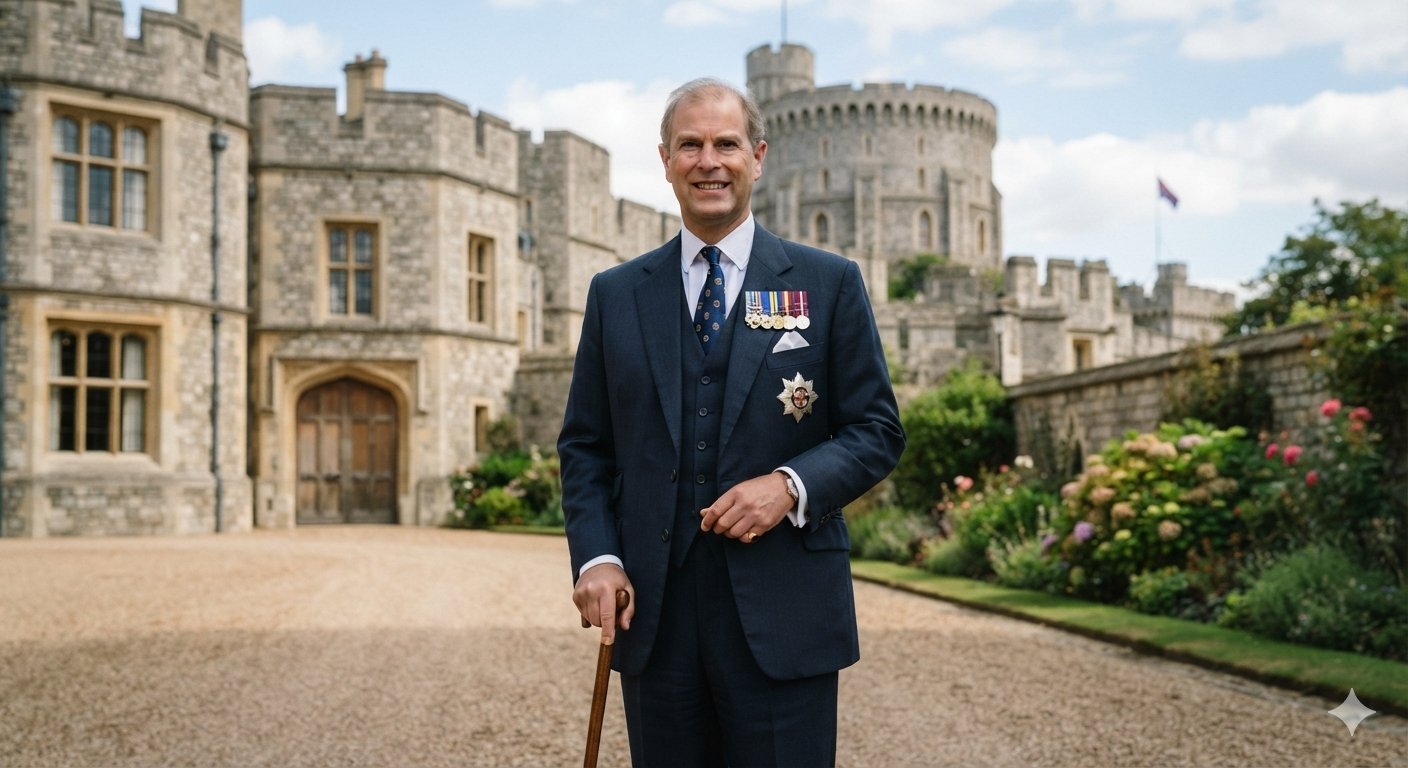

andrew mountbatten windsor is the name now used for the former Prince Andrew, the younger brother of King Charles III and the second son of Queen Elizabeth II and Prince Philip. His life has included military service, international trade work, royal duties, charitable activities, and years of public attention.
His story is also closely connected to major changes within the modern British monarchy. In recent years, his public role changed significantly, and in 2025 Buckingham Palace announced the formal process to remove his royal style, titles, and honours. The Palace stated that he would be known as Andrew Mountbatten Windsor.
The name itself is interesting because it combines two important family names: Mountbatten, associated with his father Prince Philip’s family, and Windsor, the official name of the British royal house. The change therefore has both personal and historical meaning.
This article explores his early life, family background, military career, royal work, marriage, children, controversies, change of status, and the latest legal developments.
Who Is andrew mountbatten windsor?
Andrew Mountbatten Windsor was born Prince Andrew on 19 February 1960 at Buckingham Palace. He is the third child and second son of Queen Elizabeth II and Prince Philip, Duke of Edinburgh.
He grew up as part of one of the world’s most famous royal families. His older siblings are King Charles III and Princess Anne, while his younger brother is Prince Edward.
For much of his life, the public knew him as Prince Andrew, Duke of York. He received the title Duke of York when he married Sarah Ferguson in 1986.
However, his official position changed greatly after years of controversy. In October 2025, Andrew announced that he would no longer use his title or honours. Buckingham Palace then stated that a formal process had been initiated to remove his style, titles, and honours, and that he would be known as Andrew Mountbatten Windsor.
That change made the name particularly important in current discussions about the British Royal Family.
Early Life and Royal Family Background
Andrew was born during the reign of his mother, Queen Elizabeth II. His birth was significant because he was the first child born to a reigning British monarch since Queen Victoria’s children in the nineteenth century.
Growing up in Buckingham Palace came with unusual responsibilities. From an early age, Andrew was surrounded by royal traditions, public ceremonies, official visits, and military connections.
His father, Prince Philip, had a strong naval background, while his mother carried out thousands of official duties as Queen. These influences helped shape Andrew’s own interest in military service.
His family background also explains the later surname Mountbatten Windsor. The Royal Family explains that Windsor became the family’s official house name in 1917. Later, Queen Elizabeth II and Prince Philip established Mountbatten-Windsor as the surname used by certain direct descendants when a surname was required.
So, although the royal family is traditionally known as the House of Windsor, Mountbatten Windsor connects Andrew to both sides of his family history.
Education and Young Adulthood
Like other members of the Royal Family, Andrew received an education designed to prepare him for public responsibilities.
His early education included Gordonstoun in Scotland, the school attended by his father and later by other members of the royal family. He also studied at Lakefield College School in Canada.
Rather than following a purely academic career, Andrew developed a strong interest in the armed forces and aviation.
This choice was significant. Military service has long been an important part of life for many senior members of the British Royal Family. His father served in the Royal Navy, and his older brother Charles also had military training.
For Andrew, the Royal Navy eventually became an important part of his identity.
andrew mountbatten windsor and His Royal Navy Career
Andrew joined the Royal Navy and trained as a helicopter pilot. His naval career became one of the most important parts of his early adult life.
He served during the Falklands War in 1982, flying helicopters from the aircraft carrier HMS Invincible. His role involved difficult and dangerous military operations.
The Falklands conflict gave Andrew direct experience of active military service. Unlike many ceremonial military positions held by members of royal families around the world, his service included operational duties during a real conflict.
His naval career helped create a public image of Andrew as a young royal with professional military experience.
During his service, he developed aviation skills and worked in roles connected with naval helicopters. He continued his naval career for many years before leaving active service.
His military experience later influenced his charitable interests, particularly those connected with veterans, armed forces personnel, and organizations supporting military communities.
His Role as Duke of York
Andrew became Duke of York after his marriage to Sarah Ferguson in 1986. The title had a long history within the British monarchy.
As Duke of York, Andrew carried out official duties on behalf of Queen Elizabeth II. He attended ceremonies, visited communities, supported charities, and represented Britain overseas.
For many years, his role was similar to that of other working members of the Royal Family. He supported organizations covering areas such as:
- Business and international trade
- Young people
- Education
- The armed forces
- Entrepreneurship
- Charitable work
- International relations
His position also gave him opportunities to travel internationally.
Over time, Andrew became particularly associated with business and trade promotion.
International Trade and Business Work
After leaving active naval service, Andrew developed a significant role in promoting British business.
He became a special representative for international trade and investment. His work involved visiting different countries, meeting business leaders, and supporting British companies seeking international opportunities.
This period was important because it showed a different side of his public role.
Instead of focusing only on traditional royal ceremonies, Andrew became involved in commercial and economic issues. He traveled widely and met government officials, investors, entrepreneurs, and business representatives.
His supporters viewed this work as an opportunity for the monarchy to connect with the business community.
At the same time, his business contacts later became an important subject of public and legal scrutiny, particularly concerning his relationship with Jeffrey Epstein.
It is important to separate established facts from allegations. Public investigations and legal proceedings can involve claims that have not been proven in court. Andrew has denied wrongdoing related to the allegations against him.
Marriage to Sarah Ferguson
Andrew married Sarah Ferguson in Westminster Abbey on 16 March 1986.
The wedding attracted enormous international attention because Andrew was a senior member of the British Royal Family.
Sarah became the Duchess of York, and the couple had two daughters:
- Princess Beatrice
- Princess Eugenie
Andrew and Sarah divorced in 1996. Despite their divorce, they have continued to have a close relationship and have often appeared together at family occasions.
Their two daughters have remained important members of the extended Royal Family.
Princess Beatrice and Princess Eugenie have also continued their own charitable and public activities.
For Andrew, his daughters have remained an important part of his family life, particularly as his public role changed dramatically in later years.
Family Life and His Daughters
Family is an important part of the story of andrew mountbatten windsor.
His daughters, Princess Beatrice and Princess Eugenie, were born during the period when he was still an active working royal.
Both daughters have developed their own lives outside the traditional structure of full-time royal duties.
Andrew has also become a grandfather. His family has expanded through his daughters’ marriages and children.
The changing nature of his public position has therefore taken place alongside a growing private family network.
The Royal Family itself has changed considerably since Andrew was a child. Queen Elizabeth II’s reign lasted more than seven decades, while King Charles III now leads a smaller and more focused monarchy.
That changing structure provides important context for understanding Andrew’s reduced role.
Controversies Surrounding andrew mountbatten windsor
The public story of andrew mountbatten windsor cannot be understood without discussing the controversies surrounding him.
One of the biggest issues concerns his long-standing association with Jeffrey Epstein, the American financier and convicted sex offender.
Andrew faced intense criticism over his relationship with Epstein. He has repeatedly denied allegations of wrongdoing.
In 2019, Andrew stepped back from public duties following the intense public reaction to his association with Epstein and a widely discussed television interview.
The controversy became one of the most serious reputational challenges faced by a senior British royal in modern times.
It is important for readers to understand that association with a person does not by itself prove participation in that person’s crimes. At the same time, Andrew’s relationship with Epstein became the subject of significant public scrutiny and later investigations.
This distinction between allegation, evidence, and proven wrongdoing is essential when discussing such serious subjects.
The 2019 Decision to Step Back From Public Duties
In November 2019, Andrew announced that he would step back from public duties.
He explained that the circumstances surrounding his former association with Epstein had become a major distraction for the Royal Family.
This was a major change.
A senior royal normally performs official engagements, attends ceremonies, supports charities, and represents the monarch. By stepping back, Andrew effectively removed himself from that public role.
Although he continued to be a member of the Royal Family by birth, his working relationship with the institution was greatly reduced.
The decision also showed how public confidence and reputation can affect royal responsibilities.
The 2022 Civil Case
Andrew later faced a civil lawsuit in the United States brought by Virginia Giuffre.
The case involved allegations that Andrew had sexually abused her when she was underage. Andrew denied the allegations.
In 2022, the case was settled out of court without an admission of liability by Andrew.
Because it was a civil case and was settled rather than decided at trial, it is important not to describe the allegations as established criminal facts.
The case nevertheless had a major effect on Andrew’s public position.
He had already stepped away from official duties, and the controversy further reduced his connection with official royal activities.
Loss of Royal Patronages and Military Affiliations
As the controversy continued, Andrew lost several important associations with the Royal Family.
His military affiliations and royal patronages were removed or returned to the Queen.
This was highly significant because military links had been an important part of Andrew’s public identity since his naval career.
For decades, royal family members have traditionally maintained relationships with military units. These relationships can include ceremonial leadership, patronage, and attendance at military events.
Andrew’s removal from such roles demonstrated the seriousness of the changes to his public status.
The Change From Prince Andrew to andrew mountbatten windsor
One of the biggest developments occurred in 2025.
On 17 October 2025, Andrew announced that he would no longer use his title or honours. He said that the continued accusations were distracting from the work of King Charles and the Royal Family. He also stated that he continued to deny the accusations against him.
Later, on 30 October 2025, Buckingham Palace announced that the King had initiated a formal process to remove Andrew’s style, titles, and honours.
The Palace stated that he would now be known as Andrew Mountbatten Windsor. It also announced that formal notice had been served concerning his Royal Lodge lease and that he would move to alternative private accommodation.
This represented a remarkable change in status.
For decades, the public had known him as Prince Andrew, Duke of York. The new name removed the traditional royal title from his everyday identity.
What Does the Name Mountbatten Windsor Mean?
The name is more than just a replacement for a royal title.
Windsor is the name of the British royal house. King George V adopted Windsor as the family name in 1917.
Mountbatten comes from Prince Philip’s family. Prince Philip adopted the surname Mountbatten after becoming a naturalized British subject in 1947.
Queen Elizabeth II and Prince Philip later established Mountbatten-Windsor as a surname for certain direct descendants.
The traditional form is commonly written Mountbatten-Windsor, while Buckingham Palace’s 2025 statement referred to Andrew specifically as Andrew Mountbatten Windsor.
That distinction explains why people searching online may see slightly different versions of the name.
Andrew’s Place in the Line of Succession
Despite losing his royal titles and public role, Andrew’s position in the line of succession has been a separate constitutional question.
The official Royal Family website currently lists Andrew Mountbatten-Windsor as eighth in line to the British throne.
The succession is not simply controlled by personal decisions made by individual members of the Royal Family. It is governed by laws and constitutional arrangements.
This is an important point because losing a title and leaving the line of succession are not automatically the same thing.
The British constitutional system has changed over centuries, and Parliament has played a major role in establishing succession rules.
Legal Developments in 2026
The story entered another major phase in 2026.
On 19 February 2026, King Charles issued a statement concerning Andrew Mountbatten Windsor after news emerged about suspicion of misconduct in public office. The King said that the matter should follow the proper legal process and that the law must take its course.
Andrew was subsequently arrested and released under investigation in connection with allegations concerning possible misconduct in public office.
According to Reuters reporting published in October 2026, the investigation concerns allegations that confidential government information may have been shared with Jeffrey Epstein during Andrew’s period as a UK trade representative. Andrew denies wrongdoing.
These are serious allegations, but an investigation or arrest does not establish guilt.
That distinction matters greatly. Legal systems are based on evidence, due process, and the presumption of innocence until guilt is established.
The Latest Court Challenge
As of October 2026, Andrew Mountbatten Windsor is also challenging the legality of search warrants connected with the investigation.
Reuters reported on 5 October 2026 that he had begun legal proceedings concerning the warrants used during his February arrest. A court hearing was scheduled to consider the matter.
The legal challenge focuses on the procedures used by authorities.
Even if a court were to question a particular warrant, that would not necessarily mean the wider investigation would end. The legal process can involve several separate questions, and courts determine them according to the evidence and applicable law.
For readers following the story, this is an important area to watch because the investigation remains ongoing.
A Simple Timeline of Andrew’s Life
| Period | Important Event |
|---|---|
| 1960 | Andrew is born at Buckingham Palace |
| 1970s | He receives his education and prepares for a naval career |
| 1978 | He begins Royal Navy service |
| 1982 | He serves during the Falklands War |
| 1986 | He marries Sarah Ferguson |
| 1988 | Princess Beatrice is born |
| 1990 | Princess Eugenie is born |
| 1996 | Andrew and Sarah Ferguson divorce |
| 2000s | He becomes involved in international trade and business promotion |
| 2019 | He steps back from public duties |
| 2022 | His U.S. civil case is settled |
| 2025 | He announces he will no longer use his title or honours |
| 2025 | Buckingham Palace announces the formal removal of his style, titles, and honours |
| 2026 | He faces a legal investigation concerning suspected misconduct in public office |
| October 2026 | He challenges search warrants connected with the investigation |
Why andrew mountbatten windsor Remains a Major Public Figure
Even after losing his royal titles, andrew mountbatten windsor remains a person of major public interest.
There are several reasons for this.
First, he is the brother of the reigning British monarch.
Second, he is the son of Queen Elizabeth II and Prince Philip, meaning his life is closely connected to one of the longest and most important periods in modern British royal history.
Third, his military career, business work, family life, and controversies have all received international attention.
Finally, his changing legal and constitutional position continues to attract public interest.
His story also illustrates how dramatically public roles can change. A person who once represented the monarchy internationally can later become involved in legal proceedings outside the normal activities of the Royal Family.
Lessons From His Public Life
The story of andrew mountbatten windsor provides several broader lessons about public life.
Public Responsibility Matters
People holding important public positions are expected to maintain high standards of conduct.
Reputation Can Change Quickly
A long career can be affected by controversies, investigations, or decisions that attract intense public attention.
Legal Claims Need Careful Language
Allegations should not automatically be treated as proven facts. Reliable reporting must distinguish between accusations, investigations, court findings, and confirmed facts.
Institutions Can Adapt
The British monarchy has changed many times throughout history. Andrew’s changing position is another example of how institutions respond to difficult circumstances.
Family and Public Duty Can Overlap
For royal families, personal decisions can have wider institutional consequences because family members can also be public representatives.
The Historical Importance of the Mountbatten and Windsor Names
The name Andrew Mountbatten Windsor also provides a small window into British royal history.
The House of Windsor was created in 1917 during the reign of King George V. The change replaced the previous dynastic name of Saxe-Coburg-Gotha.
The Mountbatten name entered the British royal family through Prince Philip.
Although surnames have historically been less important for British monarchs than they are for ordinary citizens, Mountbatten-Windsor became a practical surname for descendants of Queen Elizabeth II and Prince Philip when one was needed.
This makes Andrew’s present name historically meaningful.
It reflects both his paternal family connection and the royal house into which he was born.
How His Story Fits Into the Modern Monarchy
The British monarchy today is very different from the institution Andrew entered as a child.
Queen Elizabeth II’s reign was marked by continuity, tradition, and a very large extended Royal Family.
King Charles III has continued many traditional elements while also placing emphasis on a more focused monarchy.
Members of the Royal Family now have carefully defined public roles. Some undertake full-time duties, while others live largely private lives.
Andrew’s withdrawal from public duties and later loss of his titles therefore fits into a wider period of change.
The situation also demonstrates that royal status isn’t simply about family relationships. Titles, duties, honours, public funding, military associations, and constitutional roles can all be treated separately.
Public Interest and Responsible Reporting
Because Andrew’s story involves serious allegations, responsible reporting is especially important.
Readers should be careful with social media posts, unsourced claims, edited videos, and sensational headlines.
A trustworthy article should ask:
- Who made the claim?
- Is there an official statement?
- Has a court made a finding?
- Is the matter still under investigation?
- Has the person involved denied the allegation?
- Is the information current?
- Does the source clearly separate fact from opinion?
These questions help readers understand complicated stories without jumping to conclusions.
What Could Happen Next?
The future of andrew mountbatten windsor will depend partly on the legal process and any decisions made by the relevant authorities and courts.
The current investigation concerning suspected misconduct in public office remains an important development.
His legal challenge concerning search warrants is another matter to follow.
At the same time, questions about his constitutional position, including his place in the line of succession, may continue to receive attention.
It would be unwise to predict the final outcome of ongoing legal proceedings. The most reliable approach is to follow official announcements and court decisions as they happen.
Frequently Asked Questions About andrew mountbatten windsor
Who is andrew mountbatten windsor?
Andrew Mountbatten Windsor is the former Prince Andrew, younger brother of King Charles III and second son of Queen Elizabeth II and Prince Philip. Buckingham Palace announced in October 2025 that he would be known by this name after the formal process to remove his royal style, titles, and honours.
Why is he no longer called Prince Andrew?
In October 2025, Andrew said he would no longer use his title or honours. Buckingham Palace subsequently announced a formal process to remove his royal style, titles, and honours.
What was Andrew’s military career?
Andrew served in the Royal Navy and trained as a helicopter pilot. He served during the Falklands War in 1982.
Who are Andrew’s children?
Andrew has two daughters, Princess Beatrice and Princess Eugenie.
Is Andrew still in the line of succession?
The official Royal Family website currently lists Andrew Mountbatten-Windsor eighth in the line of succession.
What is the current legal situation?
In 2026, Andrew became subject to an investigation concerning suspected misconduct in public office. Reuters reported in October 2026 that he is also challenging search warrants connected with his arrest. He denies wrongdoing.
What does Mountbatten Windsor mean?
Mountbatten Windsor combines the Mountbatten family name associated with Prince Philip with Windsor, the name of the British royal house.
Final Thoughts on andrew mountbatten windsor
The story of andrew mountbatten windsor is closely connected to the history and changing nature of the British Royal Family. From his childhood at Buckingham Palace and Royal Navy career to his work in international trade, family life, withdrawal from public duties, and major changes in royal status, his life has followed an unusual path.
The events of 2025 and 2026 have transformed how the public formally identifies him. Buckingham Palace confirmed that he would be known as Andrew Mountbatten Windsor after the removal of his royal style, titles, and honours.
At the same time, current legal matters remain ongoing. Because investigations and court proceedings can develop over time, readers should rely on official announcements and credible reporting rather than speculation.
Ultimately, andrew mountbatten windsor represents a significant and complicated chapter in the modern history of the British monarchy. His story shows how public responsibility, family history, reputation, constitutional rules, and the law can intersect—and why careful, balanced information remains essential when examining the life of a major public figure.
andrew mountbatten windsor: Understanding His Changing Public Role
The story of andrew mountbatten windsor is not limited to royal titles or recent headlines. His life also reflects several important changes in the British monarchy, especially the way royal family members balance private life, public service, tradition, and modern expectations.
Once a highly visible member of the Royal Family, Andrew’s position has changed considerably. His military career, international business work, family connections, and later controversies have all contributed to a complicated public record.
Looking at these developments together gives readers a clearer picture of how his role evolved over several decades.
andrew mountbatten windsor and the Evolution of Royal Duties
Royal duties have never remained exactly the same. As society changes, the monarchy also adjusts how individual family members serve the public.
During the earlier part of his adult life, Andrew carried out many official engagements. He attended ceremonies, represented the Crown during overseas visits, supported charities, and participated in events connected with business and international relations.
His background made him particularly suited to some of these responsibilities.
His Royal Navy experience gave him a connection with the armed forces, while his international trade work allowed him to meet business leaders and government officials.
For many years, these activities formed an important part of his public identity.
However, his withdrawal from official duties created a very different situation. Instead of appearing regularly at royal events, he increasingly lived away from the public role traditionally associated with a senior royal.
This transition illustrates an important point: being born into a royal family and being an active working royal aren’t necessarily the same thing.
His Connection With the Royal Navy
Andrew’s relationship with the Royal Navy remains one of the strongest themes of his early life.
He joined the Navy as a young man and trained as a helicopter pilot. His military career wasn’t simply ceremonial. He served during the Falklands War, where he flew missions from HMS Invincible.
Military service can shape a person’s professional skills, discipline, and understanding of responsibility. For Andrew, it also created a connection with service personnel that continued into his later public work.
His naval career included several different responsibilities, and he remained connected with military organizations after becoming a senior member of the Royal Family.
The later removal of his military affiliations therefore represented a significant change from the role he once held.
The Importance of the Falklands War in His Biography
The Falklands War remains an important chapter in Andrew’s biography.
The conflict between the United Kingdom and Argentina took place in 1982 after Argentina occupied the Falkland Islands. British forces were sent to recover the islands.
Andrew was serving as a helicopter pilot at the time.
His role involved transporting personnel and equipment and supporting military operations. Serving in an active conflict distinguished his early career from the purely ceremonial responsibilities often associated with royal family members.
For historians studying Andrew’s life, this period is important because it happened before his later royal business and public-relations responsibilities.
It also shows that his career initially followed a professional military path rather than immediately becoming focused on royal representation.
International Travel and Diplomatic Connections
As a senior member of the Royal Family, Andrew traveled extensively.
Royal visits can serve several purposes. They can strengthen diplomatic relationships, promote cultural exchanges, support British businesses, and highlight charitable causes.
Andrew’s work with British trade and investment gave many of his overseas trips an economic focus.
During these visits, he met entrepreneurs, government officials, investors, and representatives of companies.
Such work can be useful because members of the Royal Family often have access to international networks that ordinary business representatives don’t have.
At the same time, it also creates a high level of public responsibility. Every meeting and relationship can receive attention because of the person’s royal position.
That became particularly important when Andrew’s business contacts were later examined in connection with his relationship with Jeffrey Epstein.
Business Connections and Public Scrutiny
Andrew’s business-focused royal role was sometimes described as an effort to support British companies overseas.
His position gave him the opportunity to introduce businesses to international markets and influential people.
However, royal connections and private business networks can sometimes overlap in complicated ways.
The scrutiny surrounding Andrew’s relationship with Jeffrey Epstein became one of the biggest challenges to his public image.
Epstein had been a wealthy financier with connections to many prominent people. He was later convicted of sex-related crimes and became the subject of extensive investigations.
Andrew’s association with Epstein attracted intense attention because Andrew was a senior British royal.
It is important to keep the distinction clear: being associated with Epstein doesn’t automatically establish that someone participated in his criminal activities. Andrew has denied wrongdoing related to the allegations against him.
Why His 2019 Interview Became So Important
One of the most discussed moments in Andrew’s public life was his 2019 television interview concerning his relationship with Epstein.
The interview attracted widespread criticism and generated significant media attention.
Soon afterward, Andrew announced that he would step back from public duties.
The episode demonstrated how quickly a public interview can influence an individual’s reputation, especially when that person belongs to a major institution.
For the Royal Family, the situation also created a difficult communications challenge.
Instead of focusing on charitable projects and official engagements, news coverage increasingly centered on Andrew’s personal associations and the controversy surrounding them.
His decision to step back was therefore presented as an attempt to reduce the distraction affecting the wider Royal Family.
The Difference Between Public Office and Private Life
The Andrew story raises an interesting question about where public responsibility ends and private life begins.
Members of the British Royal Family occupy unusual positions. They may have private friendships and personal interests, but their actions can still attract public attention because of their family status.
For Andrew, this distinction became especially difficult because his international business role brought him into contact with many influential individuals.
The controversy surrounding Epstein showed that private associations could have significant consequences for public responsibilities.
This is one reason modern public figures often face intense scrutiny over relationships that might otherwise remain private.
His Relationship With His Daughters
Andrew’s daughters remain an important part of his family story.
Princess Beatrice and Princess Eugenie have built their own public identities while maintaining connections with the wider Royal Family.
Both have attended major royal events and have supported charitable and social causes.
Their lives also demonstrate how younger generations of the Royal Family have approached public life differently from earlier generations.
Neither daughter has taken on exactly the same role that Queen Elizabeth II or King Charles III carried out as monarch.
Instead, they have developed careers, families, and interests of their own.
Andrew’s relationship with his daughters has continued despite the changes to his public position.
andrew mountbatten windsor as a Father and Grandfather
Family responsibilities have continued even as Andrew’s public role has changed.
His daughters have married and started families, making him a grandfather.
This part of his life is separate from questions about royal titles and legal matters.
It also highlights the difference between a person’s private family identity and their public institutional position.
A person can experience major professional or public changes while continuing ordinary family responsibilities.
For Andrew, family occasions have provided some of the few situations in which he has continued to appear alongside members of the Royal Family.
Changes at Royal Family Events
Andrew’s presence at royal events has changed over time.
Earlier in his life, he regularly appeared at official ceremonies, celebrations, and overseas events.
After stepping back from public duties, his appearances became more limited.
His participation in private family occasions has sometimes attracted media attention because of his status as a close relative of the monarch.
This distinction is worth remembering:
- Official duties involve representing the monarch or supporting public organizations.
- Private family appearances are personal occasions.
- Royal ceremonies can sometimes include both public and family elements.
- Charitable work may be separate from official royal duties.
Understanding these differences makes royal news much easier to follow.
The Meaning of Losing a Royal Title
Titles are an important part of British royal tradition, but they aren’t all identical in legal or constitutional meaning.
Andrew’s loss of his royal style and honours represented a major change in his public identity.
For decades, people had known him as Prince Andrew, Duke of York.
The change meant that the name andrew mountbatten windsor became much more prominent.
It also marked a clear separation between his personal identity and his former public position.
This wasn’t simply a change in how newspapers referred to him. It was connected with a formal process involving his royal status and honours.
Why the Mountbatten Name Matters
The word “Mountbatten” has an important place in twentieth-century British history.
Prince Philip was born Prince Philip of Greece and Denmark. Before his marriage to Princess Elizabeth, he became a British citizen and adopted the surname Mountbatten.
The name therefore entered the direct family line of the future Queen Elizabeth II.
The Windsor name has an even longer connection with the modern British monarchy.
Together, Mountbatten and Windsor represent two sides of Andrew’s family history.
That’s why andrew mountbatten windsor is more than an ordinary surname. It carries a direct connection to the history of the British royal family.
How Royal Surnames Work
Royal naming conventions can seem confusing because monarchs and senior royals don’t always use surnames in everyday life.
The Royal Family is officially associated with the House of Windsor.
However, certain descendants of Queen Elizabeth II and Prince Philip may use Mountbatten-Windsor as a surname when a surname is required.
This is different from a royal title.
For example, “Prince” or “Princess” is a title, while a surname identifies family lineage.
Andrew’s move away from royal titles therefore makes the surname more noticeable than it was during his years as a working prince.
His Position in the Succession
Andrew’s position in the succession has generated questions because his royal titles and succession status are separate issues.
The line of succession is governed by constitutional law and established rules.
Losing a royal title doesn’t automatically produce the same result as being removed from the succession.
This is an important distinction for readers who may see headlines suggesting otherwise.
The official succession list provides the clearest reference for understanding a person’s current position.
Because constitutional arrangements can be changed through legislation or formal decisions, readers should rely on authoritative sources when discussing future changes.
The Role of Parliament in Royal Matters
The British monarchy operates within a constitutional system.
The monarch is the head of state, but Parliament has an important role in constitutional and legal matters.
This means that questions involving succession, titles, public law, and other major constitutional issues can involve more than the Royal Family itself.
This is one reason royal news sometimes includes references to Parliament, government departments, courts, and official documents.
The modern monarchy isn’t operating outside the legal system. Quite the opposite: royal responsibilities exist within Britain’s constitutional framework.
Legal Proceedings and the Importance of Due Process
Recent developments involving Andrew make legal terminology particularly important.
Words such as “allegation,” “investigation,” “arrest,” “charge,” and “conviction” don’t mean the same thing.
An allegation is a claim that someone did something wrong.
An investigation is an official effort to determine what happened.
An arrest means authorities have taken someone into custody under legal powers. It doesn’t by itself prove guilt.
A charge is a formal accusation brought by prosecutors or authorities.
A conviction occurs when a court determines that a person is guilty.
Keeping these terms separate helps prevent misinformation.
Why Reliable Sources Matter
Stories involving famous people can spread extremely quickly online.
Social media posts may combine confirmed information with rumors, opinions, or old news.
For a complicated story like andrew mountbatten windsor, readers should look for:
- Official statements from Buckingham Palace
- Court documents
- Statements from police or prosecutors
- Established news organizations
- Clearly dated reports
- Direct quotations with proper context
It’s also useful to check the date of an article. A report from several years ago may no longer describe the person’s current status.
How His Story Has Affected the Royal Institution
Andrew’s controversies have affected more than his personal reputation.
They have also raised questions about how the Royal Family manages relationships, public duties, and accountability.
The monarchy depends heavily on public confidence.
When a senior royal becomes involved in a major controversy, the institution may need to respond carefully.
Andrew’s removal from official duties and later changes to his titles show how the Royal Family has attempted to separate his situation from the working activities of the monarchy.
The wider institution has continued its work under King Charles III.
A Smaller and More Focused Royal Family
The modern monarchy has increasingly emphasized a smaller group of working royals.
This approach places more responsibility on those who regularly undertake official engagements.
Andrew’s withdrawal from public duties therefore fits into a broader transformation of royal work.
Instead of having a very large group of full-time working members, the institution increasingly relies on a smaller number of senior royals.
This change can make roles clearer and reduce uncertainty about who officially represents the monarch.
Public Interest in His Personal History
Why do people continue searching for information about Andrew?
Part of the answer is his unique family background.
He is connected to Queen Elizabeth II, Prince Philip, King Charles III, Princess Anne, Prince Edward, Princess Beatrice, and Princess Eugenie.
His life therefore connects several generations of the Royal Family.
His military career adds another dimension, while his international business work provides a different perspective.
Finally, the legal controversies surrounding him continue to generate significant news coverage.
Taken together, these elements make his biography unusually complex.
Common Misunderstandings About andrew mountbatten windsor
Several misunderstandings can arise when reading about his current position.
Losing a Title Is Not Automatically the Same as Leaving the Family
A person can lose a royal title while remaining a biological member of the Royal Family.
An Investigation Is Not a Conviction
A person under investigation has not necessarily been found guilty.
A Civil Settlement Is Not the Same as a Criminal Conviction
Civil cases and criminal cases operate under different legal systems and standards.
The Name Windsor Does Not Automatically Mean Someone Is the Monarch
Windsor is the name of the royal house, not a title reserved only for the reigning monarch.
Media Reports Can Become Outdated
Royal and legal developments can change quickly, so readers should check publication dates.
What Readers Can Learn From His Biography
The life of andrew mountbatten windsor offers several useful lessons about history and public institutions.
It demonstrates how traditional institutions adapt to modern expectations.
It also shows how important accurate language is when discussing allegations.
Most importantly, his story reminds readers that public figures can have complicated careers containing both professional achievements and difficult periods.
A balanced biography doesn’t need to ignore controversy. Instead, it should explain events carefully and distinguish established information from unresolved claims.
Looking Ahead
The future of andrew mountbatten windsor will depend on several separate developments.
His legal situation is one of the most important.
The courts and relevant authorities will determine how ongoing matters proceed.
His relationship with the Royal Family is another area of public interest, although private family relationships aren’t always fully visible to the public.
His constitutional position may also continue to generate questions.
For now, the safest approach is to follow official announcements and reliable reporting rather than predictions or rumors.
Final Perspective on andrew mountbatten windsor
The history of andrew mountbatten windsor is a story of remarkable change. He began life as the son of a reigning monarch, developed a professional career in the Royal Navy, served during the Falklands War, became the Duke of York, worked internationally on British trade, raised two daughters, and later stepped away from public duties following serious controversy.
His transformation from Prince Andrew to andrew mountbatten windsor represents one of the clearest examples of how dramatically a senior royal’s public position can change.
His story is still developing, particularly because of ongoing legal matters. For that reason, readers should approach new claims carefully, check dates and sources, and distinguish allegations from established findings.
Above all, andrew mountbatten windsor remains an important figure for understanding the modern British monarchy, its changing traditions, and the relationship between royal status, public responsibility, family history, and the law.
Discover more insightful articles, helpful updates, and engaging stories on Leo ART News, and stay connected with the latest information. For more details, Contact Us.