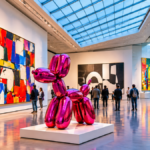


Pop art changed the way people look at the world around them. Imagine seeing a soup can displayed like a priceless painting, a comic-book character transformed into a giant artwork, or a famous celebrity’s face repeated in bright, unexpected colors. These ideas may seem simple today, but they challenged traditional ideas about what art could be.
Emerging during the 1950s and becoming especially influential in the 1960s, Pop Art brought popular culture into galleries and museums. It took inspiration from advertising, television, magazines, movies, music, consumer products, and everyday experiences. Instead of focusing only on traditional subjects, artists began exploring the images people saw in their daily lives.
The movement became popular because it was colorful, bold, accessible, and sometimes humorous. It also raised important questions about fame, shopping, mass production, and the growing influence of media.
In this guide, we explore 10 famous Pop Art artists whose creative ideas helped shape modern art. From Andy Warhol’s iconic soup cans to Roy Lichtenstein’s comic-inspired paintings, discover the artists, their styles, and the artworks that made Pop Art unforgettable.
What Is Pop Art?
Pop Art is a modern art movement that uses images and ideas from popular culture. The word “Pop” comes from “popular,” referring to the entertainment, products, celebrities, and everyday images that people recognize.
To understand the Pop Art movement more clearly, watch this helpful video by the National Galleries of Scotland.
The movement first developed in Britain during the 1950s and later became especially influential in the United States during the 1960s. Artists began using subjects that traditional fine art had often overlooked, including comic strips, food packaging, advertisements, movie stars, and household products. MoMA+2
Pop Art also challenged the belief that serious art had to be rare, expensive, or created entirely by hand. Artists borrowed commercial printing techniques, repeated images, and used bright colors to connect art with the visual world outside galleries. MoMA+1
Main Characteristics of Pop Art
- Bright colors: Strong reds, yellows, blues, and other bold shades make artworks visually striking.
- Popular culture: Artists use images from advertising, television, movies, music, and comic books.
- Everyday objects: Products such as soup cans, food, furniture, and household items become artistic subjects.
- Repetition: Repeating an image can suggest mass production, celebrity culture, and the constant circulation of media.
- Commercial techniques: Screen printing, collage, photography, and graphic design influence the appearance of many works.
- Humor and irony: Some artworks celebrate popular culture, while others question consumerism and society.
These characteristics help explain why Pop Art remains recognizable and influential today.
10 Famous Pop Art Artists Who Changed Modern Art
1. Andy Warhol – The Artist Who Made Everyday Products Famous
When people think about Pop Art, Andy Warhol is often the first artist who comes to mind. He transformed familiar products, celebrity photographs, and commercial images into some of the most recognizable artworks of the twentieth century.
Born in Pittsburgh, Pennsylvania, in 1928, Warhol first developed his career as a commercial illustrator. His experience with advertising and graphic design helped shape the clean, bold visual style that later became central to his Pop Art.
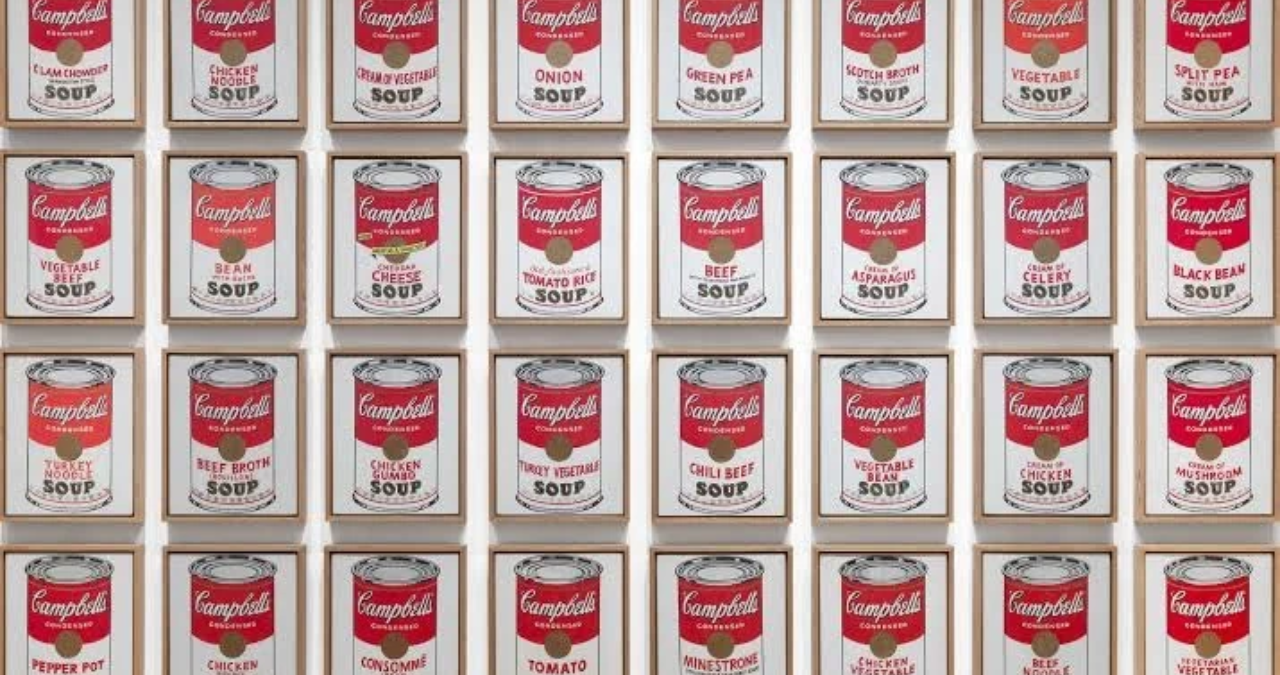
One of his most famous works is Campbell’s Soup Cans (1962). The artwork consists of 32 canvases, each showing a different variety of Campbell’s soup. Instead of choosing a traditional landscape or historical subject, Warhol turned a familiar supermarket product into the focus of a major artwork.
He also became famous for his repeated portraits of Marilyn Monroe. In Marilyn Diptych (1962), the actress’s face appears again and again in bright colors and fading black-and-white images. The repetition reflects the way celebrity photographs circulate through newspapers, magazines, and television.
Warhol used screen printing to reproduce images in multiple versions. This method connected his art with commercial production and raised questions about originality, fame, and consumer culture.
His influence continues to shape contemporary art, graphic design, fashion, and visual advertising. MoMA+1
2. Roy Lichtenstein – The Artist Who Turned Comic Books into Fine Art

Roy Lichtenstein became famous for paintings inspired by comic books, newspaper printing, and commercial illustrations. His artworks often feature thick black outlines, primary colors, speech bubbles, and Ben-Day dots that imitate the appearance of printed images.
Born in New York City in 1923, Lichtenstein developed an artistic style that challenged the distinction between popular entertainment and fine art. He took visual ideas associated with comic books and transformed them into large paintings that demanded attention in galleries and museums.
One of his best-known works is Whaam! (1963). This large two-panel painting shows a fighter plane firing a rocket at another aircraft, accompanied by a dramatic comic-book-style explosion.
Another famous artwork is Drowning Girl (1963), which presents a woman surrounded by water and an emotional speech bubble. The image uses dramatic composition and printed-style dots to create the feeling of a comic-book scene.
Lichtenstein’s art is sometimes humorous, but it also encourages viewers to consider how images are produced and consumed. By enlarging familiar comic-book imagery, he showed that popular visual culture could become a serious subject for artistic exploration.
His recognizable style has influenced illustration, advertising, graphic design, and contemporary visual art.
3. Richard Hamilton – One of the Founding Figures of British Pop Art

Richard Hamilton played an important role in the development of British Pop Art. He explored advertising, technology, consumer products, and modern lifestyles through paintings, photographs, and collage.
Born in London in 1922, Hamilton became associated with the Independent Group, a collection of artists, writers, and architects who discussed the growing influence of popular culture during the 1950s.
His best-known work, Just what is it that makes today’s homes so different, so appealing? (1956), is a collage that combines images from magazines and advertisements. It presents a modern interior filled with consumer products, entertainment references, and symbols of contemporary life.
The artwork is often discussed as an important early example of British Pop Art. It reflects the growing influence of advertising and the desire for modern comfort, technology, and fashionable products.
Hamilton was interested in the relationship between art and everyday life. He did not treat popular imagery as something unworthy of artistic attention. Instead, he explored how commercial images influence people’s desires and ideas about success.
His work helped establish the intellectual foundations of the Pop Art movement and influenced later artists on both sides of the Atlantic. National Galleries of Scotland+1
4. Eduardo Paolozzi – The Artist Who Turned Magazine Images into Art
Eduardo Paolozzi was an important pioneer of the ideas that later developed into British Pop Art. His work combined images from advertisements, magazines, technology, machinery, and American popular culture.
Born in Edinburgh, Scotland, in 1924, Paolozzi was interested in the visual language of modern industrial society. He explored how mass-produced images were changing the way people experienced the world.
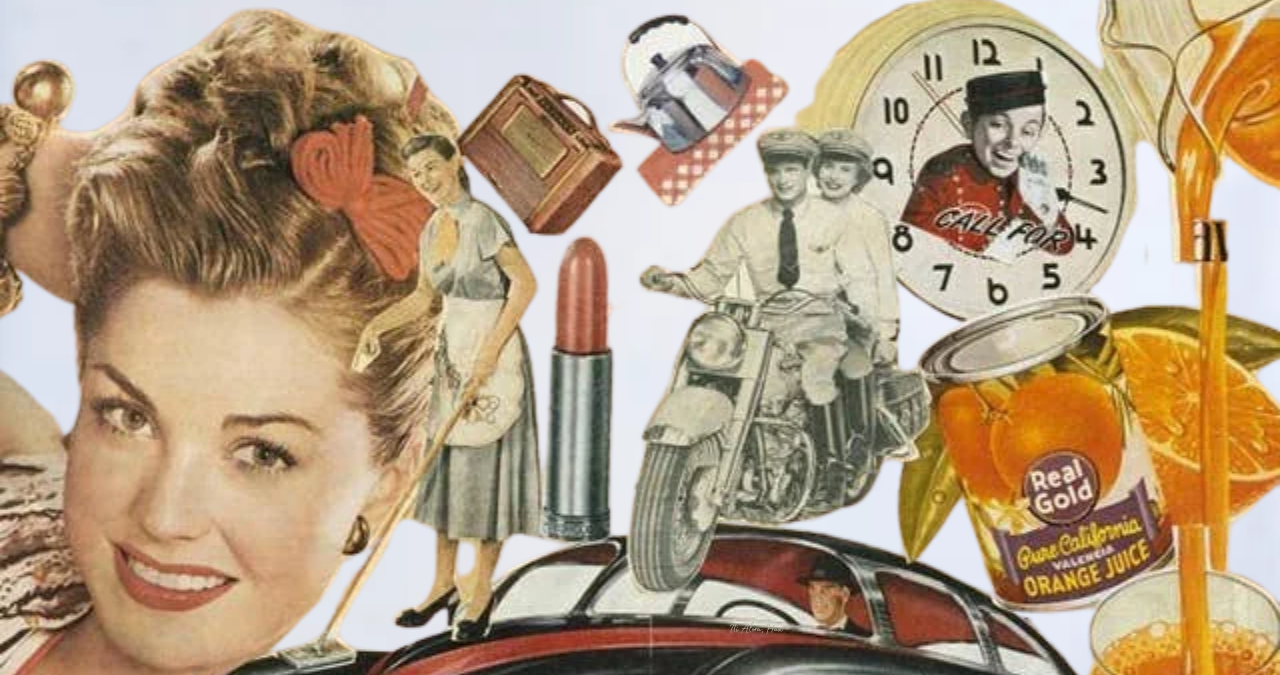
His 1947 collage I Was a Rich Man’s Plaything is frequently discussed as an early example of the imagery associated with Proto-Pop. It combines magazine pictures, advertising references, and bold graphic elements.
Paolozzi also presented his famous Bunk series through a lecture at the Institute of Contemporary Arts in London in 1952. The collages drew attention to the growing influence of mass media and commercial imagery.
Although Paolozzi worked in sculpture as well as collage, his experiments with popular images helped create an artistic environment in which everyday visual material could become a serious subject.
His contribution is especially important because it demonstrates that Pop Art’s history began before the movement became widely recognized in the 1960s. National Galleries of Scotland
5. Claes Oldenburg – The Artist Who Made Ordinary Objects Look Extraordinary

Claes Oldenburg became famous for creating oversized sculptures of everyday objects. Instead of painting food or household products on canvas, he transformed them into large three-dimensional artworks.
Born in Stockholm, Sweden, in 1929, Oldenburg moved to the United States as a child and became an important figure in the American Pop Art scene.
His artistic subjects included hamburgers, ice cream, typewriters, clothespins, and other familiar objects. By changing their size, materials, and surroundings, he encouraged viewers to see ordinary things in a completely different way.
One of his early projects was The Store (1961), an installation in which he displayed handmade sculptures resembling commercial products. The project explored the relationship between shopping, consumer culture, and artistic production.
He later became well known for public sculptures such as Clothespin in Philadelphia. These enormous objects make familiar everyday items appear unusual and playful.
Oldenburg’s work demonstrates that Pop Art is not limited to painting. Sculpture can also transform ordinary products into memorable artistic experiences. Sotheby’s+1
6. James Rosenquist – The Artist Who Turned Advertising into Giant Paintings
James Rosenquist developed a distinctive style using large-scale images inspired by commercial advertising. Before becoming a full-time artist, he worked as a billboard painter, an experience that influenced the scale and visual structure of his paintings.
Born in North Dakota in 1933, Rosenquist became interested in how advertisements attract attention. He brought that experience into his art by combining enlarged images of consumer products, faces, machinery, and other unrelated subjects.
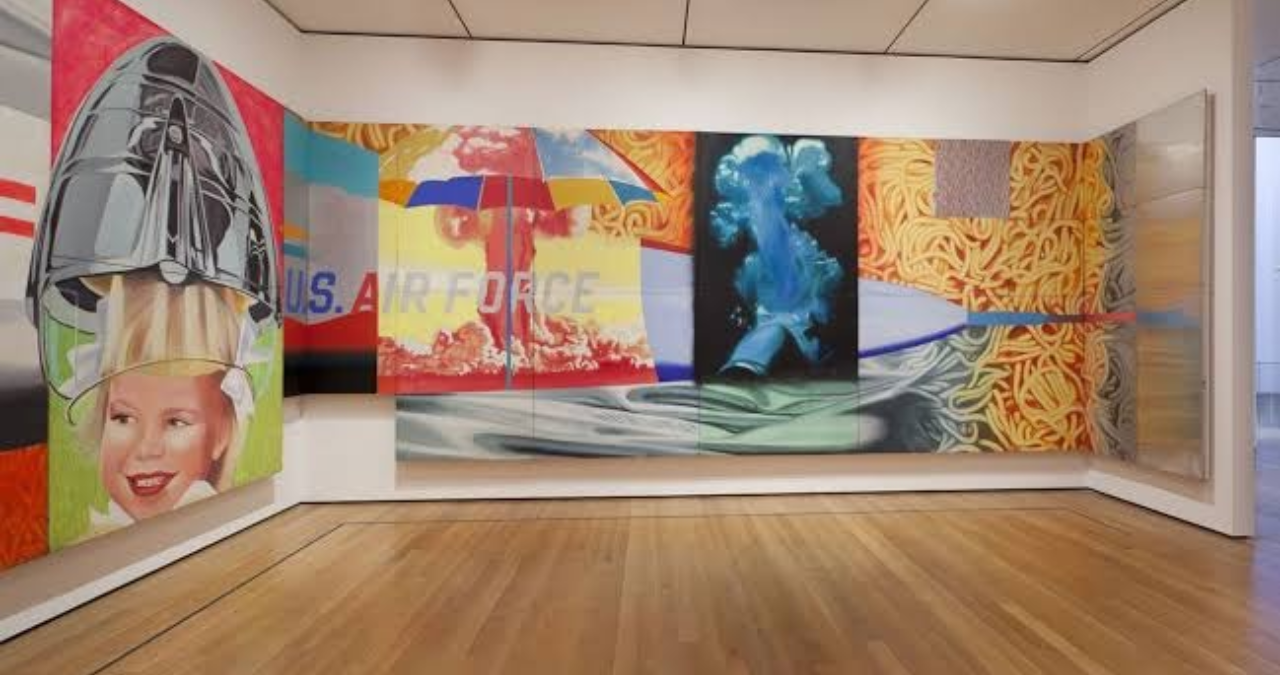
His famous work F-111 (1964–1965) is a large multi-part painting that combines images of a fighter aircraft with consumer goods and other visual elements. The work brings together ideas about advertising, military power, technology, and American culture.
Rosenquist’s paintings often resemble fragments of enormous advertisements. However, their unusual combinations encourage viewers to think about the relationships between commercial imagery and the wider world.
His work helped expand the possibilities of Pop Art by showing how advertising techniques could be used to create complex and thought-provoking paintings.
7. Tom Wesselmann – The Artist Who Made Everyday Interiors Iconic
Tom Wesselmann was known for his colorful paintings of everyday interiors, still-life objects, and the human figure.
Born in Cincinnati, Ohio, in 1931, Wesselmann became one of the important artists associated with American Pop Art. His work often combined traditional artistic subjects with the bold visual language of commercial culture.
His Great American Nude series, which began in the early 1960s, is among his most recognized projects. These paintings use simplified figures, bright colors, and elements inspired by advertising and popular imagery.
He also created still-life works featuring household objects, food packaging, and familiar domestic items. These subjects were arranged in striking compositions that connected traditional still-life painting with modern consumer culture.
Wesselmann’s work is notable for its clear shapes and strong colors. His paintings show how ordinary interiors and objects can become powerful visual compositions.
He helped demonstrate that Pop Art could explore beauty, domestic life, and traditional subjects while using a completely modern visual language.
8. Peter Blake – The Artist Who Celebrated Music and Popular Culture
Peter Blake is one of the best-known British artists associated with Pop Art. His work combines popular culture, music, nostalgia, celebrities, and images from everyday life.
Born in Dartford, England, in 1932, Blake developed an artistic style that often brought together different visual materials. His paintings and collages reflect an interest in popular entertainment and the objects people collect.
One of his most famous projects was the cover design for The Beatles’ album Sgt. Pepper’s Lonely Hearts Club Band (1967), created in collaboration with Jann Haworth. The cover features a colorful group portrait surrounded by famous personalities and cultural references.
Another important work is On the Balcony (1955–1957), which combines images of people, flags, and popular objects in a layered composition.
Blake’s art celebrates the visual world of popular entertainment without losing its sense of personal memory and nostalgia. His work helped connect Pop Art with music, fashion, and graphic design.
9. Pauline Boty – The Influential Woman Who Helped Shape British Pop Art
Pauline Boty was one of the important female artists in the British Pop Art movement. Her work explored popular culture, celebrity images, femininity, and the representation of women in modern society.
Born in London in 1938, Boty studied at the Royal College of Art and developed a colorful artistic style influenced by advertising, magazines, and contemporary media.
Her painting The Only Blonde in the World (1963) reflects her interest in celebrity culture and the way women were represented through popular images.
Boty’s art is especially interesting because it does not simply repeat the visual language of advertising. It also raises questions about beauty, identity, and the expectations placed on women.
Although her career was tragically short, her contribution has become increasingly recognized in discussions of British Pop Art. Her work helps create a broader picture of the movement beyond its most famous male artists.
10. Marisol – The Artist Who Blended Pop Art with Expressive Sculpture
Marisol, born Marisol Escobar, was an artist known for combining sculpture, painting, drawing, and found objects.
Born in Paris in 1930 to Venezuelan parents, Marisol later became an important figure in the New York art scene. Her work often features wooden figures, painted surfaces, and unusual combinations of materials.
One of her recognized works is The Family (1963), which presents a group of figures arranged in a distinctive sculptural composition. Her work often explores identity, family relationships, social expectations, and popular culture.
Marisol’s artistic approach was different from the flat, commercial-looking images associated with some other Pop Art artists. She used three-dimensional forms and sometimes incorporated her own facial features into her sculptures.
Her work expanded the visual possibilities of Pop Art and helped make the movement more diverse. It also demonstrated that popular culture could be explored through sculpture, humor, and personal storytelling.
How Pop Art Artists Changed the Art World
Pop Art did more than introduce bright colors and recognizable images. It changed the way artists, museums, and audiences thought about creativity.
Here are some of its most important contributions.
1. They Made Everyday Objects Worthy of Attention
Before Pop Art became popular, traditional paintings often focused on historical events, religious subjects, landscapes, and portraits. Pop artists showed that a soup can, hamburger, newspaper, or advertisement could also become an interesting artistic subject.
2. They Connected Art with Popular Culture
Pop artists brought the visual language of movies, music, magazines, television, and comic books into galleries. Their work reflected the world people were experiencing outside museums.
3. They Experimented with Commercial Techniques
Artists such as Andy Warhol used screen printing to reproduce images in different colors and versions. This approach challenged traditional ideas about handmade artwork and originality.
4. They Made Art More Accessible
Pop Art used familiar images that audiences could recognize immediately. People did not need specialized knowledge of art history to understand a celebrity portrait, a comic-book scene, or a familiar product.
5. They Inspired New Generations
Pop Art influenced graphic design, fashion, illustration, advertising, digital art, and contemporary sculpture. Its visual language continues to appear in posters, music artwork, product packaging, and online media.
British Pop Art vs. American Pop Art
Although British and American artists shared an interest in popular culture, their approaches were not always identical.
| British Pop Art | American Pop Art |
|---|---|
| Developed strongly during the 1950s | Became especially influential during the 1960s |
| Often explored advertising and American consumer culture from an outside perspective | Frequently used celebrities, brands, products, and mass media directly |
| Important artists included Richard Hamilton and Eduardo Paolozzi | Important artists included Andy Warhol and Roy Lichtenstein |
| Collage and experimentation were significant | Screen printing, large paintings, and commercial imagery were prominent |
These are broad tendencies rather than strict rules. Artists in both countries experimented with different techniques and subjects. National Galleries of Scotland+1
Where Can You Explore Famous Pop Art?
If you want to see Pop Art beyond photographs on the internet, several major museums offer opportunities to explore important works and learn about the movement.
- Museum of Modern Art (MoMA): Its collection includes famous works by Andy Warhol, Roy Lichtenstein, and other Pop artists. Visit the MoMA Pop Art collection guide.
- Tate: Explore the history of Pop Art and works such as Roy Lichtenstein’s Whaam! through the Tate Pop Art guide.
- National Galleries of Scotland: Learn about British Pop Art, its origins, and important artists through its Pop Art overview.
Conclusion
The pop art artists featured in this guide transformed ordinary images into extraordinary works of modern art. Andy Warhol made everyday products and celebrity photographs internationally recognizable, while Roy Lichtenstein brought the visual language of comic books into galleries. Richard Hamilton and Eduardo Paolozzi helped establish the movement’s British foundations, while artists such as Claes Oldenburg, James Rosenquist, and Tom Wesselmann expanded its creative possibilities.
The contributions of Peter Blake, Pauline Boty, and Marisol also show that Pop Art was much more than a single artistic style. It was a movement shaped by different perspectives, techniques, and cultural experiences.
Today, Pop Art remains relevant because the world is still surrounded by advertisements, celebrities, brands, entertainment, and digital images. These artists taught us that inspiration can come from almost anywhere. Sometimes, the most interesting artwork begins with something we see every day.
Frequently Asked Questions (FAQs)
1. Who are the most famous Pop Art artists?
Andy Warhol and Roy Lichtenstein are among the most famous Pop Art artists. Other important figures include Richard Hamilton, Eduardo Paolozzi, Claes Oldenburg, James Rosenquist, Tom Wesselmann, Peter Blake, Pauline Boty, and Marisol.
2. What is Pop Art famous for?
Pop Art is famous for using images from popular culture, including comic books, celebrities, advertisements, food packaging, and everyday products. It often features bright colors, bold designs, repetition, and commercial printing techniques.
3. Who is considered the father of Pop Art?
There is no single universally accepted father of Pop Art. However, Richard Hamilton and Eduardo Paolozzi are considered important pioneers of British Pop Art, while Andy Warhol became one of the most influential figures in the American movement.
4. When did Pop Art begin?
Pop Art emerged in Britain during the 1950s and developed strongly in the United States during the late 1950s and 1960s. It became one of the most recognizable modern art movements of the twentieth century.
5. What is the most famous Pop Art painting?
There is no single official answer, but Andy Warhol’s Campbell’s Soup Cans and Roy Lichtenstein’s Whaam! are among the movement’s most recognizable artworks.
6. Why did Pop Art artists use everyday objects?
Pop artists wanted to explore the growing influence of consumer products, advertising, and mass media. By using familiar objects, they challenged traditional ideas about what could be considered fine art.
7. Who was the most famous female Pop Art artist?
Pauline Boty and Marisol are important female figures associated with Pop Art. Other women, including Jann Haworth and Rosalyn Drexler, also made significant contributions to the movement.
8. What are the main characteristics of Pop Art?
The main characteristics include bright colors, bold outlines, recognizable images, comic-book influences, repetition, commercial printing techniques, and subjects taken from popular culture.
9. Is Pop Art still popular today?
Yes. Pop Art continues to influence contemporary painting, graphic design, advertising, fashion, illustration, and digital media. Modern artists still use popular imagery and commercial visual styles in new ways.
10. What is the difference between Pop Art and traditional art?
Traditional art often focuses on subjects such as landscapes, portraits, history, and religion. Pop Art frequently uses everyday products, celebrities, advertisements, and popular entertainment as its subjects.
For more art inspiration and artist profiles, explore our guide to 10 Famous Japanese Artists and Their Most Iconic Paintings.