
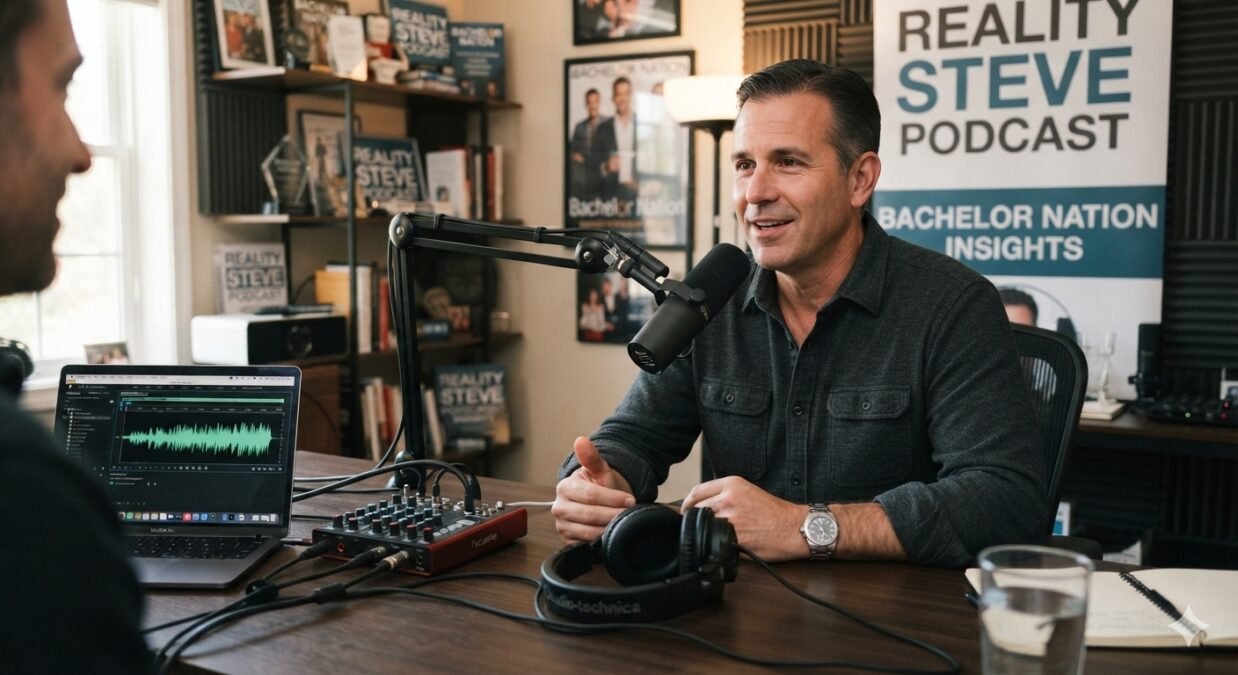

When fans search for reality steve, they’re usually looking for Bachelor Nation spoilers, episode information, elimination details, and behind-the-scenes updates. But there’s much more to Reality Steve than simply knowing what happens before a television episode airs. The name has become closely connected with online reality-TV spoiler culture, especially around The Bachelor, The Bachelorette, and related shows.
Reality Steve is the online name of Steve Carbone, a longtime reality-TV blogger and podcaster. He built his reputation by collecting information from sources, examining social-media clues, comparing reports, and publishing spoilers for viewers who wanted to know what happened before the official broadcast. His career shows how the internet changed entertainment journalism and how fans can become an important part of the media conversation.
For some viewers, spoilers take away the surprise. For others, they make the show even more interesting because they can watch each episode while knowing what may happen later. Either way, the popularity of reality steve demonstrates how strongly audiences connect with unscripted television.
Who Is Reality Steve?
Reality Steve is the nickname used by Steve Carbone, a media personality best known for reporting spoilers connected to Bachelor Nation. His website and podcast have focused heavily on The Bachelor, The Bachelorette, Bachelor in Paradise, and other reality-TV subjects.
Carbone didn’t originally set out to become a professional spoiler. His journey began with humorous television recaps. According to interviews about his career, he started writing about reality television in the early 2000s and circulated his writing among friends. Those early efforts eventually developed into a larger online audience.
Over time, his work became a full-time media business. Instead of waiting for television networks to reveal every major event, his readers could visit his website and learn information gathered before episodes aired.
That was a major change in the way fans consumed reality television.
How Reality Steve Became Famous
The turning point in the Reality Steve story came during Jason Mesnick’s season of The Bachelor.
In 2009, Carbone received information about the season’s ending. The information concerned the highly unexpected change in Jason Mesnick’s romantic decision involving Melissa Rycroft and Molly Malaney. Carbone published the information before the finale, and the televised events later supported the major details of the spoiler.
That moment helped transform him from a reality-TV recapper into a major spoiler source.
It was, in a way, a classic internet success story:
- A hobby attracted readers.
- Readers created demand for more information.
- Sources began sending tips.
- Accurate information increased his credibility.
- More attention brought even more sources.
- The website eventually became a professional business.
And just like that, a person writing television recaps for fun had created a recognizable entertainment brand.
The Early Career of Steve Carbone
Before becoming famous as Reality Steve, Steve Carbone had experience in sports radio. His professional background helped him develop communication and broadcasting skills that later became useful in online media.
His early reality-TV writing wasn’t initially designed as a large business. Interviews have described his first writing efforts as informal and humorous. He was essentially sharing his thoughts with friends and gradually discovering that people enjoyed reading them.
This is an important part of his story because it shows that online careers don’t always begin with a detailed business plan.
Sometimes they begin with a simple question:
“Would people enjoy reading this?”
In Carbone’s case, the answer was yes.
As his audience grew, he developed a more organized system for receiving and evaluating information about reality-TV productions.
What Does Reality Steve Actually Do?
A common misunderstanding is that Reality Steve personally witnesses everything that happens during production. That’s not how his spoiler operation works.
Instead, his work has traditionally involved receiving information from sources and examining clues that become available through different channels. In an interview, Carbone explained that he acts largely as a filter and evaluates information he receives rather than personally attending filming locations and observing every event.
Information may involve:
- Contestant identities
- Elimination orders
- Dates
- Filming locations
- Final contestants
- Relationships
- Production developments
- Social-media activity
- Post-show developments
Some information can come directly from people who know something about production. Other clues may be publicly visible.
For example, social media can sometimes reveal useful information through changes in posting behavior, account activity, or when contestants become active online again after filming.
It’s almost like putting together a giant puzzle.
How Reality Steve Checks Spoilers
One of the most interesting parts of reality steve is the process of checking information.
A spoiler isn’t automatically true simply because someone sends an email or message. Carbone has discussed the importance of checking sources and comparing information.
His historical approach has included looking at:
- How detailed a source’s information is
- Whether the source appears to have direct knowledge
- Whether information matches other reports
- Whether social-media evidence supports the claim
- Whether the timeline makes sense
- Whether later information confirms or contradicts an earlier report
This process matters because reality-TV production can be complicated.
Information can also change.
A contestant might leave unexpectedly. A relationship might develop differently from what people expected. A production decision can change. Even a reliable source may have incomplete information.
That means readers should treat spoilers as information gathered from sources rather than official announcements from the television network.
Reality Steve and the Power of Social Media
Social media has dramatically changed the spoiler environment.
Years ago, fans had fewer ways to track contestants outside television. Today, platforms such as Instagram can provide clues about where contestants are, whether they’re active online, and how their lives appear to have changed.
Reality Steve has discussed the importance of social-media activity in researching Bachelor spoilers.
For example, viewers may notice:
- A contestant suddenly returning to social media
- A change in account activity
- New followers
- Deleted or changed posts
- Photos appearing at particular times
- Contestants interacting with each other
- Public appearances after filming
None of these clues should automatically be treated as proof. However, when several pieces of evidence point in the same direction, they can become part of a larger picture.
And that’s where spoiler research gets fascinating.
Reality Steve and The Bachelor Franchise
The strongest association with reality steve is the Bachelor franchise.
The franchise includes several programs and special events, with The Bachelor and The Bachelorette being its best-known shows. Other related programs have also received attention from Reality Steve over the years.
His coverage has often included information about:
- Upcoming contestants
- Episode developments
- Eliminations
- Finalists
- Hometowns
- Fantasy Suite stages
- Final decisions
- Post-show relationships
- Reunion or special episodes
His podcast also expanded the way audiences could consume his work. Instead of reading only written articles, listeners could hear him discuss reality-TV developments, answer questions, and speak with people connected to reality television.
That shift from blogging to podcasting reflects a larger change in online media.
A Look at Reality Steve’s Media Style
Reality Steve’s writing and speaking style has traditionally been informal and conversational.
Rather than sounding like a traditional newspaper report, his content often feels more like someone talking directly to a television fan.
This style can make complicated reality-TV stories easier to follow.
His content may include:
- Personal observations
- Spoiler explanations
- Episode discussions
- Questions from readers
- Reactions to Bachelor Nation news
- Interviews
- Behind-the-scenes discussion
That informal approach is part of his recognizable identity.
After all, fans aren’t necessarily visiting a spoiler website because they want a textbook. They want to talk about television.
Why Do People Read Reality Steve Spoilers?
This is where things get interesting.
Why would someone want to know the ending before watching the episode?
Different viewers have different reasons.
Some People Enjoy Predictability
Knowing what happens can make some viewers feel more relaxed. Instead of wondering whether a favorite contestant will survive the next elimination, they already know the broad outcome.
Others Like Solving the Puzzle
Reality television contains editing, clues, conversations, and storytelling decisions.
Spoilers can turn watching into a puzzle.
A viewer may think:
“Now I understand why the producers showed that conversation.”
The audience isn’t simply asking what happened. They’re examining how the show tells the story.
Some Fans Want to Avoid Surprises
Not everyone enjoys suspense.
For some viewers, knowing the outcome allows them to focus on personalities, conversations, dates, and relationships instead of worrying about the final result.
Others Simply Love Gossip
Let’s be honest—reality television has always been connected with gossip and social conversation.
A spoiler can give fans something exciting to discuss with friends before an episode even airs.
Reality Steve and the Difference Between Spoilers and Official Information
It’s important to understand the difference between a spoiler and an official announcement.
An official announcement comes directly from a recognized production company, television network, or authorized representative.
A spoiler, by contrast, may come from:
- Sources
- Production clues
- Public information
- Social-media evidence
- Anonymous tips
- Information shared by people familiar with events
Therefore, even an experienced spoiler reporter can sometimes make mistakes.
This is one of the most important lessons for readers.
Being famous for accurate spoilers doesn’t mean every spoiler is guaranteed to be correct.
When Reality Steve Gets Something Wrong
Reality Steve has acknowledged errors in his spoiler history.
A notable example occurred during Joey Graziadei’s season of The Bachelor. An early report identified Daisy Kent as the expected final choice, but the ending did not match that prediction. Later, the reporting was corrected as additional evidence became available.
This example is useful because it shows how spoiler reporting works in real life.
Information can be:
- Reported in good faith.
- Supported by sources.
- Published before filming information is fully understood.
- Challenged by new evidence.
- Corrected when stronger evidence appears.
That’s not unique to entertainment reporting. It is a basic feature of information gathering.
The key lesson is simple: new evidence can change the story.
Reality Steve’s Podcast and Digital Expansion
The Reality Steve brand eventually expanded beyond traditional written blogging.
His podcast became another important platform for discussing Bachelor Nation and reality television. The podcast description says it covers The Bachelor, The Bachelorette, Bachelor in Paradise, episode discussions, listener questions, interviews, and broader reality-TV topics.
Podcasting offers several advantages.
Listeners can:
- Hear the personality behind the website.
- Get explanations rather than just written spoilers.
- Listen while driving or working.
- Hear interviews with reality-TV personalities.
- Follow ongoing discussions between episodes.
This reflects a broader change in entertainment media.
Today, audiences don’t have to rely only on television networks, magazines, or newspapers. Independent creators can build their own communities through websites, podcasts, newsletters, video platforms, and social media.
Reality Steve’s Relationship With Bachelor Nation Fans
The relationship between reality steve and Bachelor Nation audiences is unusual.
Many fans don’t simply visit his website once. They return during an entire season.
A typical spoiler-focused viewer might:
- Check casting information before the premiere.
- Look for filming updates.
- Read episode spoilers.
- Follow elimination information.
- Compare spoilers with what appears on television.
- Search for updates after the finale.
- Listen to podcast discussions.
In this way, the spoiler experience becomes part of the television experience.
Some fans may even watch episodes differently after reading spoilers.
Instead of asking, “Who will win?” they may ask, “How did the show get from here to that ending?”
That can create a completely different viewing experience.
The Role of Accuracy and Trust
Trust is particularly important in spoiler journalism.
Readers need to know that information isn’t simply invented for clicks.
Reality Steve has built much of his reputation around evaluating tips and correcting information when evidence changes. His long history and continuing media presence have made his name recognizable among Bachelor fans.
Still, readers should use sensible media habits.
When reading a spoiler:
- Check whether it comes from a direct source.
- Look for supporting evidence.
- Notice whether the information is described as confirmed or unconfirmed.
- Check whether later updates changed the report.
- Don’t confuse predictions with verified information.
- Remember that social-media clues can be misunderstood.
These habits help readers become smarter consumers of entertainment information.
Reality Steve’s Impact on Online Entertainment
The story of reality steve is also a story about the internet.
Traditional television operates on a simple schedule:
Produce → Promote → Broadcast → Audience Watches
Spoiler culture changes that model:
Produce → Leak → Discuss → Investigate → Speculate → Publish → Broadcast → Compare
The audience becomes part of the process.
Fans search for clues. Bloggers publish theories. Social-media users analyze photographs. Podcasts discuss developments. Then the official episode arrives.
Suddenly, watching television isn’t just about watching.
It’s about participating.
Why Spoilers Have Become So Powerful
The growth of spoiler culture isn’t limited to Bachelor Nation.
Fans discuss spoilers for:
- Reality shows
- Streaming series
- Movies
- Competition programs
- Award shows
- Sports documentaries
- Celebrity events
Research and commentary on spoilers have also explored why some people enjoy knowing outcomes in advance. Some viewers find that advance information can reduce uncertainty and help them focus on other parts of a story.
So, spoiler lovers aren’t necessarily trying to “ruin” entertainment.
For many people, spoilers are simply another way to experience a story.
Reality Steve’s Major Career Lessons
The career of Steve Carbone offers useful lessons for bloggers and online creators.
Start With Something You Understand
Carbone already had an interest in television and experience communicating through media.
That foundation helped him develop his online voice.
Build Trust Over Time
A single successful article can attract attention, but a long-term audience usually requires consistency.
Readers return when they believe a creator provides useful information.
Develop a Distinct Voice
Reality Steve became recognizable partly because his writing and podcast style didn’t try to sound like traditional corporate media.
His conversational voice helped separate his work from standard entertainment reporting.
Adapt to New Technology
The move from email newsletters and blogs to podcasts and social media shows the importance of adaptation.
The internet changes constantly.
Creators who refuse to change can struggle to maintain an audience.
Correct Mistakes
Perhaps most importantly, information-based creators need to recognize when evidence changes.
Updating an incorrect claim is part of responsible publishing.
Quick Facts About Reality Steve
| Topic | Information |
|---|---|
| Real name | Steve Carbone |
| Online name | Reality Steve |
| Main field | Reality television coverage |
| Best known for | Bachelor Nation spoilers |
| Major franchise | The Bachelor and related shows |
| Early media background | Sports radio |
| Online beginnings | Reality-TV recaps |
| Major breakthrough | Jason Mesnick’s 2009 Bachelor season |
| Main platforms | Website and podcast |
| Content style | Spoilers, recaps, interviews, commentary |
| Important feature | Source and clue analysis |
How to Read Reality Steve Without Losing the Fun
If you enjoy Bachelor Nation but aren’t sure whether spoilers are for you, there are several ways to approach them.
You could choose a spoiler-free experience, where you avoid all information before watching.
Or you could choose a light-spoiler experience, where you only read general information without learning the final outcome.
Another option is a full-spoiler experience, where you learn the major events before the episodes air.
There’s no single correct way to enjoy television.
The best approach depends on what makes watching enjoyable for you.
Some viewers want suspense.
Some want certainty.
Some want both.
The Future of Reality Steve
The entertainment industry continues to change rapidly.
Streaming services, social media, podcasts, short-form video, fan communities, and independent websites have made it easier than ever to discuss television before and after episodes air.
That environment gives spoiler creators new opportunities.
At the same time, it creates new challenges.
Information spreads extremely quickly. A rumor can reach millions of people before anyone has verified it. A social-media post can be misunderstood within minutes. A prediction can become “fact” simply because thousands of people repeat it.
For that reason, careful sourcing and transparency will remain important.
The future of reality steve and similar spoiler platforms will likely depend on how successfully they adapt to this changing media environment while maintaining the audience’s trust.
Final Thoughts on Reality Steve
The story of reality steve is much bigger than Bachelor spoilers. Steve Carbone’s career demonstrates how an ordinary interest in reality television can develop into a long-running digital media business.
Beginning with informal recaps and eventually becoming a recognized source for Bachelor Nation spoilers, Carbone helped show how online audiences could change entertainment coverage. His work has included websites, podcasts, source analysis, interviews, episode discussions, and social-media investigation.
At the same time, readers should remember that spoilers aren’t the same as official information. Even experienced spoiler reporters can receive incomplete or incorrect information, and later evidence can change an earlier report.
Ultimately, reality steve represents a fascinating part of modern television culture: the place where fans, social media, independent creators, and traditional entertainment come together. Whether you love spoilers or prefer to avoid them, reality steve has played a notable role in changing how many viewers follow Bachelor Nation and consume reality-TV news.
Reality Steve and the Evolution of Bachelor Spoiler Culture
The rise of reality steve is closely connected to the changing culture of reality television. In the early years of reality TV, viewers generally had to wait for each episode to discover what would happen. Today, the experience can begin weeks or even months before an episode reaches television.
Online spoiler communities changed that pattern.
Fans can now discuss filming locations, contestants, social-media activity, interviews, and possible outcomes long before an official episode airs. Reality Steve became one of the best-known personalities within this environment because his work focused heavily on information about Bachelor Nation.
This doesn’t mean every piece of information circulating online is reliable. In fact, the huge amount of online content makes verification even more important.
A thoughtful reader should always separate:
- Confirmed information
- Reported information
- Predictions
- Fan theories
- Rumors
- Social-media clues
- Personal opinions
That distinction can make entertainment coverage much easier to understand.
Reality Steve’s Approach to Sources
One of the most important parts of spoiler reporting is the use of sources.
A source might have direct knowledge of filming, know a contestant, observe an event, or receive information from someone connected to the production. However, having a source doesn’t automatically guarantee accuracy.
This is where experience matters.
A spoiler reporter has to consider whether information makes sense and whether different pieces of evidence support one another.
For example, imagine a report says a contestant reached a certain stage of a season. A reporter might examine additional information such as:
- When the contestant returned home
- Whether the contestant appeared on social media
- Whether another source reported the same event
- Whether filming dates fit the claim
- Whether later interviews support the timeline
One clue by itself might mean very little.
Several independent clues can provide a stronger picture.
That’s why spoiler reporting can sometimes feel like investigative work.
Reality Steve and Contestant Information
Contestant information is another major part of Bachelor Nation coverage.
Before a season begins, viewers often want to know who will appear on the show. Once contestants are announced, fans may research their backgrounds, careers, interests, and social-media accounts.
Reality Steve has historically covered contestants and season developments as part of his broader Bachelor coverage.
For readers, however, it’s useful to remember that contestants are real people, not simply television characters.
The show may present edited versions of their personalities, while online audiences can form strong opinions based on limited footage.
A responsible approach is to focus on information that is relevant to the program and publicly available rather than treating speculation as fact.
Reality Steve and Television Editing
Television editing plays a huge role in reality programming.
A season might contain many hours of conversations and events, but only a fraction appears in the final episodes.
Editors decide:
- Which conversations viewers see
- Which reactions receive attention
- How scenes are arranged
- Which contestants receive more screen time
- Where dramatic pauses occur
- How previews are presented
This means a spoiler can sometimes provide context that changes how viewers interpret an episode.
Suppose a preview shows a contestant crying.
Without additional information, viewers may assume something dramatic happened.
But the full context could be completely different.
A spoiler reader might already know that the scene isn’t connected to the event suggested by the preview.
In that sense, spoilers can change the way audiences interpret television storytelling.
The Reality Steve Effect on Viewing Habits
The existence of major spoiler sources has created different types of television viewers.
Some people refuse to read spoilers because they want the traditional experience.
Others check spoilers before every episode.
Then there are viewers who use spoilers selectively.
They might want to know the final outcome but avoid details about individual dates.
Or they might read contestant information but skip elimination results.
This flexibility is one reason spoiler culture continues to grow.
People can customize their viewing experience according to their preferences.
There’s no need to follow one fixed method.
Reality Steve and Fan Discussions
Bachelor Nation is more than a television audience.
It’s also a large online community.
Fans discuss episodes through:
- Podcasts
- Social-media posts
- Online forums
- Blogs
- YouTube videos
- Comment sections
- Fan pages
- Entertainment websites
Reality Steve’s content has become part of these wider discussions.
A spoiler may begin on one platform and then travel rapidly across others.
Someone reads a report, posts about it on social media, another person discusses it on a podcast, and soon thousands of fans are debating the same information.
This creates a fascinating cycle:
Information → Discussion → Reaction → More Information
And sometimes, the discussion itself becomes almost as entertaining as the original television program.
How Social Media Changed Reality Television
Social media has made reality television far more interactive.
In the past, viewers primarily watched contestants on television.
Today, contestants can continue communicating with audiences through their own social-media accounts.
That creates opportunities for fans to learn more about contestants after filming.
It can also create confusion.
A social-media post may be:
- A genuine update
- A promotional post
- A sponsored message
- A carefully timed announcement
- A simple personal update
- Something unrelated to the television show
Therefore, social-media clues should be interpreted carefully.
A photo or follow doesn’t automatically prove a relationship or storyline.
This is one reason experienced spoiler readers understand that online evidence needs context.
Reality Steve and the Importance of Corrections
No information system is perfect.
Reality-TV production contains uncertainty, and information can change. For that reason, corrections are an important part of responsible spoiler coverage.
When new evidence contradicts earlier information, readers benefit when the change is clearly explained.
A good correction should ideally make it clear:
- What was previously reported
- What new information appeared
- Why the earlier report changed
- What information is currently supported
This approach helps audiences understand the difference between an honest mistake and deliberately misleading content.
It also reminds readers that spoiler reporting is an ongoing process rather than a crystal ball.
Reality Steve as an Online Media Brand
The development of reality steve also offers an interesting lesson about personal branding.
The name became closely associated with a specific subject.
When people heard “Reality Steve,” they could quickly connect it with Bachelor spoilers and reality-TV commentary.
This is valuable for online creators because a recognizable identity can help an audience remember a website or personality.
A successful digital brand often combines:
- A clear subject
- A recognizable name
- Consistent content
- A distinctive voice
- Audience interaction
- Multiple publishing platforms
Reality Steve illustrates how these elements can work together over many years.
Why Independent Entertainment Websites Matter
Traditional entertainment companies aren’t the only sources of information anymore.
Independent bloggers and creators can develop their own audiences without operating a major television network.
This has created a broader media environment.
A person can publish:
- Articles
- Podcasts
- Videos
- Interviews
- Newsletters
- Social-media commentary
And audiences can decide which creators they want to follow.
The result is a more decentralized entertainment-information system.
Of course, greater choice also creates greater responsibility for readers.
More sources mean more opportunities to compare information—but also more opportunities to encounter rumors.
Reality Steve and Media Literacy
Following reality steve or any spoiler source can be a useful exercise in media literacy.
Media literacy means understanding how information is produced, shared, and interpreted.
When reading a spoiler, ask:
Who is making the claim?
Is it an official source, a reporter, a fan, or an anonymous account?
What evidence supports it?
Does the report provide specific information or simply make a broad statement?
Is the information confirmed?
Words such as “reported,” “expected,” and “confirmed” don’t mean the same thing.
Could the information have changed?
Reality-TV production can develop unexpectedly.
Are other reliable sources reporting the same thing?
Comparing sources can reduce the chance of accepting an unsupported rumor.
These simple questions are useful far beyond entertainment.
Reality Steve and the Business of Attention
Spoilers are naturally attractive because they create curiosity.
A headline promising information about a major reality-TV development can encourage readers to click immediately.
That makes spoilers valuable in the online attention economy.
However, attention alone isn’t enough to build a lasting audience.
A website that constantly publishes unsupported claims may gain short-term clicks but lose reader trust.
A long-running brand needs something more:
Credibility.
That’s why sourcing, corrections, transparency, and consistency matter.
Readers may forgive an occasional mistake when they believe the creator is making a genuine effort to provide accurate information.
Reality Steve Beyond Spoilers
Although spoilers remain strongly connected with his name, the broader Reality Steve brand has also involved conversations about reality television personalities, interviews, podcasts, and entertainment developments.
This wider approach helps explain why the brand has continued beyond a single season or single television program.
Bachelor Nation itself changes constantly.
New contestants arrive.
New leads are selected.
Relationships develop.
Shows receive new formats.
Audience interests shift.
A creator covering this world needs to keep adapting.
The Human Side of Reality Television
One important issue often overlooked in spoiler culture is the human side of reality television.
Contestants aren’t fictional characters.
They may have families, careers, friends, and private lives outside the show.
Online discussions can sometimes become intense, especially when viewers become emotionally invested in a contestant.
A healthier approach is to remember that television presents a selected version of someone’s life.
Viewers should be cautious about making serious personal claims based solely on edited footage, anonymous rumors, or social-media speculation.
Entertainment can be fun without forgetting the people involved.
Reality Steve and the Changing Meaning of “News”
The career of reality steve also raises an interesting question:
What counts as news in the digital age?
Traditional news often focuses on politics, economics, public affairs, science, and major events.
Entertainment news has a different focus.
For Bachelor fans, information about a contestant, filming development, or upcoming episode can be highly relevant.
Digital media has blurred the boundary between professional journalism, blogging, commentary, and fan culture.
This doesn’t mean all sources are equally reliable.
Instead, it means audiences need to understand the type of source they’re reading.
A professional report, personal blog, anonymous tip, and fan theory should not automatically receive the same level of trust.
How Readers Can Use Reality Steve Responsibly
If you’re interested in reality steve, a balanced approach can make the experience more enjoyable.
Consider these simple habits:
- Read the publication date.
- Look for updates.
- Separate facts from speculation.
- Compare major claims with other reliable sources.
- Remember that spoilers may contain errors.
- Avoid sharing unverified claims as confirmed facts.
- Respect contestants’ privacy.
- Decide how much of the season you actually want spoiled.
Most importantly, don’t feel pressured to consume every spoiler.
You can enjoy Bachelor Nation in whatever way works for you.
Reality Steve and the Future of Spoiler Culture
The future of spoiler culture will probably become even more connected to digital platforms.
Social media will continue to provide clues.
Podcasts will continue to offer discussions.
Video creators will continue analyzing episodes.
Fans will continue sharing theories.
And independent websites will continue competing with traditional entertainment outlets for attention.
Artificial intelligence and increasingly sophisticated digital tools may also change how entertainment information is discovered and analyzed. At the same time, these technologies make verification even more important because misleading or manipulated information can spread quickly.
The basic principle remains unchanged:
Check the evidence before accepting the claim.
What Readers Can Learn From Reality Steve
The reality steve story provides several lessons that apply to anyone interested in online publishing.
Consistency Matters
Building an audience takes time.
A creator may begin with a small group of readers and gradually develop a much larger community.
Specialization Can Be Powerful
Instead of trying to cover everything, focusing strongly on one subject can help establish expertise.
Audience Trust Is Valuable
People return to sources they believe provide useful information.
Mistakes Should Be Addressed
No publisher is perfect. Transparent corrections can help maintain credibility.
Adaptation Is Essential
Blogs, podcasts, social media, and video platforms all provide different ways to reach audiences.
A creator who understands changing technology has more opportunities to grow.
Final Perspective on Reality Steve
The history of reality steve reflects the remarkable evolution of entertainment media. What began as informal reality-TV commentary developed into a recognizable digital brand associated with Bachelor Nation spoilers, podcasts, interviews, and online discussion.
His work also illustrates an important reality about modern media: audiences no longer have to wait passively for television networks to tell them what happened. Fans can investigate clues, follow contestants online, compare reports, and participate in discussions long before an episode airs.
At the same time, spoiler culture works best when readers understand its limits. Reports can change, sources can be mistaken, and online clues can be misinterpreted. Official announcements and independently reported information aren’t always the same thing.
For anyone following Bachelor Nation, reality steve remains an interesting example of how one creator can build a long-running media presence around a passionate audience, specialized knowledge, and the ever-changing world of reality television. Ultimately, reality steve is not only about spoilers; it’s also about the relationship between creators, information, television, and the fans who keep the conversation going.
Discover more insightful articles, helpful updates, and engaging stories on Leo ART New, and stay connected with the latest information. For more details, Contact Us.